
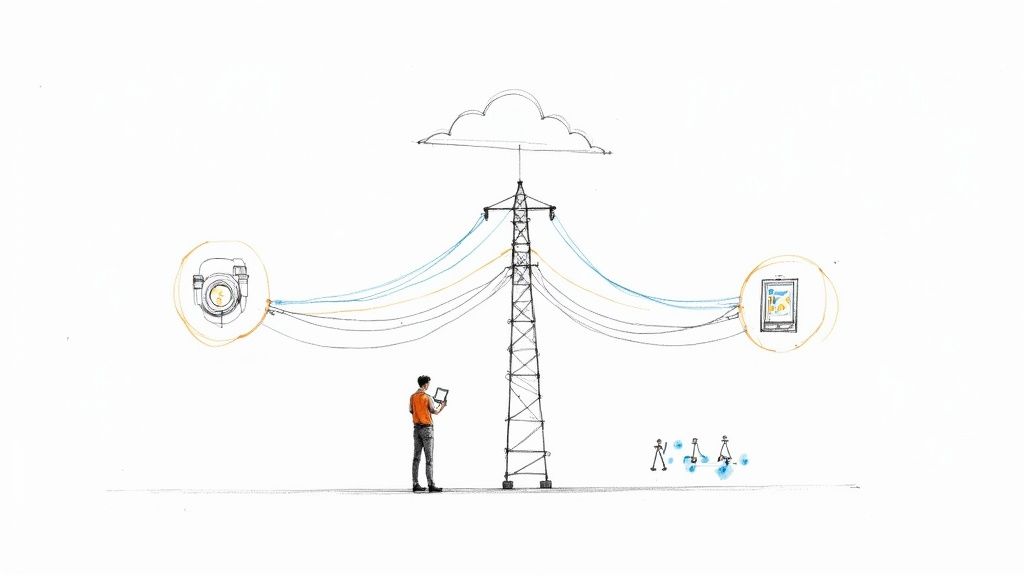
The power and utilities sector is at a turning point. Here in Australia, the industry is grappling with a perfect storm of ageing infrastructure, the massive shift to renewables, and a new breed of customer who expects slick, digital interactions. The old ways of doing business—relying on disconnected systems and manual processes—are no longer sustainable. For organisations ready to modernise, this challenge presents a significant opportunity.
This article shares our experience as a Salesforce partner, guiding utility companies through digital transformation. We'll explore the business challenges, the Salesforce solutions we've implemented, and the tangible results that follow.
Why a Salesforce-Powered Digital Shift Is Now Essential for Power and Utilities
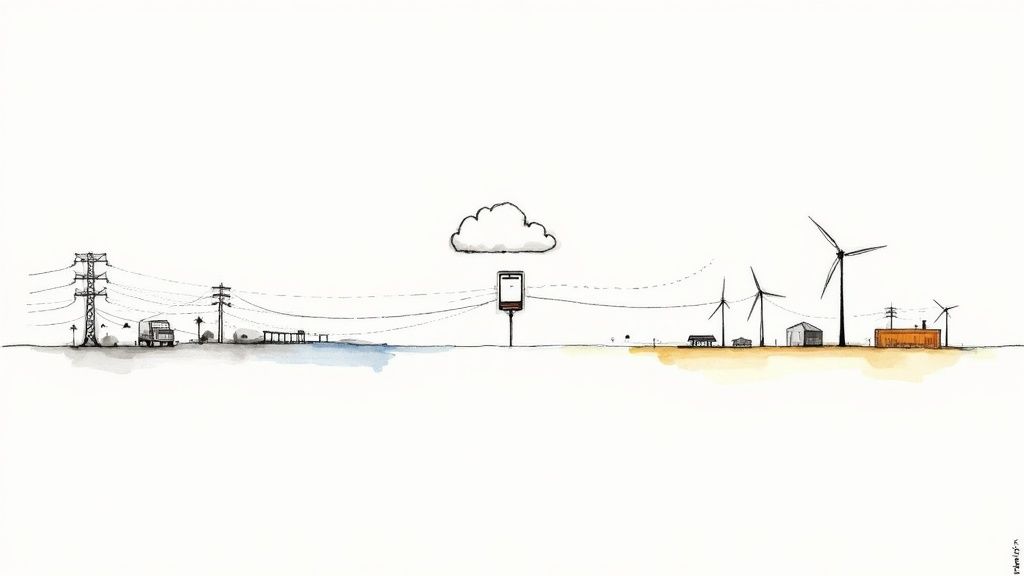
The Australian energy market is changing at a pace we've never seen before. Traditional, siloed systems simply can't handle the complexity of managing decentralised energy resources, preparing for extreme weather events, or keeping up with ever-shifting regulations. This isn't just about a fresh coat of paint; it's about a fundamental digital transformation to ensure survival and relevance in a new energy era.
Companies in the power and utilities space are under immense pressure to adapt. Sticking with manual processes and disconnected data sources creates a huge amount of operational friction. That friction translates into slow responses during outages, inefficient field service dispatch, and a customer experience that leaves everyone frustrated. This is the core business challenge we see time and again.
Key Drivers Pushing for a CRM Solution
This urgent need for a new approach isn't coming from one place, but from several forces all hitting at once. These aren't far-off challenges; they are day-to-day realities that demand action now.
- Evolving Customer Expectations: Today's customers expect the same level of service from their utility provider as they get from Amazon or their bank. They want self-service portals, proactive outage updates on their phones, and quick answers across any channel they choose.
- The Renewable Energy Transition: You can't just plug solar, wind, and battery storage into a grid that was built for one-way power flow from a central plant. Integrating these resources adds layers of complexity, demanding sophisticated data management to keep the grid stable and the lights on.
- Ageing Infrastructure: Much of our grid infrastructure needs proactive, data-driven maintenance to stay ahead of failures. Waiting for things to break is expensive, inefficient, and quickly erodes public trust.
- Regulatory Demands: Compliance isn't optional. Meeting safety, environmental, and reporting standards requires modern platforms that can track and report on these metrics accurately and without fuss.
To get a real handle on this new environment, utilities need to embrace new technologies. Understanding the role of AI and Big Data in revolutionizing energy management shows just how powerful data can be in turning these challenges into genuine opportunities.
Lesson Learned: At its heart, the problem is a massive disconnect between outdated systems and modern demands. A successful digital transformation bridges that gap by creating a single, unified CRM platform for all customer, asset, and operational data.
Salesforce as the Strategic Salesforce Solution
This is exactly where a powerful platform like Salesforce comes into play. It's not just another bit of software to add to the pile; it's a strategic foundation designed to connect all the disparate parts of the business. By pulling customer data together, optimising field operations, and enabling proactive communication, Salesforce turns these overwhelming challenges into clear chances for growth and resilience.
Of course, making a shift like this requires a solid plan. For many organisations, the first step is teaming up with an experienced digital transformation consultant to build a clear, achievable roadmap. Salesforce provides the tools, and with the right Salesforce partner and strategy, you can build a more responsive, efficient, and customer-focused utility for the future.
Case Study: Reinventing the Customer Experience with Salesforce Service Cloud
The Business Challenge: How do you turn a routine billing query into a moment that actually strengthens a customer's loyalty? For today's power and utilities companies, that's not just a nice idea—it's a critical business question. The answer is to stop thinking about service as purely transactional and start building genuine, lasting customer relationships.
The Salesforce Solution: This is exactly where Salesforce Service Cloud changes the game. It gives you the tools to create a genuinely connected and proactive customer experience, something that's essential for keeping customers in an increasingly crowded market.
Creating the 360-Degree Customer View
You can't provide exceptional service if you don't really know who your customer is. For years, this has been a huge headache for utilities, with customer data fragmented across separate billing systems, service request logs, and various communication channels.
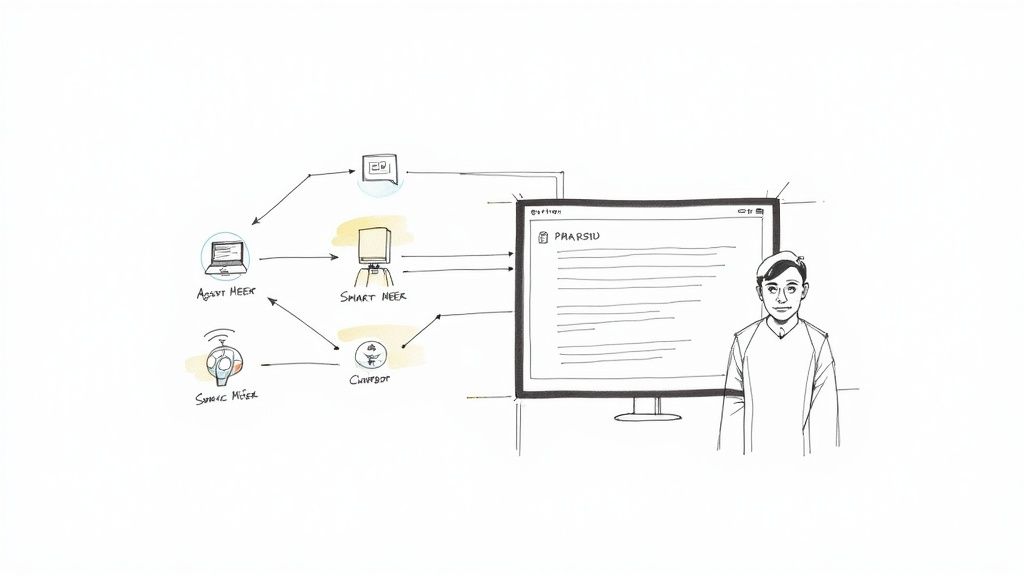
Salesforce Service Cloud smashes down those silos. Picture this: a service agent takes a call. Instead of jumping between different screens and systems, they see a single, unified console with everything they need to know right there:
- Complete Billing History: Every past invoice, payment record, and the current balance.
- Service Interaction Log: A full timeline of every previous call, email, or chat they've had with you.
- Smart Meter Data: Real-time and historical usage information, perfect for answering high-bill questions with solid facts.
- Property and Asset Details: Specifics about their connection, including any active service orders.
The Result: This 360-degree view empowers your team to solve issues faster and more accurately. It turns what could be a frustrating call into a helpful, efficient conversation, which is a key part of how we approach Salesforce for service.
Best Practice: Automation for Proactive and Timely Support
Great service isn't just about reacting well; it's about getting ahead of your customers' needs. With rising energy costs and complex new offerings like solar feed-in tariffs, people have more questions than ever.
The Australian energy market is changing fast. According to the Clean Energy Council, renewable energy supplied 40% of Australia's total electricity last year, and that figure is set to climb with over 10 GW of new capacity on the way. This shift brings big opportunities but also a flood of customer questions about new plans and technologies. You can explore more on this energy transition in the Clean Energy Australia Report.
Here's where automation inside Service Cloud becomes so valuable. An AI-powered chatbot on your website can handle common requests 24/7. A customer moving house can sort out their service transfer at midnight, no human interaction needed.
Our Insight: This frees up your skilled agents to focus on the complex, high-stakes stuff—like managing communications during a major outage. It’s about using technology to put your human expertise where it’s needed most.
What's more, you can connect marketing automation tools to send out proactive alerts. Think automatically notifying customers in a specific suburb about planned maintenance, or warning them about potential disruptions from an incoming storm. A simple heads-up like that builds immense trust and dramatically cuts down the number of calls you get during a crisis. By following the customer's journey, a connected platform like Service Cloud creates a seamless, supportive experience that builds real loyalty.
Case Study: Optimising Field Operations with Salesforce Field Service

The Business Challenge: In the power and utilities sector, what happens out in the field is everything. The efficiency, expertise, and safety of your mobile workforce have a direct line to grid reliability, customer happiness, and your bottom line. The old ways of dispatching—shuffling spreadsheets, paper work orders, and radio calls—are slow, disconnected, and ripe for error.
The Salesforce Solution: This is exactly where Salesforce Field Service (SFS) steps in, creating a fundamental shift in how work gets done. It pulls your operations out of a reactive, manual state and into a proactive, data-driven system. It’s all about connecting your dispatchers, technicians, and assets on one intelligent CRM platform to make sure every job is done right the first time.
The Lifecycle of an Intelligent Work Order in Salesforce
To really get the picture, let’s follow a single work order through the Salesforce Field Service ecosystem. The entire process is built for maximum efficiency from start to finish.
It all starts not with a phone call, but with data. A routine maintenance check for a substation might automatically generate a work order right in the system. Or, an IoT sensor on a transformer could detect a slight anomaly and trigger an alert, creating a predictive maintenance order before a failure even has a chance to happen.
This work order isn't just a simple task—it's a rich packet of information. It contains the asset's precise location, its complete service history, all the required safety protocols, and a list of the exact skills and parts needed for the job.
Best Practice: Intelligent Dispatching and Scheduling
Once the work order is live, the system’s scheduling engine kicks into gear. Forget about a dispatcher manually scanning rosters to find a free technician. SFS uses AI to find the perfect match based on a whole range of factors:
- Skills and Certifications: It ensures the technician assigned has the specific qualifications for that particular asset.
- Location and Travel Time: The algorithm works out the smartest routes to cut down travel and keep technicians productive.
- Equipment Availability: It confirms the technician’s vehicle is already stocked with the parts and tools needed for the job.
The dispatcher’s role completely changes. They go from being a manual scheduler to a strategic overseer, managing by exception from a real-time command centre view. They can react fast to emergencies like storm damage, trusting the system to handle the day-to-day assignments. This strategic approach to field service management with Salesforce is absolutely critical for improving operational control.
Empowering Technicians in the Field with Mobile CRM
The real transformation happens when the technician arrives on-site. Armed with the SFS mobile app on a tablet or phone, they have a powerful toolkit right at their fingertips.
They can pull up the asset's full service history, check past repairs, and read notes from previous technicians. That context is priceless for an accurate diagnosis. Instead of filling out paper forms, they follow interactive digital checklists, ensuring every safety protocol and procedural step is completed and documented correctly.
Our Insight: This isn't just about digitising paperwork; it’s about equipping your team with the intelligence of your entire organisation. A less experienced technician can perform like a seasoned expert because they have decades of collective knowledge available on their device.
With the app, they can snap photos of the completed work, grab a customer's digital signature, and even order replacement parts directly from the field if something unexpected comes up. Once the job is done, the work order is closed out in real-time. This instantly updates asset records and kicks off the next step in the process, like invoicing.
The Result: This seamless flow of information drives down operational costs and dramatically improves first-time fix rates—a crucial KPI for any utility. Beyond Salesforce, organisations in the power and utilities sector might explore various platform features designed to boost operational efficiency. However, the deep integration of Salesforce Field Service with customer data provides a unique advantage, connecting what happens in the field directly to the overall customer experience.
Connecting Asset Management and Sustainability Goals with Salesforce
The Business Challenge: For any organisation in the power and utilities game, physical assets are the lifeblood of the entire operation. But trying to manage a sprawling network of substations, transformers, and smart meters with old, siloed systems is a surefire way to rack up costs and deal with constant, unexpected failures. The business challenge is to connect asset management with corporate responsibility goals, building a system that doesn't just boost reliability but actively drives sustainability.
The Salesforce Solution: This is where a platform like Salesforce comes in, acting as the central nervous system for all your asset data. By plugging into your existing ERP and Geographic Information Systems (GIS), it gives you a complete, 360-degree view of every single component in your network. That kind of visibility is the bedrock for moving away from the old "fix it when it breaks" model to a much smarter, proactive maintenance strategy.
From Reactive Repairs to Predictive Maintenance
The real magic of a connected CRM platform is its ability to see trouble coming before it causes an outage. Picture this: IoT sensors on your most critical assets are constantly checking performance. The moment a sensor picks up a tiny fluctuation or a temperature change that hints at a problem, it can automatically fire off a work order in Salesforce.
This is an intelligent process. The system can schedule the maintenance job, assign the right technician with the right skills, and make sure they have all the necessary parts before they even think about leaving the depot.
The Result:
- Maximised Reliability: By catching issues early, you stop minor hiccups from snowballing into major, expensive failures that leave customers in the dark.
- Improved Safety: Technicians show up to a job with the full history of the asset and any potential risks, which makes for a much safer work environment.
- Extended Asset Lifespan: Consistent, data-driven maintenance keeps your equipment running in top shape for longer, letting you put off massive capital replacements.
Lesson Learned: This shift completely changes the game for your operational teams. Instead of constantly putting out fires, they can work from a strategic, data-backed plan. It’s all about taking control of your network instead of letting your network control you.
Tying Operational Efficiency to Sustainability KPIs
Even better, this newfound operational efficiency is directly tied to hitting your most important sustainability targets. It’s simple: well-maintained assets run more efficiently, using less energy and creating less waste. But the link goes much deeper, especially as Australia’s energy grid undergoes a massive transformation.
Our national electricity generation is in the middle of a huge shift, with low-carbon sources now kicking in nearly 40% of the total supply. Solar is leading the way at about 20%, with wind not far behind at 14%. But with fossil fuels still making up over 60% of the mix, it's clear the push for decarbonisation has to continue. This is precisely why having the right tools to manage and report on sustainability isn't just a nice-to-have anymore. You can see a fantastic breakdown of Australia's clean energy transition on lowcarbonpower.org.
This is where a tool like Salesforce Net Zero Cloud becomes non-negotiable for the modern utility. It gives you a powerful platform to:
- Track Your Carbon Footprint: Get an accurate measure of emissions across your entire operation, from the utes in your fleet to your power generation facilities.
- Manage Renewable Energy Projects: Keep a close eye on the complex lifecycle of solar or wind projects, tracking everything from progress and costs to final output.
- Report on Sustainability KPIs: Pull together clear, auditable reports for regulators, investors, and customers that show real, tangible progress towards your decarbonisation goals.
By bringing asset management and sustainability reporting together on a single platform, Salesforce becomes a key partner for power and utilities companies. It gives you the operational tools to build a more dependable grid today and the strategic insights you need to forge a cleaner, more sustainable energy future for tomorrow.
Your Practical Roadmap for Salesforce Implementation
Kicking off a Salesforce project in the power and utilities sector can feel like a massive undertaking. From our project experience, the secret isn't to try and boil the ocean. A smarter way forward is a phased, strategic rollout that lets you build a solid foundation, nail some early wins, and create real momentum for the long haul.
We've seen the "Crawl-Walk-Run" approach work time and time again. It’s a method that breaks a complex digital project into digestible stages. This gives your organisation the breathing room to adapt, learn, and grow into the platform’s full power without getting swamped. It’s a proven path to getting results that stick.
This timeline shows exactly how that progressive journey unfolds, starting with foundational systems and building towards advanced operational muscle.
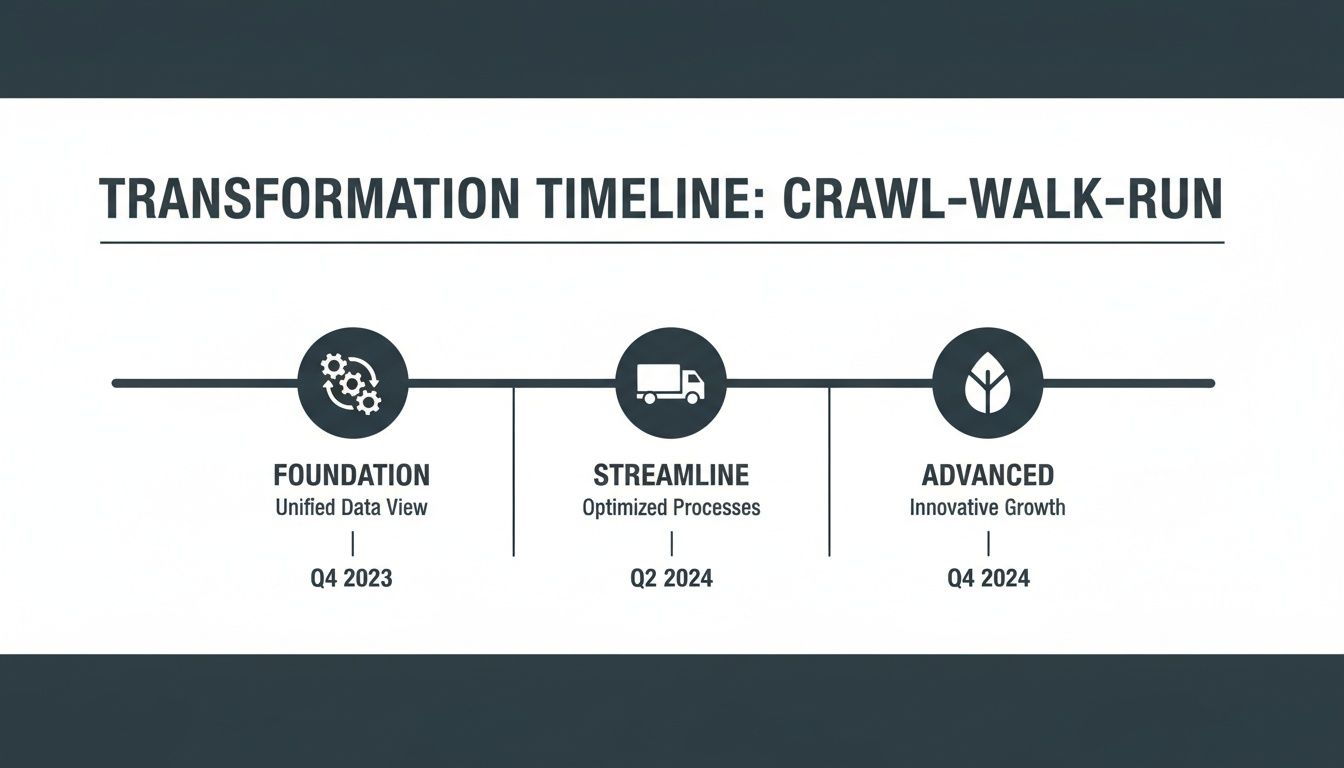
Each phase is a stepping stone for the next. It makes sure you have crucial elements like a unified customer view locked in before you start tackling the more complex worlds of field service and sustainability.
The Crawl Phase: Building the Foundational Customer View with Service Cloud
First things first: you have to get your data house in order. Before you can even think about automating field crews or tracking emissions, you need one single, reliable source of truth for every customer.
This stage is all about implementing Salesforce Service Cloud. The main goal here is to create that all-important 360-degree customer view. We’re talking about breaking down the walls between your billing, service, and communication systems. Once that information is centralised, your service agents can finally resolve queries faster and more accurately, giving customer satisfaction an immediate lift.
The Walk Phase: Streamlining Field Operations with Field Service
With your customer data foundation rock-solid, the next logical move is to push that intelligence out into the field. This is where you bring Salesforce Field Service into the picture for your mobile workforce.
In the "Walk" phase, the focus pivots to optimising how you dispatch technicians and manage work orders. You’ll swap out manual scheduling for intelligent, automated processes that send the right person with the right skills and gear to the right job. Putting a mobile app in your technicians’ hands gives them the information they need on-site to improve first-time fix rates and stick to safety protocols.
Best Practice: A successful rollout is about more than just technology; it's about your people. Driving user adoption through proper change management and training is every bit as critical as getting the system integrations right. A good Salesforce partner can guide you through both the technical and human side of the project.
The Run Phase: Unlocking Advanced Capabilities and Automation
Once your customer service and field operations are humming along on a connected platform, you’re ready to take on the bigger challenges. The "Run" phase is where you unlock the true strategic power of Salesforce.
This involves integrating IoT data for predictive asset maintenance, using data analytics to get ahead of network stress, and rolling out Salesforce Net Zero Cloud for detailed sustainability reporting. This stage is becoming non-negotiable as Australia’s grid continues its rapid transition. In a single recent month, utility-scale solar and wind generated 5,271 GWh of power—a 28% increase year-over-year. Managing this kind of growth requires advanced tools to balance supply, demand, and storage. Discover more insights on Australia's accelerating renewable generation from pv-tech.org.
Finding the Right Salesforce Implementation Partner
Working through this roadmap takes more than just technical chops; it demands deep industry knowledge. The Australian utilities sector has its own unique set of rules and operational quirks. Choosing a Salesforce implementation consultant who gets these specific challenges is absolutely critical.
A quality Salesforce partner will help you launch a well-defined pilot project to prove the concept and build support internally. They’ll guide you through connecting Salesforce with your core systems and, crucially, help you manage the change needed to get your team fully on board. With the right expertise in your corner, this roadmap becomes a clear plan for building a more resilient, efficient, and customer-focused utility.
Power & Utilities Salesforce FAQ
When decision-makers in the power and utilities sector start looking at a platform like Salesforce, a few practical, mission-critical questions always come up. You need to know how it’s going to play with your existing tech, if it’s genuinely secure enough for your data, and what kind of return you can actually expect.
Let’s tackle these head-on.
How does Salesforce connect with our existing billing and GIS systems?
Nobody wants to create another data silo. The whole point is to unify your systems, not add another layer of complexity. Salesforce was built from the ground up for integration, designed to be the central hub that connects to your core operational platforms like billing and Geographic Information Systems (GIS).
The magic behind this connection is usually Application Programming Interfaces (APIs). Think of an API as a secure, pre-approved translator that lets different software systems talk to each other and share data instantly. For more complex setups with multiple systems needing to connect, a dedicated platform like MuleSoft (which is part of Salesforce) is the answer.
MuleSoft doesn't just build one-off connections; it creates a whole network of reusable ones. This ensures data flows smoothly between Salesforce and everything else you rely on. The result? A true single source of truth. When a customer calls, your service agent sees their live billing data and service location right next to their case history in Salesforce—no more juggling multiple screens.
Is Salesforce secure enough for critical infrastructure data?
In the power and utilities world, security isn't just a feature; it's a fundamental requirement. You’re not just guarding customer details; you're protecting data linked to the critical infrastructure that communities depend on. Salesforce gets this, and its entire platform is built on a multi-layered security architecture designed for the intense demands of highly regulated industries.
Trust is the foundation, and Salesforce backs this up with an exhaustive list of international and industry-specific compliance certifications. This covers the full spectrum, from data privacy regulations to stringent security controls.
For organisations needing an even higher level of assurance, Salesforce Shield adds a suite of powerful, specialised features:
- Platform Encryption: This provides an extra lock on your most sensitive data while it's stored, going well beyond standard protections.
- Event Monitoring: Gives you a detailed look at who is accessing your data and what they're doing with it, helping you spot and stop potential threats before they become a problem.
- Field Audit Trail: Lets you track the history of data changes for up to ten years. This isn't just good practice; it’s often essential for regulatory compliance and forensic investigations.
These tools, combined with Salesforce's baseline security, give you the confidence needed to manage sensitive operational data on the platform.
Can the Salesforce platform handle our scale of operations?
Utilities don't operate on a small scale. You're managing millions of customers, vast networks of assets, and massive volumes of data every single day. The big question is whether a cloud platform can keep up, especially during peak events like a major storm, without grinding to a halt.
Simply put, yes. The Salesforce platform has been battle-tested at an enterprise scale, supporting some of the largest companies on the planet. Its architecture is built to be highly scalable, meaning it can handle millions of customer records, process huge volumes of service cases, and manage intricate field service schedules without breaking a sweat.
The platform's multi-tenant cloud architecture is designed for elasticity. This means it can automatically allocate more resources to handle sudden spikes in activity, ensuring you get consistent performance whether it's a quiet Tuesday or you're in the middle of a large-scale outage response.
This proven ability to scale means that as your customer base and operational complexity grow, Salesforce grows right alongside you, giving you a stable and reliable foundation for the future.
What is the typical ROI on a Salesforce project for a utility company?
Every solid business case needs to be built on a clear understanding of the potential return on investment (ROI). While every utility's situation is different, the value from a Salesforce project is measured through tangible improvements in key operational areas.
Rather than looking for a single, generic number, we help our clients build a business case focused on KPIs they can actually measure. Key areas where you'll see a clear return include:
- Improved First-Time Fix Rates: When technicians arrive with the right information and parts the first time, you slash the costs of repeat visits and make customers happier. It's a clear win-win.
- Reduced Call Handling Times: Giving your service agents a complete 360-degree view of the customer means they can resolve issues faster, which directly improves contact centre efficiency.
- Increased Asset Uptime: Using data in Salesforce to drive proactive and predictive maintenance helps you minimise unplanned downtime and get more life out of your critical assets.
- Lowered Truck Rolls: Smarter scheduling and the ability to diagnose issues remotely often mean you can solve a problem without dispatching a technician at all, leading to significant operational savings.
By tracking these metrics before and after the project, you can paint a clear, data-driven picture of the financial and operational benefits you’ve achieved.
Ready to build a more connected, efficient, and customer-focused utility? The team at Adaptal has the deep industry experience and technical expertise to guide your Salesforce journey from start to finish. Contact us today for a consultation and discover what's possible.