
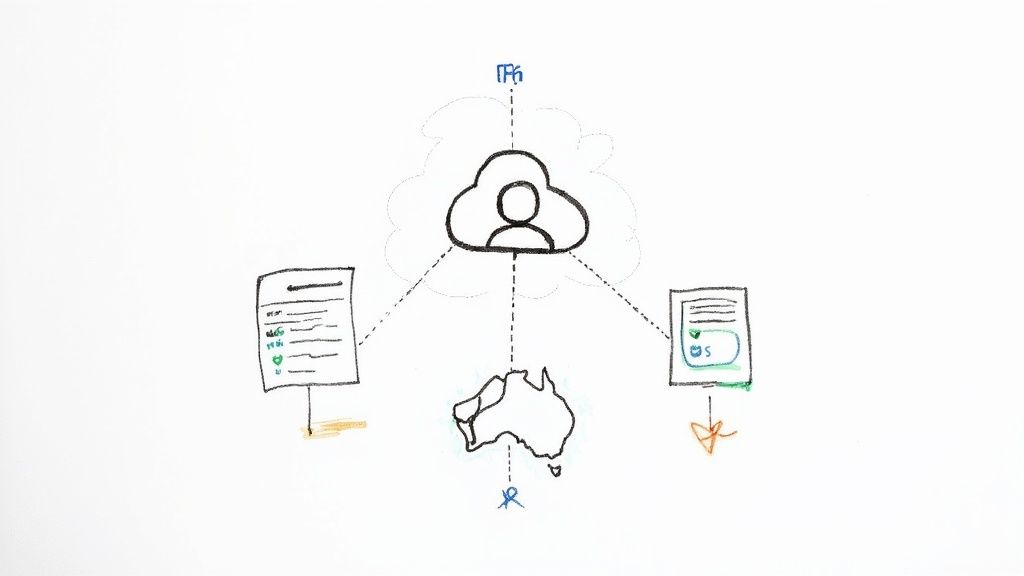
What exactly is SFDC Health Cloud? At its core, it's a specialised patient relationship management platform built on Salesforce's world-renowned CRM technology. But it's far more than another record-keeping system. It pushes beyond the limits of traditional electronic health records (EHRs) by creating a complete, 360-degree view of the patient, helping Australian healthcare providers deliver more connected, personalised, and proactive care.
The Challenge: Fragmented Data in Australian Healthcare
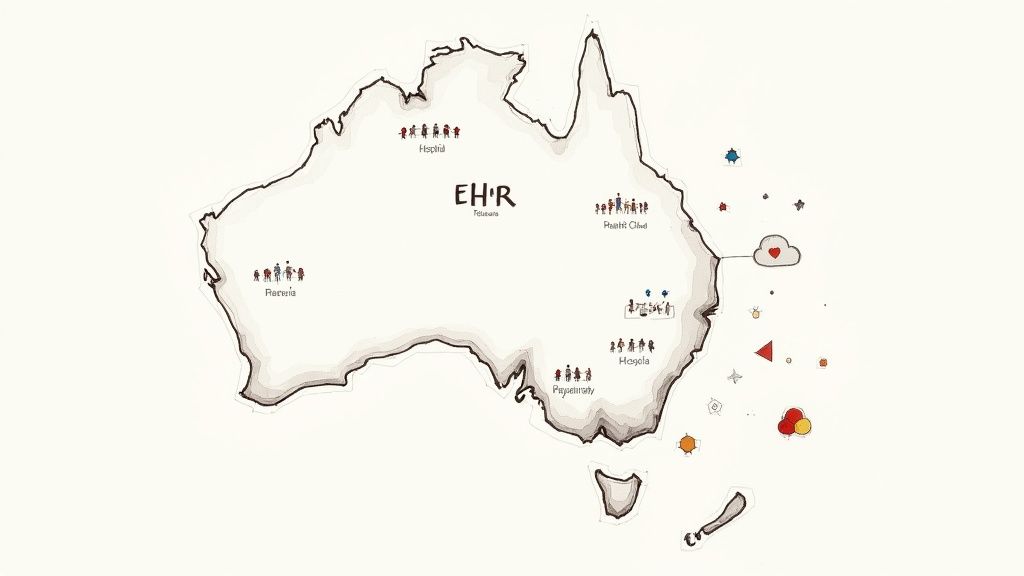
The Australian healthcare system faces a significant challenge: fragmented patient data. Information is often spread across different states, private providers, and public systems, creating frustrating information silos that make it incredibly difficult for care teams to collaborate effectively. Compounding this, patients now expect seamless digital access to their health information and care providers—a demand legacy systems struggle to meet.
This is precisely where a platform like SFDC Health Cloud becomes a strategic asset. As an experienced Salesforce partner, we've seen how it acts as a central hub, expertly pulling together disparate pieces of information.
- The Business Challenge: Healthcare providers struggle with siloed patient data, leading to inefficient care coordination and a disconnected patient experience.
- The Salesforce Solution: SFDC Health Cloud integrates clinical data (from EHRs, labs, medical devices) and non-clinical data (patient preferences, communication history, social determinants of health) into a single, unified view. It also connects with patient portals and mobile apps for direct engagement.
- The Results & Benefits: By breaking down data barriers, Australian organisations can dramatically improve operational efficiency, enhance care team collaboration, and deliver the modern, patient-centric experiences that build trust and improve outcomes.
A Salesforce industry white paper rightly points out that integrated digital platforms are essential for enabling the rapid innovation needed to support an ageing population and manage chronic conditions more effectively.
This kind of visual timeline gives clinicians and support staff immediate context, laying out everything from a patient's medical history to their upcoming appointments in a single, easy-to-understand view.
Lesson Learned: SFDC Health Cloud isn't just another piece of software; it's a foundational tool for digital transformation. It allows providers to build stronger relationships, coordinate care more proactively, and deliver the modern, patient-centric experiences people now expect.
For organisations focused on providing specialised care, like disability support services, this technology is a game-changer. It simplifies the management of complex care plans and helps coordinate between multiple stakeholders seamlessly. We saw this first-hand in our work showing how Carer Solutions Australia improved its operations using Salesforce. The goal isn't just to digitise records; it's about building a more intelligent, responsive, and connected healthcare ecosystem.
Core SFDC Health Cloud Features That Power Patient-Centric Care
To understand what makes Salesforce Health Cloud so effective, we need to look at the specific tools that drive its patient-first approach. These features are designed to work together, moving providers away from fragmented records and toward building a complete patient story. The platform brings true customer relationship management in hospitals to life, giving healthcare teams the tools to connect with patients on a much deeper, more personal level.
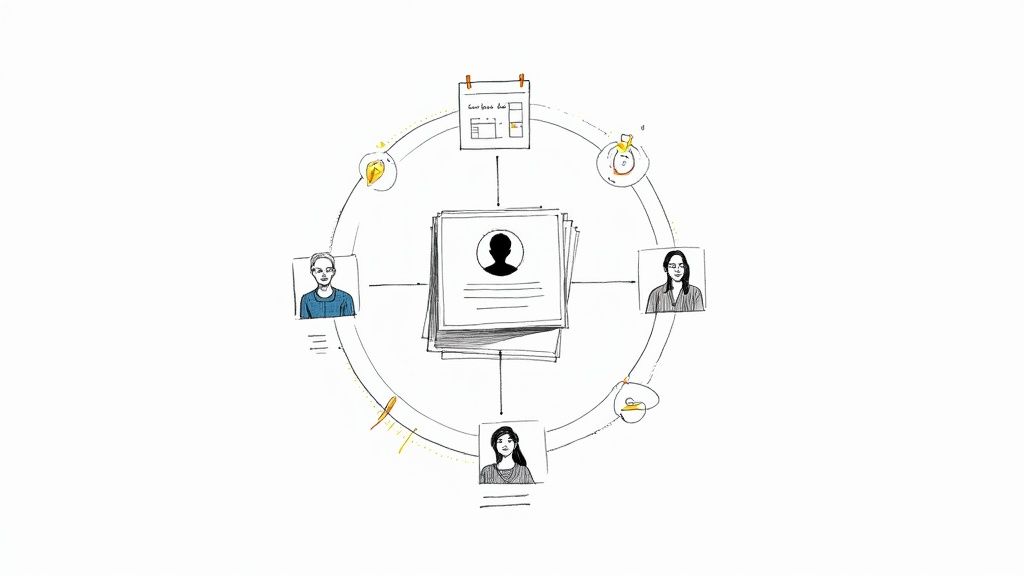
This shift is crucial. Studies consistently find that a significant majority of patients now expect a personalised healthcare experience, and this is how leading providers deliver it.
The 360-Degree Patient View
The foundation of Health Cloud is the 360-degree patient view. For many providers, managing patient information feels like trying to solve a puzzle with pieces scattered everywhere. This feature is a game-changer, pulling all clinical and non-clinical data into a single, easy-to-understand profile.
This unified view brings together everything:
- Clinical Data: Medical history, diagnoses, and lab results pulled directly from integrated EHRs.
- Communication Logs: A complete record of every interaction, from phone calls to secure messages.
- Patient Preferences: Little details that matter, like preferred communication channels or appointment times.
- Social Determinants of Health: Critical context about a patient's life outside the clinic that can impact their wellbeing.
By laying this all out on a clear timeline, care teams can see a patient’s entire journey at a glance. It empowers them to make smarter, more informed decisions and is the first real step toward proactive, personalised care.
Personalised and Dynamic Care Plans
Once you have a complete patient view, the next step is building an effective roadmap for their health journey. Health Cloud shines here with its personalised care plans. This feature lets multidisciplinary teams build, manage, and track a patient's progress together, all in real time. It’s not a static document; it’s a dynamic, living plan that adapts as a patient's needs change.
Best Practice: Think of a personalised care plan in Health Cloud as a central playbook. It ensures everyone on the care team—from the GP and specialist to the pharmacist and allied health professional—is on the same page, working from the same script toward the same goals.
This collaborative approach ensures alignment and prevents important details from falling through the cracks. A care coordinator, for example, can set specific goals for a patient recovering from surgery, assign tasks to different team members, and see progress updates right there in the platform.
Seamless Care Team Collaboration
Great healthcare relies on great communication. Yet, communication silos between GPs, specialists, nurses, and admin staff are a common and frustrating challenge. Health Cloud tackles this head-on with its care team collaboration tools. The platform acts as a secure, internal network where everyone involved in a patient's care can communicate and work together.
Key collaboration functions include:
- Secure Messaging: Allows for quick consultations and sharing of sensitive information within a fully compliant environment.
- Task Management: Team members can assign and track tasks related to a patient's care plan, ensuring accountability.
- A Private Community: Each patient can have a dedicated space where their entire care team, and even family members, can connect and share updates.
By tearing down these communication barriers, Health Cloud fosters a coordinated, efficient, and truly patient-centric ecosystem where every provider has the information they need to contribute effectively.
Building the Business Case for Implementing SFDC Health Cloud
Connecting SFDC Health Cloud features to real business outcomes is where the strategic value becomes clear. For Australian healthcare organisations, adopting this platform isn't just a tech upgrade; it's a strategic move to future-proof patient care and build a more efficient, resilient operation. The business case solves genuine, day-to-day challenges providers face.
The platform is a major force behind the digital transformation in Australian healthcare. As providers look to modernise, cloud adoption is climbing fast. The Australian healthcare cloud infrastructure market is projected to reach USD 5,430.7 million by 2030. This growth is fuelled by platforms like Health Cloud that power essential services like telehealth, EHR integration, and advanced diagnostics. You can discover more about the growth of Australia's healthcare cloud market on grandviewresearch.com.
Enhancing Patient Engagement and Satisfaction
Today’s patients want a healthcare experience that’s connected, convenient, and clear. SFDC Health Cloud delivers the tools to make that happen through secure patient portals and mobile apps, creating a "digital front door" to your services.
This self-service approach puts patients in control of their health journey. They can book appointments, chat directly with their care team, and access their health information on demand. When patients are more involved, outcomes improve—we see better adherence to care plans and a significant reduction in costly no-shows.
The Business Result: This leads directly to higher patient satisfaction scores and stronger loyalty. When patients feel seen, heard, and supported, they build long-term relationships based on trust.
Boosting Operational Efficiency Through Automation
Behind every patient interaction is a mountain of administrative work. Manual scheduling, follow-ups, and data entry are slow, prone to error, and drain resources that could be spent on care. SFDC Health Cloud tackles this by automating repetitive tasks.
With smart workflows, the platform can:
- Automate appointment reminders via a patient’s preferred channel (SMS or email).
- Trigger follow-up tasks for care coordinators when a patient is discharged.
- Streamline referral management between GPs and specialists, closing communication gaps.
This automation frees up precious time for clinical and admin staff to focus on what truly matters: providing top-quality patient care. The result is a leaner, more efficient operation that can handle more patients without compromising service quality.
Ensuring Robust Security and Compliance with Salesforce
In the Australian healthcare sector, data security and compliance with regulations like the Privacy Act are non-negotiable. SFDC Health Cloud is built on the trusted Salesforce platform, offering robust security to protect sensitive patient data. It provides fine-grained control over data access, ensuring only authorised individuals can view specific patient information. With full audit trails and advanced encryption, organisations can manage their data with confidence, turning SFDC Health Cloud into a cornerstone of a secure, modern digital health strategy.
How AI and Data Cloud Elevate the Patient Experience in Salesforce
While the core features of SFDC Health Cloud create a solid foundation, combining it with artificial intelligence (AI) and Salesforce Data Cloud is what propels patient care into the future. These practical tools help Australian healthcare organisations shift from reactive to proactive care, making smarter, data-driven decisions that spot patient needs before they become critical issues.
The results are already showing. A recent Salesforce report found that Australian consumers engaging with AI-powered agents reported 64% higher customer satisfaction. They were also 217% more likely to prefer resolving service issues with an agent, highlighting AI's power to create smooth, personalised experiences. You can read the full analysis of AI's impact on customer satisfaction in the Salesforce report.
Predicting Patient Risks with AI-Powered Insights
Think of the AI within SFDC Health Cloud as an intelligent assistant for your care teams. By analysing vast amounts of data, it can spot patterns and predict potential patient risks that a human might miss, moving from recording what happened to anticipating what could happen next.
For a clinic managing patients with chronic conditions, the AI can:
- Flag at-risk patients: By analysing data trends, it can highlight individuals at higher risk of hospital readmission or those deviating from their care plan.
- Identify gaps in care: The system can quickly see if a patient has missed a crucial check-up or forgotten to refill a prescription.
- Personalise outreach at scale: AI helps automate communications, sending tailored reminders based on a patient's specific condition and recent activity.
This allows care teams to focus their attention where it's most needed, intervening early to improve long-term health outcomes. Organisations can also streamline data entry further with tools like AI voice charting solutions.
Unifying Data for a Truly Complete Picture with Data Cloud
AI is only as smart as the data it's fed. That's where Salesforce Data Cloud becomes essential. It’s the engine that pulls together patient data from a huge range of sources into a single, unified, and current profile. Data Cloud can harmonise information from:
- Wearable Devices: Data from fitness trackers and smartwatches.
- Patient Surveys: Feedback on experiences and self-reported symptoms.
- Social Determinants: Non-clinical factors that influence health.
- EHRs and Labs: The core clinical data from multiple systems.
Lesson Learned: By harmonising this data, Data Cloud transforms a fragmented collection of data points into a rich, actionable patient profile. It ensures that AI-generated insights are based on the most complete information possible, leading to better clinical decisions.
Managing this data influx requires clear governance. For a closer look at this, our guide on effective data storage and file deletion strategies offers practical advice. This ensures patient data is not only unified but also managed in line with Australian privacy regulations, building a solid foundation of trust.
Your Roadmap for a Successful SFDC Health Cloud Implementation
Embarking on a Salesforce Health Cloud implementation is a major step in modernising patient care. While the platform's potential is immense, success depends on a smart, structured approach. This isn't just a tech project; it’s a fundamental business transformation. From our experience as a Salesforce partner, the best projects begin with a solid plan that ties the technology directly to business outcomes.
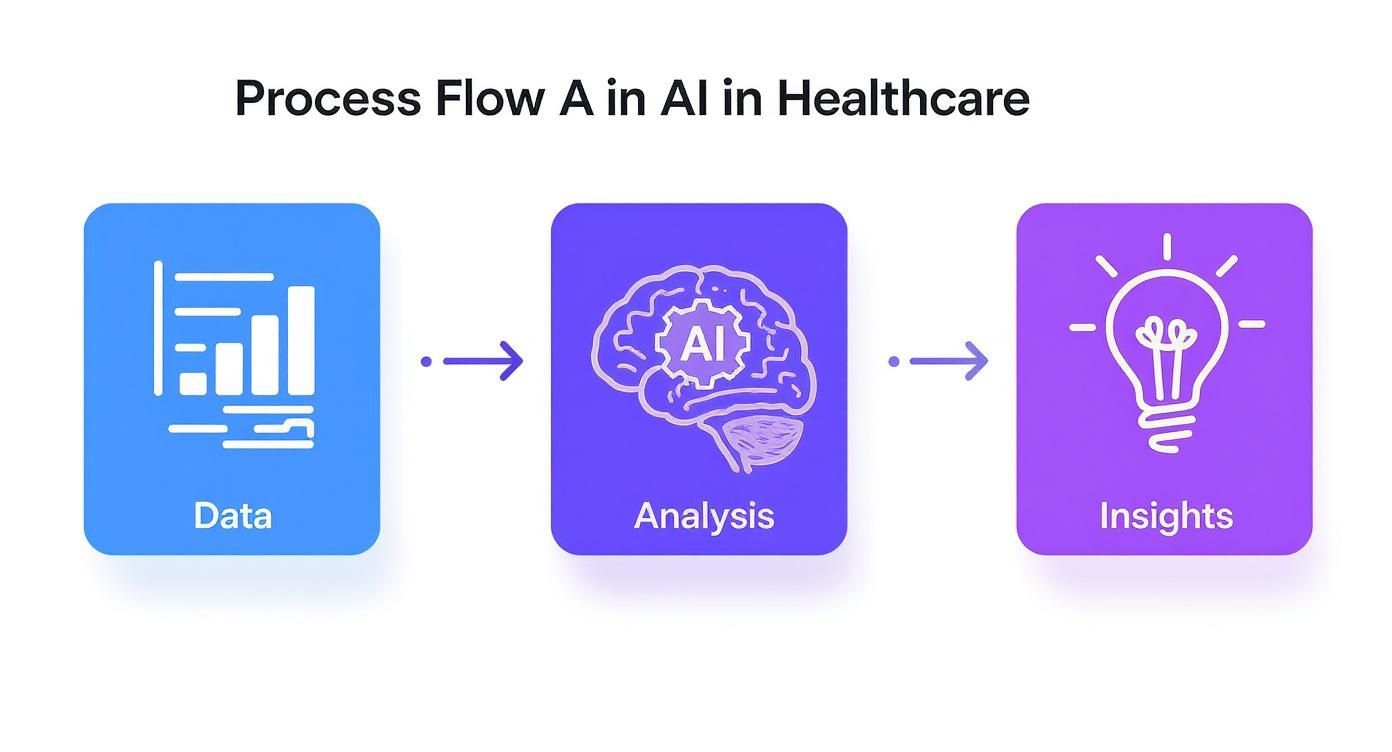
This simple flow—turning a flood of data into proactive care strategies—is the core value of a connected health platform. To make this journey smoother, we've developed a high-level checklist for a Health Cloud project.
SFDC Health Cloud Implementation Checklist
| Phase | Key Activities | Success Metric |
|---|---|---|
| Discovery & Strategy | Define business goals, identify key stakeholders, map current workflows. | A clear project charter with measurable objectives (e.g., "reduce no-shows by 15%"). |
| Planning & Design | Develop a technical blueprint, plan data migration, design integrations. | A signed-off solution design document and a detailed data migration plan. |
| Execution & Build | Configure Health Cloud, develop custom features, conduct user training. | The system is built to spec, and users can confidently perform key tasks. |
| Testing & Validation | Perform User Acceptance Testing (UAT), test integrations, validate data. | All critical business scenarios are successfully tested with zero high-priority defects. |
| Deployment & Go-Live | Final data migration, transition to the new system, provide post-launch support. | A smooth go-live with minimal disruption and a clear support process in place. |
| Optimisation & Review | Monitor user adoption, gather feedback, plan future enhancements. | User adoption rates meet or exceed targets; a backlog of future improvements is created. |
Following a structured plan like this is what separates a smooth rollout from one plagued by delays and budget overruns.
Phase 1: Discovery and Strategy
Before touching the technology, the most critical step is defining what success looks like for your organisation. This discovery phase is about setting a clear vision.
- Define Business Objectives: What specific problems are you solving? Is it reducing patient no-show rates by 15% or streamlining referral management? Your goals must be specific and measurable.
- Identify Key Stakeholders: Assemble a project team including executive sponsors, IT leaders, clinical staff, and administrative representatives. Their early involvement is key to buy-in.
- Map Current Processes: Document existing workflows to identify inefficiencies and opportunities for improvement.
This strategic groundwork ensures your Health Cloud implementation is focused on solving real-world challenges from day one.
Phase 2: Planning and Design
With a clear strategy, it's time to translate your objectives into a concrete technical plan. This is where you map out the architecture, integrations, and data strategies.
A critical component is data migration. Moving sensitive patient information from legacy systems requires a meticulous approach to maintain data integrity and comply with Australian privacy laws.
Best Practice: A successful data migration isn't just copying data. It's about ensuring the data arrives clean, accurate, and ready to power the personalised experiences you want to deliver.
Another crucial element is designing integrations with existing platforms, especially your Electronic Health Record (EHR) system. A seamless connection is non-negotiable for achieving the true 360-degree patient view. For a deeper look at navigating this process, our comprehensive Salesforce implementation guide for Australian businesses offers valuable insights.
Phase 3: Execution and Change Management
The execution phase involves the technical build-out, but it’s equally about preparing your people for change. User adoption is the ultimate measure of success, and it requires a robust change management and training plan.
Your execution checklist should include:
- Configuration and Customisation: Building the Health Cloud environment to match your designed workflows.
- Comprehensive User Training: Developing role-specific training that shows users not just how to use the new system, but why it helps them and their patients.
- Go-Live and Support: Planning for a smooth transition with a dedicated support system to handle questions and issues promptly.
When you frame the implementation as a tool that empowers your team, you build enthusiasm and ensure your people embrace the new system, unlocking its full value.
Partnering for Success in Your Digital Transformation Journey
Implementing Salesforce Health Cloud is a strategic shift towards a more connected, patient-first model of care. The platform offers a clear path to personalised care, streamlined operations, and data-driven insights. However, the journey involves complex data migrations, navigating Australia's strict privacy laws, and customising the system to fit your unique workflows. This is where an experienced Salesforce partner makes all the difference.
Why an Experienced Salesforce Partner Is Essential
An experienced Salesforce partner brings more than just technical setup; we provide real-world project knowledge to help you avoid common pitfalls and achieve a faster return on your investment.
A true partner will:
- Navigate Complexity: We handle the technical challenges of integrating with your existing systems like EHRs and ensure your data is migrated securely.
- Ensure Compliance: We understand the nuances of Australian healthcare regulations and build a solution that meets the highest standards for data security and sovereignty.
- Drive User Adoption: We focus on the human side of change, with training and support to ensure your teams feel confident with their new tools from day one.
The goal is to build a solution that is fully embraced by your team, feeling like a natural extension of your commitment to excellent patient care.
Working with a specialist ensures your investment delivers a platform perfectly aligned with your patient care goals and business objectives. If you're ready to explore what Salesforce Health Cloud could do for your organisation, our team is here to help. Discover how our dedicated Salesforce consulting services can guide you through every step of your digital journey.
FAQ: Common Questions About SFDC Health Cloud
Here are answers to common questions we hear from Australian healthcare decision-makers.
How does SFDC Health Cloud handle Australian data sovereignty and security?
This is a critical concern. SFDC Health Cloud is built on the core Salesforce platform, designed to meet strict global and local standards, including the Australian Privacy Act. Salesforce offers local data residency options, allowing you to store sensitive patient data on servers located within Australia. Combined with advanced encryption and role-based access controls, you can be confident your patient information remains secure, sovereign, and compliant.
Can we integrate SFDC Health Cloud with our existing EMR?
Yes, absolutely. This is one of the platform's greatest strengths. Health Cloud is not designed to replace your core clinical systems like an Electronic Medical Record (EMR). Instead, it acts as a powerful system of engagement that sits on top. Using modern APIs, we create a seamless, two-way data flow, keeping your EMR as the clinical source of truth while SFDC Health Cloud provides the rich, 360-degree patient view needed for personalised engagement.
How customisable is the platform for our specific needs?
Salesforce Health Cloud is highly flexible. While it comes with pre-built healthcare data models and workflows, it is not a one-size-fits-all solution. The platform can be extensively configured to mirror the unique processes of any provider, from aged care facilities and NDIS providers to specialised clinics.
The real value is in its adaptability. We can tailor everything from patient intake forms and care plan templates to automated communication journeys, ensuring the system aligns perfectly with how your team delivers care.
This means the platform grows with you, making it a smart, sustainable investment for the long term.
Ready to see how SFDC Health Cloud could be tailored to solve your organisation's unique challenges? As a leading Australian Salesforce Partner, Adaptal has the hands-on expertise to guide your digital journey. Get in touch for a consultation and let's explore how we can help you deliver truly patient-centric care.