
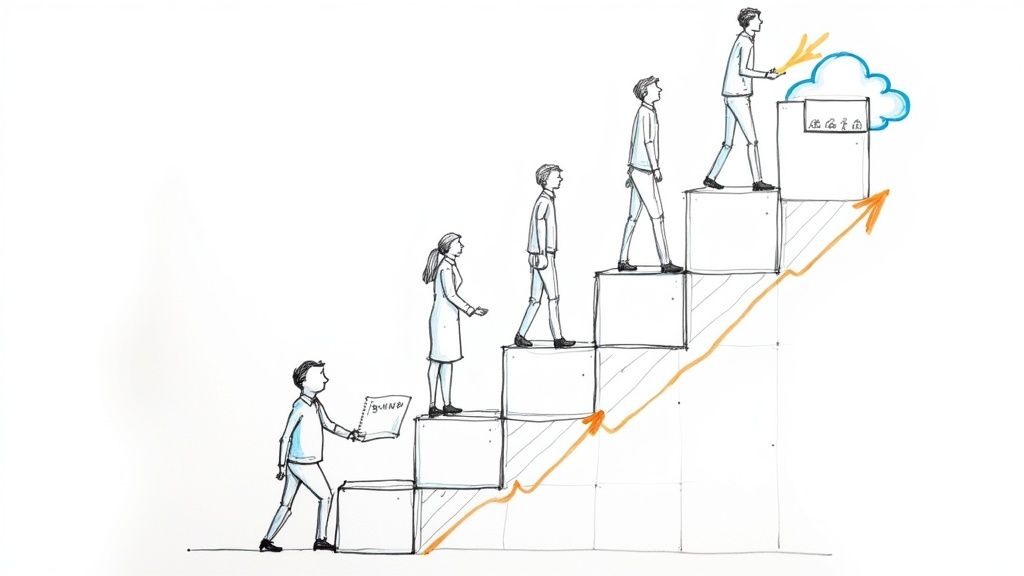
An organisational change management consultant is your strategic partner in ensuring a major technology investment, like Salesforce, delivers its promised return. Their primary role is to manage the human side of change, guaranteeing that a new platform isn't just installed, but is fully embraced and leveraged by your team to achieve business goals.
Why Your Salesforce ROI Hinges on People
Investing in a platform like Salesforce is a significant strategic decision. You're counting on it to streamline sales cycles with Sales Cloud, elevate customer support with Service Cloud, or automate marketing with Account Engagement (Pardot). However, the hard truth is that the technology itself guarantees nothing. Its true power is only unlocked when your team actively and effectively uses it.
Research consistently shows that a staggering 70% of change initiatives fail, not because of technology flaws, but due to employee resistance and poor user adoption.
This is where the real work of digital transformation begins. A "technology-first" approach—focusing solely on configuring the software without a robust plan for the people who must use it daily—is a recipe for a failed project. It creates a massive gap between what your shiny new CRM could do and what your team is actually doing, leading to predictable and costly problems.
Common Pitfalls of a Tech-First Salesforce Implementation
Without a dedicated focus on organisational change, businesses often encounter serious issues that completely undermine their Salesforce investment. These are not minor speed bumps; they are fundamental roadblocks to achieving your business objectives.
From our experience on Salesforce projects, some of the biggest challenges include:
- Plummeting User Adoption: Your sales team reverts to their old spreadsheets because Sales Cloud feels unfamiliar. Service agents ignore new case management flows in Service Cloud because their old routine feels faster or easier.
- Active Team Resistance: When employees feel a change is being forced upon them without their input, they can become vocal opponents. This creates a negative culture that slows down progress and erodes morale.
- Failure to Achieve ROI: It’s a simple equation. When the platform isn't used correctly or consistently, the projected gains in efficiency, data accuracy, and revenue simply don't materialise.
A Salesforce implementation is not an IT project. It's a business transformation project enabled by technology. The focus must be on guiding people through the transition, not just deploying a tool.
Bridging the Gap With an OCM Consultant
An organisational change management consultant is a specialist in closing this exact gap. They don't just manage a project timeline; they manage people's transition from the old way of working to the new. They are experts in human behaviour, communication, and motivation within a business context.
By developing clear strategies to engage, train, and support your staff, they turn potential resistance into active participation. This hands-on approach ensures your team feels heard, prepared, and confident in using Salesforce from day one. In our own projects, this has been the secret sauce that transforms a simple software rollout into a lasting business improvement.
The table below illustrates the stark difference in outcomes.
Salesforce Project Outcomes With vs Without a Change Consultant
| Project Aspect | Without an OCM Consultant | With an OCM Consultant |
|---|---|---|
| User Adoption | Low and inconsistent. Teams often revert to old methods. | High from the start. Users are confident and see the value. |
| Team Morale | Resistance, frustration, and a negative atmosphere. | Positive and engaged. The team feels supported and heard. |
| Project Timeline | Delays caused by resistance and rework. | Stays on track as user-related issues are managed proactively. |
| Training Effectiveness | Generic, one-off training that is quickly forgotten. | Ongoing, role-specific training and support that sticks. |
| Return on Investment (ROI) | Significantly delayed or never fully realised. | Achieved faster and often exceeded due to full platform use. |
Ultimately, a change consultant ensures your investment pays off by focusing on the most critical variable—your people—and equipping them for success.
To see how managing this human element drives tangible results, explore our successful Salesforce implementation case studies.
What a Change Management Consultant Actually Does
Think of an organisational change management consultant as the architect for the human side of your Salesforce implementation. Their role extends far beyond project management; they build genuine momentum and ensure new systems are woven into the daily fabric of how your people work.
They translate the high-level business case for implementing Salesforce into practical, real-world actions that make sense to every single employee.
Their approach is proactive. Instead of waiting for resistance to emerge, they anticipate the sticking points and design strategies to address them head-on. It's a structured, empathetic process that places your team at the centre of the transformation.
This infographic breaks down the core responsibilities a consultant manages to ensure a smooth transition.
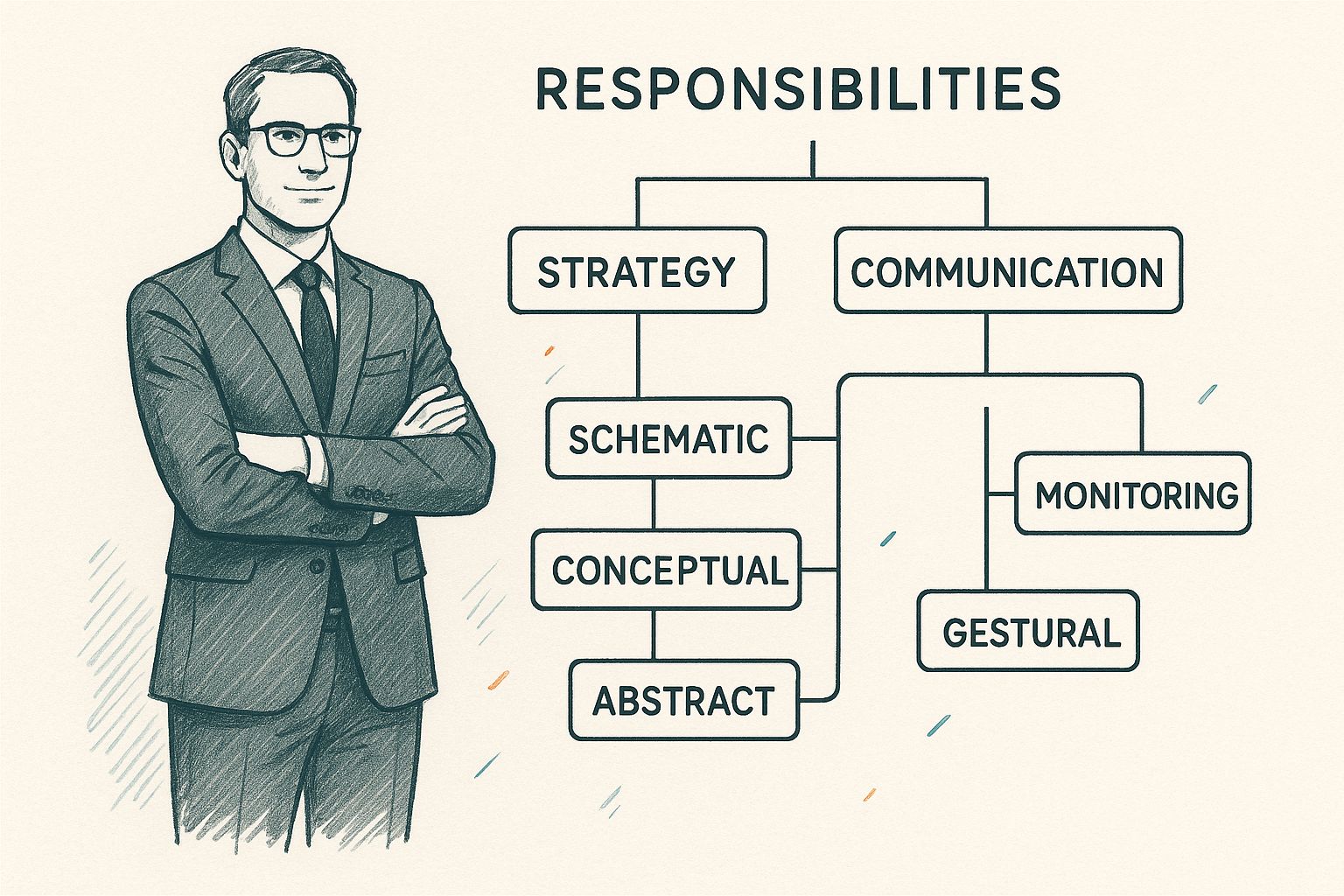
As you can see, their duties flow from foundational strategy and communication all the way through to active monitoring and reinforcement, covering the entire lifecycle of the change.
Analysing Stakeholders and Impacts
The first step is always to understand the landscape. A change consultant doesn't arrive with a one-size-fits-all template; they start by digging deep into what makes your company tick.
This begins with Stakeholder Analysis. The consultant maps out everyone affected by the Salesforce implementation, from executive sponsors to frontline users. They identify key influencers, potential champions who can advocate for the change, and groups who might push back. This allows for targeted, meaningful engagement.
Simultaneously, they conduct a Change Impact Assessment. This is a granular look at what is actually changing in people's day-to-day work. For instance, when you roll out Sales Cloud, how will a salesperson's daily routine look different? With a new Service Cloud setup, what new steps must a support agent follow? This assessment pinpoints shifts in processes, job roles, and skills, forming the blueprint for all subsequent actions.
A consultant’s core job is to answer three critical questions for every employee: "What does this change mean for me?", "Why are we doing this?", and "What support will I get to be successful?". Clarity on these points is non-negotiable for user adoption.
Designing Communication and Training Strategies
With a clear picture of the people and impacts, the consultant builds the support structures. This is where many internal change efforts falter.
A solid Communication Strategy is developed to deliver the right message to the right audience at the right time. This is more than a few company-wide emails. It involves:
- Targeted Messaging: Crafting communications that speak directly to the concerns and motivations of different departments (e.g., sales, service, marketing).
- Feedback Channels: Establishing two-way communication loops so employees can ask questions and voice concerns.
- Consistent Updates: Keeping everyone informed on progress, wins, and timelines to build trust and maintain momentum.
Next, they design practical User Training Programs. Effective Salesforce training isn't a generic feature tour. It’s role-specific and scenario-based, focused on helping people perform their specific jobs better with the new tool. This hands-on approach builds confidence and demonstrates the immediate value of the platform. Understanding the intricacies of organizational culture is crucial here, as it dictates how training is best delivered and received.
Reinforcing and Sustaining New Behaviours
Finally, an expert change consultant knows the job isn't done at go-live. To prevent teams from reverting to old habits, they create Reinforcement Plans designed to make new ways of working stick for the long term.
This can involve several tactics:
- Celebrating early wins to highlight success stories and build positive momentum.
- Gathering user feedback post-launch to make quick, helpful adjustments.
- Coaching managers to effectively lead their teams through the transition.
- Aligning performance metrics and incentives with the desired new behaviours in Salesforce.
By focusing on these core areas, a consultant systematically breaks down barriers to adoption and builds a solid foundation for lasting success. If you're wondering how this strategic guidance fits into your project, learn more about our dedicated Salesforce consulting services that blend technical expertise with this essential, people-first approach.
The Australian Change Management Landscape Today
To make smart decisions about business transformation, you need to understand the current environment. The market for organisational change management consultants in Australia isn't just growing; it's becoming a core component of national business strategy, especially as companies adopt powerful cloud platforms like Salesforce to gain a competitive edge.
What's driving this demand? Major shifts in how Australian businesses operate. The rapid switch to hybrid work, a stronger focus on employee well-being, and pressure to meet sustainability goals are creating complex new challenges. These aren't simple process tweaks; they are fundamental changes to company culture that demand expert guidance.
Key Trends Fuelling Demand for Salesforce Change Expertise
Several interconnected trends are pushing Australian companies to seek specialised change management expertise, particularly for digital transformation projects involving CRM.
As businesses implement Salesforce to unify their sales, service, and marketing data, they quickly discover that the technology is only half the battle. The real challenge lies in getting entire teams to adopt new workflows, trust new data, and collaborate in different ways within the platform.
The organisation change management consulting market in Australia reflects this trend. Valued at around USD 1.63 billion in 2025, it's projected to reach USD 2.18 billion by 2029, demonstrating strong and consistent growth.
This data confirms what we see in our projects every day. Australian businesses are investing heavily in managing the people side of change because they know it directly impacts their bottom line and long-term success.
Why This Matters for Your Salesforce Project
For any organisation using or considering Salesforce, this local market context is vital. It highlights that user adoption struggles are a universal problem, and engaging an organisational change management consultant is now a standard best practice—not an optional luxury.
Ultimately, the return on your CRM investment depends entirely on your team’s ability and willingness to use it properly.
The key drivers fuelling the consulting market are the very problems a change consultant is hired to solve during a Salesforce implementation:
- Remote Work Complexity: Ensuring a distributed team uses Sales Cloud or Service Cloud consistently requires clear communication and standardised training—exactly what a consultant designs and delivers.
- Employee Well-being: A poorly managed tech rollout can cause significant stress. A consultant’s role is to support employees through the transition, protecting both morale and productivity.
- Digital Transformation Goals: To achieve true transformation, you need more than software. You need a partner who can help realign team behaviours and mindsets to leverage the full capabilities of your new platform.
The thriving change management sector in Australia reflects a broader business maturity. Companies here realize that successful innovation is less about the technology itself and more about preparing their people to embrace it with confidence.
The Real Secret to a Successful Salesforce Rollout: Your People
The true measure of a successful Salesforce implementation isn't the go-live date. It’s seeing your team months later, not just using the platform, but mastering it to exceed business goals.
The journey from a skeptical user to a true advocate is powered by one thing: employee engagement. Without it, even the most flawlessly configured CRM is just expensive software gathering digital dust.
The connection is simple: disengaged employees see change as a threat. Engaged employees see it as an opportunity to improve and make their jobs easier. An organisational change management consultant builds that bridge, ensuring the team feels invested in the new system's success from the start.
This principle is so powerful, it even applies to the change experts themselves.
A Lesson From the Consulting World
In the Australian management consulting industry, about 68% of employees report feeling engaged. However, a significant 28% feel their pay isn't competitive, and 20% are considering leaving.
This tells us that feeling valued and treated fairly are non-negotiable for commitment. If the people paid to drive change struggle when these needs aren't met, what hope does any other team have during a major transition?
The lesson for any Salesforce project is clear: your team must feel supported and understand the 'what's in it for me' of adopting the new platform. If they feel the change is happening to them instead of with them, engagement will nosedive.
Turning Sceptics Into Salesforce Champions
This is where an organisational change management consultant truly shines. They use specific, people-first strategies to build a sense of ownership, turning natural resistance into active support.
Here’s how they do it:
- Translating the 'Why' for Everyone: A consultant answers the real question on every employee's mind: "How does this make my life easier?" For a sales rep using Sales Cloud, it means less admin and more selling time. For a service agent in Service Cloud, it’s instant access to customer history to resolve issues faster.
- Building a Volunteer Army of Champions: They identify team members who are naturally curious and positive about the change. By involving them early, they become powerful peer advocates who can build momentum from the ground up.
- Opening Up Two-Way Communication: This isn't about sending more emails; it's about listening. Consultants create safe spaces—feedback sessions, forums, and surveys—where employees can ask tough questions and voice concerns without judgment.
To make this work, you have to foster psychological safety. People need to feel secure enough to speak up, share ideas, and admit they're struggling. This trust is the bedrock of genuine buy-in.
An engaged employee is 87% less likely to leave their company than a disengaged one. During a massive tech shift like a Salesforce rollout, retaining your talent and their institutional knowledge is just as vital as the system itself.
Ultimately, linking your Salesforce project to employee engagement isn’t a soft skill—it’s a hard business requirement. An expert OCM consultant orchestrates this entire process, ensuring your team has the clarity, confidence, and support to not only accept the change but to drive it.
How To Choose The Right Change Management Partner for Salesforce
Selecting the right partner to guide your Salesforce project is as crucial as choosing the technology itself. A top-tier organisational change management consultant isn't just a project manager; they are a strategic guide who ensures your investment delivers tangible results by getting your people on board.
A great consultant doesn’t apply a generic formula. They adapt their approach to your unique company culture, challenges, and goals. They become an extension of your team, dedicated to ensuring your people feel supported, confident, and ready to succeed with Salesforce.
Go Beyond The Standard Checklist
When evaluating potential partners, it’s easy to focus on surface-level criteria. The qualities that truly matter are found when you dig deeper to find a partner who can expertly bridge the gap between a technical rollout and enthusiastic user adoption.
Here are a few key areas to probe:
- Specific Salesforce Experience: Have they guided change for projects involving Sales Cloud, Service Cloud, or other platforms you’re implementing? A partner with direct Salesforce project experience already knows the common user roadblocks and opportunities.
- Methodology and Flexibility: Do they rigidly follow one framework like Prosci or ADKAR, or can they adapt their approach? The best consultants tailor their methods to your organisation's real-world needs.
- Cultural Alignment: Does their communication style resonate with your team? A consultant must build trust and rapport at every level of your business, from the C-suite to frontline staff.
Arm Yourself With Critical Questions
To truly assess if a consultant is the right fit, you need to ask questions that reveal their practical experience and problem-solving skills. Vague answers are a red flag; you want to hear specific, real-world examples from past Salesforce projects.
A solid interview process will help you distinguish true strategic partners from mere box-tickers. As you prepare, our Salesforce Implementation Guide can help frame your project's needs, informing your conversations with potential partners.
Don’t be afraid to push for details. A confident and experienced consultant will welcome the chance to share stories about their successes and, just as importantly, the lessons they’ve learned from challenges.
The following table provides a practical tool to help you evaluate potential partners effectively.
Key Evaluation Criteria for Your OCM Consultant
Use this checklist to evaluate potential Organisational Change Management Consultants for your Salesforce project.
| Evaluation Criteria | Key Questions to Ask | What to Look For in Their Answer |
|---|---|---|
| Measuring Success | "How do you define and measure the success of a change initiative beyond the go-live date?" | Look for answers that go beyond technical metrics. They should mention user adoption rates, proficiency scores, employee feedback, and tying usage to key business KPIs. |
| Overcoming Resistance | "Can you share a specific example of overcoming significant user resistance in a Salesforce project similar to ours?" | A strong answer will detail the root cause of the resistance, the specific strategies they used (e.g., targeted communication, champion networks), and the measurable outcome. |
| Engaging Leadership | "How do you ensure senior leaders remain visible and active sponsors throughout the entire project?" | They should describe concrete tactics like coaching leaders on their role, preparing them for key communications, and establishing a clear governance structure. |
| Sustaining Change | "What strategies do you use to reinforce new behaviours and prevent teams from reverting to old habits after you're gone?" | Listen for plans that include post-launch support, feedback loops for continuous improvement, and strategies for embedding new processes into performance management. |
Choosing the right organisational change management consultant is about finding a partner who can build bridges, foster trust, and make your people the heroes of your transformation story.
Your Partner for Lasting Salesforce Adoption
A successful Salesforce transformation isn't just a project; it's a journey that hinges on your people. Throughout this guide, we've highlighted the common hurdles businesses face and how an organisational change management consultant provides the solution, leading to higher ROI, boosted morale, and user adoption that sticks.
An expert OCM consultant is the key to ensuring your technology investment delivers lasting value. They work to ensure your team is ready, willing, and able to embrace the new way of working, turning a disruptive software rollout into a smooth, successful evolution of your business.
From Technical Rollout to True Transformation
The core message is clear: installing Salesforce isn’t enough. To realize its full value, you need a partner who understands both the technical capabilities of the platform and the critical human side of change. This dual expertise separates a standard implementation from a genuine business transformation.
As an experienced Salesforce partner, we have built our practice on mastering both sides of that equation. Our approach weaves technical excellence with proven change management strategies from day one. We don't just configure your system; we build your team’s confidence and skill to use it brilliantly.
A successful change initiative isn't just about the technology going live. It's about empowering your employees to become the drivers of its success, ensuring the new processes become second nature and deliver results long after the project is complete.
This people-first philosophy is at the heart of how we operate. We’re ready to guide your organisation through its Salesforce journey, ensuring it is not only smooth but also delivers the business outcomes you’re targeting. Our goal is simple: to help you get the most out of your investment by making your people the heroes of the story.
To learn more about the experts who can lead this journey, meet our dedicated Salesforce consulting team. We invite you to discuss how we can become your partner for lasting Salesforce adoption and success.
Salesforce Change Management FAQs
When facing a major business shift like a Salesforce implementation, it’s natural to have questions. Here are answers to some of the most common queries we hear from leaders considering an organisational change management consultant.
When Is the Right Time to Bring in a Consultant?
As early as possible. The ideal time to engage an organisational change management consultant is at the very beginning of your Salesforce project, during the initial planning and discovery phases. Bringing a consultant in from day one allows them to integrate the change strategy directly into the project plan. This proactive approach is far more effective than trying to fix user adoption problems after they’ve already appeared. Early involvement means they can conduct vital stakeholder analysis and impact assessments, which form the foundation of a successful communication and training plan.
How Should We Budget for Change Management?
Think of your OCM budget as a core component of your total Salesforce investment, not an optional add-on. While every project is unique, a good rule of thumb is to allocate 10-15% of your total technology project budget to change management activities. This investment covers critical success factors like strategic planning, communications development, tailored training programs for platforms like Sales Cloud or Service Cloud, and post-launch support and reinforcement. Treating this as a fundamental project cost is the best way to protect your entire technology spend and maximize its chances of success.
How Do You Measure the ROI of Change Management?
The ROI of change management is measured by how quickly your team adopts the new system and how effectively they use it to achieve business goals. An experienced consultant will work with you to establish clear, measurable metrics before the project kicks off.
The real win in change management isn’t just a smooth launch. It’s measured by how effectively your team uses Salesforce to drive results—like a stronger sales pipeline, faster case resolution times, or more accurate forecasting.
To demonstrate clear ROI from our Salesforce projects, we often track metrics such as:
- User Adoption Rates: Are people logging in? Are they correctly using key features in Sales Cloud or Service Cloud?
- Employee Proficiency: Can your team perform daily tasks in the new system efficiently? This is assessed through skills tests and observation.
- Business KPIs: We draw a direct line between platform usage and the business metrics you aim to improve.
- Employee Feedback: We use surveys and focus groups to monitor team satisfaction, confidence, and morale throughout the transition.
Ultimately, a strong ROI is achieved when your team sees Salesforce not as another task, but as an essential tool that helps them succeed in their roles.
Ready to ensure your Salesforce investment delivers on its promise? The team at Adaptal combines deep Salesforce expertise with proven change management strategies to guide your people through a successful transformation. Contact us today for a consultation.