
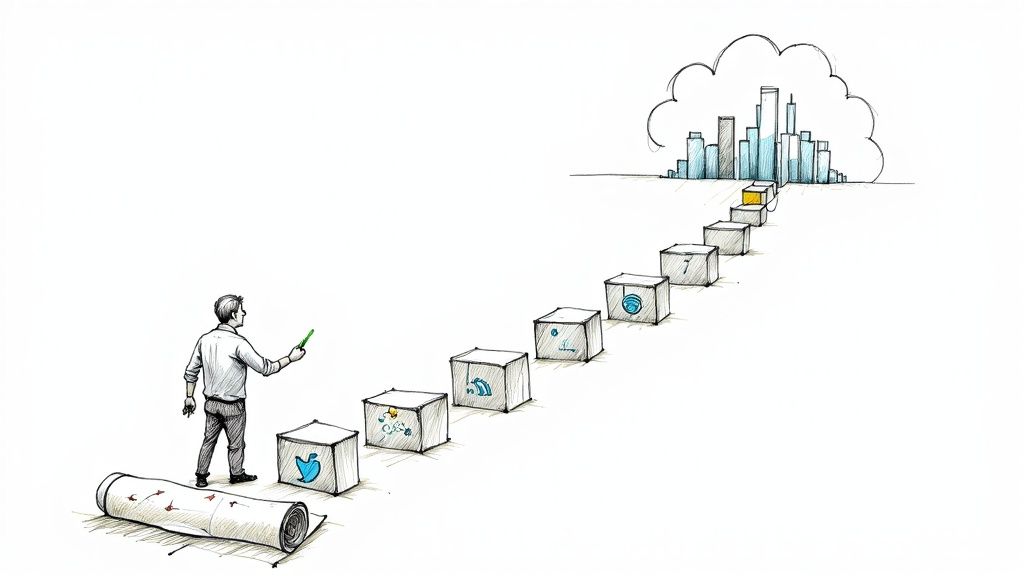
Investing in a powerful platform like Salesforce is a huge step, but the technology itself doesn't guarantee a successful digital transformation. The real challenge, and the reason many CRM projects fail to deliver their expected ROI, is managing the human side of change. This is the business problem we solve.
This is where consulting change management acts as the crucial bridge between your new Salesforce system and the people who have to use it every single day to drive business results.
The Business Challenge: Why Technology Alone Cannot Guarantee Transformation
Let's be direct—investing in a cutting-edge CRM like Salesforce doesn't automatically improve your business. Many organisations learn this the hard way, launching a powerful new system only to watch user adoption flatline. The problem isn't a bug in the software; it's a failure to account for your people.

The Business Challenge: Picture a sales team that has spent years perfecting its own system of intricate spreadsheets and personal notebooks. Suddenly, you ask them to switch to Salesforce Sales Cloud. Without a clear strategy to guide that shift, you're guaranteed to hit a wall of resistance. The team won't see the new CRM as a tool to help them sell more; they'll see it as a roadblock to their familiar way of doing things. This is a classic adoption challenge that a Salesforce partner can help you overcome.
The Human Element of Technological Change
True digital transformation only happens when you intentionally manage the 'people side' of the equation. This goes beyond a single training session. It’s about understanding your team's daily realities, their concerns, and what motivates them.
Effective consulting change management tackles these critical human factors head-on:
- Addressing Resistance: Proactively identifying and easing the anxieties and pushback that naturally occur when routines change.
- Building New Habits: Creating a structured path that helps employees move from old, inefficient habits to new, more productive ones within the Salesforce environment.
- Aligning Workflows with Goals: Making sure the new technology simplifies—not complicates—the daily tasks your team performs to hit business targets.
This is why a "go-live" date isn't the finish line; it's the starting point. Without a solid plan to manage this transition, even the most sophisticated Salesforce implementation can fall flat, leading to poor user adoption and a frustrating lack of return on your investment.
"The implicit assumption of toggling between periods of “change” and of “business as usual” now seems quaint. At this point it’s clear that “business as usual” has left the building and it’s not coming back."
To truly achieve lasting success, it's vital to think strategically about building a comprehensive digital transformation roadmap. As a Salesforce partner, we've seen that managing this alignment is the single biggest factor in a project's success. You can dive deeper into how expert guidance makes a difference in our article on the role of Salesforce development consultants in digital transformation.
The Salesforce Solution: What Successful Change Management Looks Like
Let's cut through the jargon. Think of a change management consultant as an expedition guide for your company's Salesforce journey. A good guide doesn’t just point to your business goals and wish you luck. They help create the map, equip the team, anticipate rough terrain, and ensure everyone arrives together, successfully.
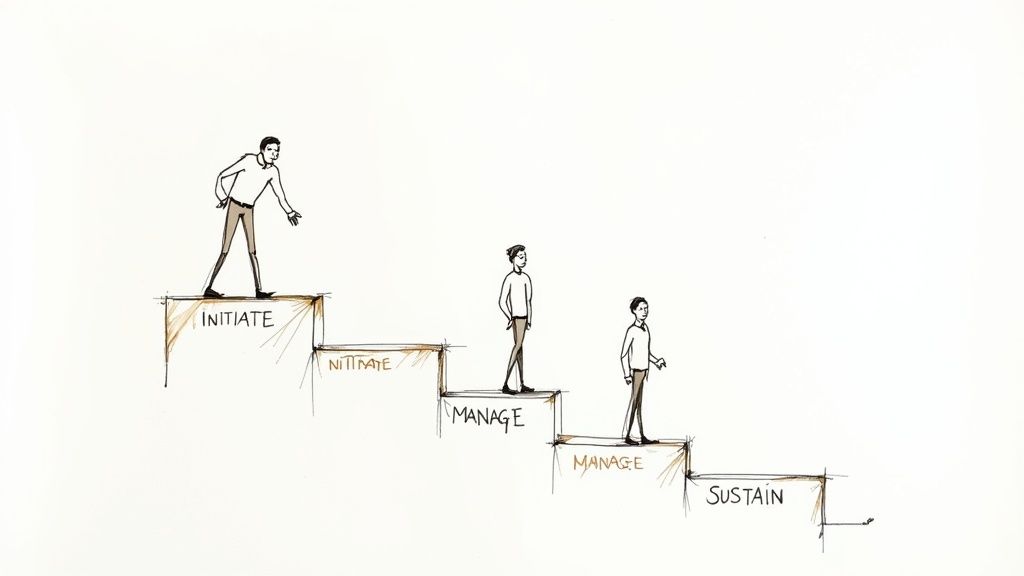
In practice, this means getting beyond a "launch and hope" strategy. Successful change management is an active, hands-on process that starts long before your Salesforce go-live date and continues well after.
From Resistance to Readiness
The first step for a consultant is to gauge your team's readiness for change. This isn't just about technical skills; it's about the human dynamics at play. We identify potential roadblocks—from a sales manager protective of their old spreadsheet system to a service team anxious about new case protocols in Service Cloud.
A skilled consultant translates the "why" behind the change into terms that matter to each department. For the sales team, it's not about forcing a new CRM on them. It’s about showing them how Salesforce Sales Cloud will eliminate manual data entry, automate lead scoring, and ultimately help them close more deals, faster.
The real job is to turn abstract business goals into tangible, personal wins for every user. When people see how the new system makes their specific job easier and more rewarding, adoption stops being a battle.
This people-first approach is vital. The broader Australian consulting services market, currently valued at around USD 9.1 billion, is expected to skyrocket to nearly USD 18.8 billion by 2034. This growth is driven by the need for expert guidance during major digital projects, highlighting how critical support is for organisations adopting platforms like Salesforce.
Building Competence and Confidence
Once the team is on board with the vision, the focus shifts to building skills and confidence through targeted training and solid support—not generic, one-size-fits-all sessions.
Effective Salesforce training is:
- Role-Specific: A sales rep needs a different learning path than a marketing manager using Account Engagement (formerly Pardot). The training must be directly relevant to their daily tasks.
- Practical and Hands-On: People learn by doing. A great plan includes sandbox environments where teams can practice new workflows without the fear of breaking the live system.
- Ongoing and Accessible: Support doesn't vanish after week one. It involves creating a library of resources, establishing a network of 'super-users', and having clear channels for questions.
By understanding the structured methods for handling big shifts, organisations can ensure a much smoother ride. You can learn more about these approaches by looking into IT change management processes. Ultimately, the goal is to empower your team to not just use the new Salesforce tools, but to master them. That's the difference between forced compliance and enthusiastic adoption.
A Practical Framework for Salesforce Change Management
Successful change is the result of a deliberate, structured plan. For a Salesforce implementation, this framework ensures every step—from initial vision to long-term user adoption—is handled with care.
This journey can be broken down into a clear, three-stage process.
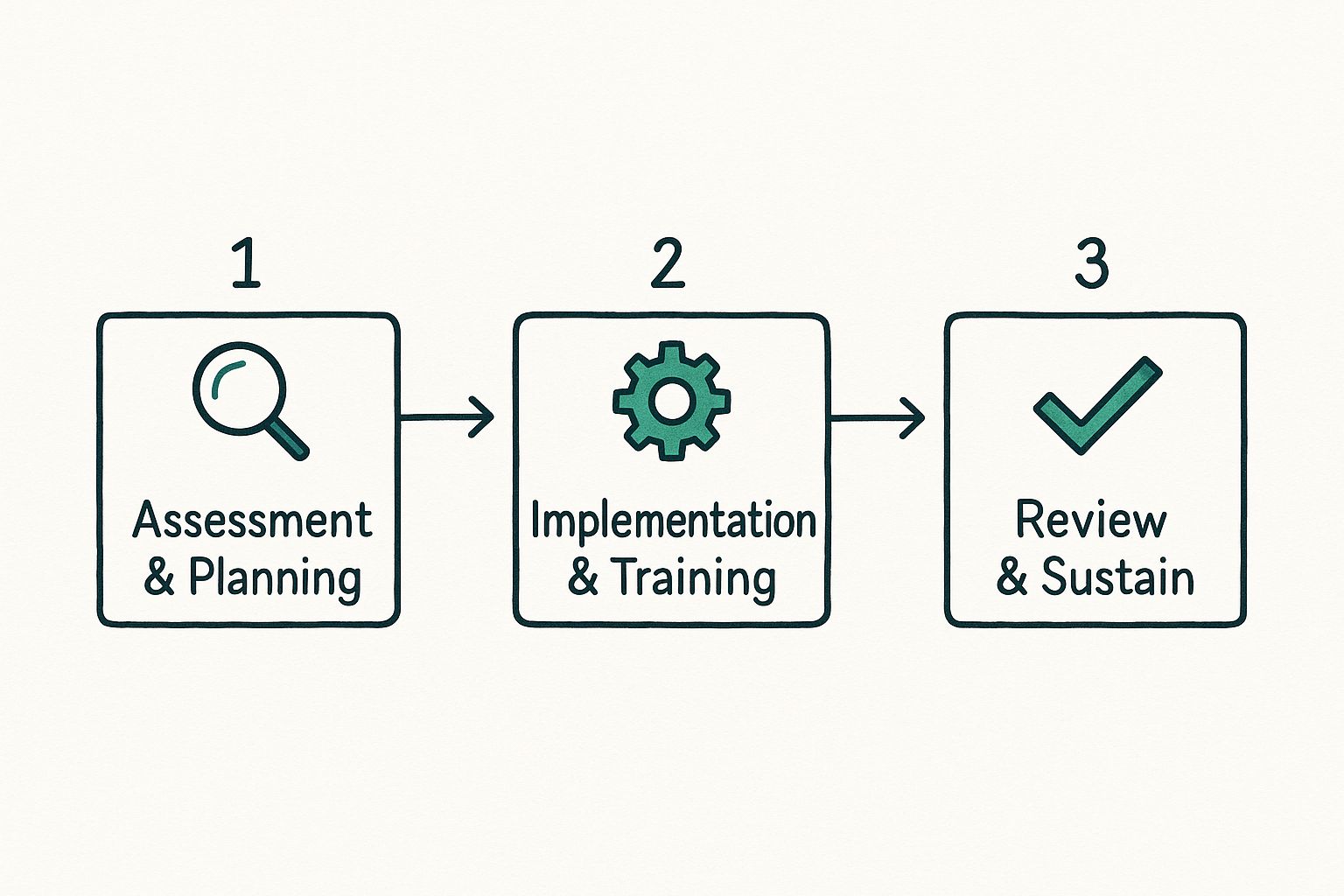
This simple flow—Assess, Implement, and Sustain—is the backbone of any change initiative that works.
Defining the Vision and Securing Sponsorship
The journey starts with a clear vision. What business problem are you solving with Salesforce? Are you aiming to shorten the sales cycle, reduce customer service response times, or gain real insights from your marketing data? This vision must be simple, compelling, and tied to measurable results.
Even more crucial is executive sponsorship. This is the single biggest factor in a change project's success. It's not just a signature on the budget; it’s an active, visible leader who consistently communicates the project's importance and clears obstacles for the team.
Mapping Stakeholder Impact and Communication
Once the vision is locked in, we map how this change will impact different people across the company. A Salesforce rollout lands differently depending on the team:
- Sales Teams: Their day-to-day in Sales Cloud will change, from tracking leads to forecasting deals.
- Service Agents: They'll use new case management workflows in Service Cloud, affecting everything from first-call resolution to CSAT scores.
- Marketing Professionals: They'll work with new campaign tools and analytics inside platforms like Account Engagement (Pardot).
Understanding these unique impacts allows a consulting change management expert to build a targeted communication plan. This plan should leverage Salesforce's own tools, like Chatter, to create open forums where people can ask questions and give feedback.
One of the biggest mistakes we see is companies sending generic emails about "digital transformation." Real communication speaks to each team in their own language, answering the all-important question: "What's in it for me?"
Developing Role-Based Training and Support
After clear communication sets the stage, the focus shifts to building skills. Forget generic, lecture-style training—it doesn’t work. Learning must be tailored to specific roles and delivered in a way that sticks.
This is where Salesforce’s own learning tools shine. A solid training program should include:
- Customised Trailhead Modules: We build specific learning paths on Trailhead that walk users through the exact processes they'll use daily, including hands-on challenges in a safe sandbox environment.
- Live, Hands-On Workshops: These sessions are built around real-world business scenarios, giving teams a chance to practice new workflows with an expert guide.
- A Network of "Super Users": By empowering internal champions in each department, you create a built-in support system for everyday questions, taking the load off your IT team.
The Salesforce Change Management Blueprint
This table breaks down the key phases, showing how strategic objectives are translated into actionable steps using Salesforce's own toolset, with clear metrics to gauge success.
| Phase | Objective | Key Activities with Salesforce Tools | Success Metric |
|---|---|---|---|
| 1. Assess & Plan | Define a clear vision, secure leadership buy-in, and understand stakeholder needs. | Conduct stakeholder interviews and workshops. Use Salesforce Surveys to gauge readiness. Define KPIs in Salesforce Reports & Dashboards. | >80% executive alignment on project goals. Clear, documented business case with measurable outcomes. |
| 2. Implement & Train | Build user competence and confidence through targeted education and communication. | Launch custom Trailhead modules for role-specific training. Use Chatter for ongoing communication and Q&A. Run hands-on workshops in a Salesforce Sandbox. Empower a network of Super Users. | >90% completion rate for mandatory training modules. High engagement levels (likes, comments, questions) on Chatter posts. |
| 3. Sustain & Optimise | Drive long-term user adoption and continuously improve system performance. | Deploy Salesforce Surveys for post-launch feedback. Create dashboards to monitor user adoption rates. Use feedback to identify and deliver targeted "refresher" training. Establish a formal process for new feature requests. | Consistent upward trend in user login rates and key activity metrics. >75% positive user satisfaction score post-launch. |
This structured approach ensures that every aspect of the change is managed, from high-level strategy down to the individual user experience.
Establishing Feedback Loops for Continuous Improvement
The "go-live" date isn't the finish line. It’s the starting line for a new way of working. To ensure the change sticks, you need ways to gather feedback and make ongoing improvements.
By using Salesforce Surveys or simple feedback forms, you can regularly check the pulse of your users. This data provides priceless insights for tweaking workflows, identifying extra training needs, and showing your team that their voice matters. This continuous feedback loop is what drives deep, lasting user adoption and truly maximises the return on your Salesforce investment.
How Salesforce Can Power Your Change Strategy
It's easy to see Salesforce as just another piece of technology your team has to learn. But what if Salesforce wasn't just the change you're introducing, but the very engine you use to drive that change?
A savvy change strategy weaves your initiatives directly into Salesforce's features, making the new way of working the most natural—and easiest—path for everyone.
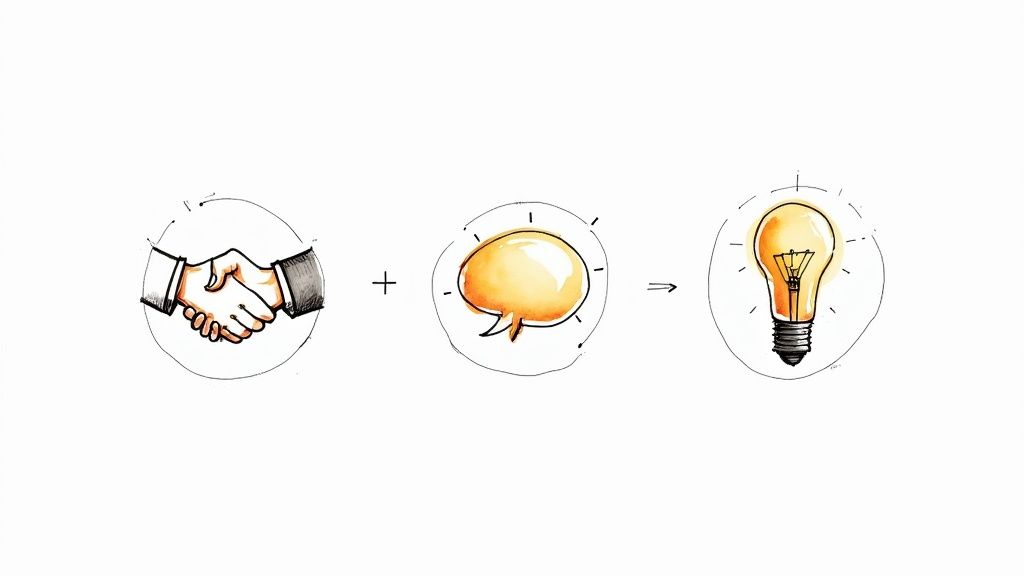
Case Study Example: Before Salesforce, reporting is often a manual slog. A sales team pulls figures from one spreadsheet, service managers have another, and marketing uses a different platform. Proving the ROI on anything new is a painful, time-consuming mess. By building your change management plan directly into your Salesforce setup, you turn the platform into an active partner in its own success. This makes the change tangible and visible in everyone's day-to-day work.
Making Progress Visible with Dashboards and Reports
One of the fastest ways to get people on board is to show them the new system works. Salesforce Reports and Dashboards are game-changers in any change management project.
Forget waiting for manual reports. You can build real-time dashboards that show exactly what’s happening, right now:
- User Adoption Metrics: See who’s logging in, creating records, and using key features. This instantly tells you which teams are embracing the change and who might need more support.
- Performance KPIs: Display sales pipeline growth in Sales Cloud or case resolution times in Service Cloud, creating a direct link between using the platform and hitting business goals.
- ROI Tracking: Show executive sponsors the money. Visualise how new processes are impacting revenue, efficiency, or customer satisfaction, giving them clear proof their investment is paying off.
This immediate visibility shifts conversations from gut feelings to data-driven facts.
Building a Collaborative Support Community
Change can feel isolating, but it doesn't have to be. You can build a living support network right inside Salesforce with Chatter. Think of it as your company's internal social tool, perfect for creating a community where people can help each other.
By setting up dedicated Chatter groups for different teams, you create a space where employees can ask questions, share quick tips, and celebrate small victories. This peer-to-peer support system not only resolves issues faster but also builds a powerful sense of shared ownership.
This approach takes a huge weight off your IT support team and allows your "super users" to step up. Seeing a colleague share a success story is often more impactful than any top-down email. In fact, many of the organisations in our Salesforce case studies pinpointed their internal Chatter community as a key ingredient for long-term adoption.
Enabling Continuous and Self-Paced Learning
Great training isn’t a one-time event; it's a continuous journey. Trailhead, Salesforce’s free online learning platform, is a brilliant tool for this. It allows us to create custom learning paths, called Trailmixes, tailored to different roles in your business.
A new sales rep can jump into a module on lead management in Sales Cloud, while a service agent hones their skills on case escalation in Service Cloud. The training is always relevant and immediately useful.
We then take it a step further by using in-app guidance and validation rules to gently nudge people along. Pop-up prompts can walk users through a new workflow, while validation rules ensure crucial data is entered correctly. It's a smart combination of education and enforcement that helps make the right way of working feel like second nature.
Understanding the Australian Business Landscape
Navigating a digital transformation in Australia requires an understanding of our unique market dynamics. A strategy that works overseas can fall flat here if it doesn't account for local context. This is critical for any successful Salesforce implementation.
The pressure on Australian small and medium-sized enterprises (SMEs) to modernise is immense. As businesses scale, old methods of managing customer relationships—like spreadsheets and disconnected systems—can’t keep up. This creates a powerful need for an integrated platform like Salesforce to provide a single source of truth.
The Growing Demand for Local Expertise
The demand for expert, on-the-ground guidance is a major trend. The management consulting sector in Australia is already valued at around USD 5.25 billion and is projected to hit USD 7.37 billion by 2030, with technology consulting leading the charge. You can get a closer look at these trends in recent industry reports on the Australian management consulting market.
This growth highlights that tackling complex technology projects requires specialised skills. A local consulting change management partner understands the specific pressures Australian businesses face, from our regulatory environment to the competitive landscape.
Choosing a local Salesforce partner means your strategy is built with an understanding of Australian business culture, communication styles, and the specific hurdles your teams face every day.
How Local Business Culture Shapes Adoption
Australian business culture is often a blend of direct and collaborative, but teams can be cautious about big operational changes. They are likely to resist top-down mandates if the day-to-day benefits aren't clearly communicated.
A change management strategy that works here must be built on:
- Practical Demonstrations: Showing teams exactly how Sales Cloud will reduce their admin work or how Service Cloud will help them solve customer issues faster is far more powerful than a high-level presentation.
- Collaborative Planning: Involving key team members in the planning process creates ownership and helps spot potential roadblocks early.
- Clear, Honest Communication: Australians appreciate being told how it is. A solid plan addresses concerns head-on and sets realistic expectations about the transition.
Understanding these cultural nuances is vital for a change plan that resonates with your team. For a deeper dive, check out our complete Salesforce implementation guide for Australian businesses.
Viewing Your Consultant as a Strategic Investment
It’s easy to see a change management consultant for your Salesforce project as just another line item on the budget. But thinking of it as an "extra cost" misses the point. This isn't an expense; it’s a strategic investment to protect and multiply the return on your significant technology spend.
You're not just hiring help; you're making a calculated decision to de-risk your digital transformation and ensure it delivers on its promises.
De-Risking Your Salesforce Investment
At its core, a consultant’s job is to ensure your project succeeds by driving user adoption. When your team fully embraces and uses Salesforce, you start seeing the tangible benefits that justified the investment.
This is about avoiding the common scenario where a new CRM becomes an underused, expensive database. Instead, you get real, measurable business outcomes.
Investing in consulting change management is an act of foresight. It’s the difference between simply installing new software and successfully embedding a new, more effective way of working into your company’s DNA.
By focusing on the human factors from day one, you build a foundation for long-term success. Our Salesforce consulting services are built specifically to provide this strategic oversight.
Achieving Tangible Business Outcomes
The results of this investment show up in clear, measurable ways. Bringing in a change management expert directly leads to:
- Faster User Adoption: A structured approach gets your team using the system correctly from the get-go, shortening your time-to-value.
- Minimised Productivity Dips: Change always causes some disruption. A consultant’s job is to manage this transition smoothly, reducing the typical drop in productivity.
- Dramatically Improved Data Quality: Proper training and reinforced processes mean users input clean, accurate data. This transforms your Salesforce reports into reliable tools for critical business decisions.
Despite the proven value, Australia's management consulting industry has faced unique pressures. While the market is estimated at a hefty AUD 45.9 billion, shifts in government spending have aimed to reduce reliance on external consultants. However, for businesses taking on complex digital projects, the strategic value of specialised external expertise is as crucial as ever, a trend you can explore in more detail through industry analysis on the Australian management consulting sector.
Ultimately, effective consulting change management ensures you hit the core business goals that drove your Salesforce project. Whether you wanted to boost sales, improve customer service, or get clearer marketing insights, managing the human element turns those goals into reality.
If you’re ready to ensure your digital transformation delivers on its promise, let’s talk.
Salesforce Change Management FAQs
When navigating a big technology shift like a Salesforce rollout, questions are normal. Here are the most common ones we hear from our clients, with answers drawn from our experience as a dedicated Salesforce partner.
What is the biggest mistake in Salesforce change management?
The single biggest mistake is underestimating the human element. Organisations pour energy into the technical implementation—configuration, data migration, go-live—and treat change management as an afterthought. They might run a single training session and assume everyone will get on board.
In reality, without a strategy to manage resistance, communicate the ‘why,’ and build new habits, even a perfectly built Salesforce system will suffer from low user adoption.
Lesson Learned: A successful Salesforce project isn't just about launching new software; it's about embedding a new way of working into your company's culture. Forgetting this is the fastest way to undermine your investment.
How do you measure the success of a Salesforce change initiative?
Success in consulting change management is about tracking real-world results using data right inside your Salesforce org.
We focus on key metrics that paint a clear picture:
- User Adoption Rates: Are people using the system? We track login frequency, record creation (leads, cases), and key feature usage in Salesforce dashboards.
- Data Quality: We look for improvements in data completeness and accuracy. High-quality data is a direct sign of correct system usage.
- Productivity Metrics: Are sales cycles shorter? Are customer service cases resolved faster? We measure tangible business outcomes that align with your initial goals.
- User Feedback: We use Salesforce Surveys to regularly check the pulse and gauge employee sentiment about the new platform.
By blending these metrics, we prove the ROI of the change management effort and make data-driven adjustments to ensure long-term success.
How long does a change management engagement last for a Salesforce project?
There’s no one-size-fits-all answer; the timeline depends on the scale of your project and the complexity of your organisation. A common myth is that change management stops on go-live day.
For a typical Salesforce project, the most intensive work happens in the months leading up to and immediately after launch—often spanning three to six months. But real success comes from sustained effort. The best engagements include ongoing support for several months post-launch to monitor adoption, gather feedback, and offer refresher training. This turns new processes into permanent habits, not just temporary fixes.
Ready to make sure your Salesforce investment delivers its full potential? At Adaptal, we are a Salesforce partner that combines technical expertise with a deep understanding of the human side of change. We partner with you to create a strategy that drives real user adoption and achieves lasting business results.
Discuss your Salesforce project with our change management experts today.