

Investing in a powerful platform like Salesforce is a strategic move, but it's only half the battle. The real ROI comes from high user adoption and tangible business results—and that’s where many projects fall short without a smart approach to the human side of change. This is where a consultant for change management becomes your most valuable player, bridging the gap between your technology investment and genuine organisational transformation.
Why Your Salesforce ROI Hinges on Change Management
Putting a significant investment into Salesforce Sales Cloud or Service Cloud is a major financial commitment. However, the technology itself doesn't guarantee a return. From our project experience, the most common reason for a disappointing ROI isn't a fault in the software; it's low user adoption.
When your team doesn’t fully embrace the new CRM, your customer data stays siloed, sales processes remain clunky, and the game-changing benefits you were promised never materialise.
This is exactly where change management consulting proves its worth. It’s about more than just running a few training sessions. It’s about implementing a dedicated strategy to guide your people through the human side of a digital transformation, ensuring your Salesforce solution delivers real value.
From Simple Training to True Transformation
A consultant for change management focuses squarely on the people and processes wrapped around your new Salesforce platform. They systematically tackle the core challenges that so often derail technology projects:
- Overcoming Resistance: They identify why employees might be hesitant to adopt the new system and create targeted strategies to get them genuinely on board.
- Building New Habits: It’s all about helping teams move away from old comfort zones (like those endless spreadsheets) and embedding new, smarter workflows powered by Salesforce into their daily routines.
- Communicating the 'Why': They clearly articulate the benefits of the new CRM—not just for the company, but for how it improves each person's specific role.
- Ensuring Change Sticks: They help create a supportive environment with ongoing resources and internal champions to maintain momentum long after the initial launch.
By focusing on these human factors, a consultant ensures your Salesforce platform isn't just another tool that's available—it becomes a system that’s actively used, valued, and central to how you do business. As your trusted Salesforce partner, we ensure this focus on adoption de-risks your investment and delivers the business outcomes you planned for.
The Role of a Change Management Consultant in a Salesforce Project
So, what exactly does a change management consultant bring to a Salesforce implementation? Think of them as the architects of your team’s transition. While your technical experts are busy configuring Sales Cloud or Service Cloud, the change consultant is designing the human experience around it. Their job is to make sure the new system isn't just functional but fully embraced by your team.
They are the strategic advisors who manage the people side of your digital transformation with the same rigour as the technical build. This professional guidance is critical for hitting high user adoption rates and achieving a strong return on your Salesforce investment. It’s no surprise the change management consulting market in Australia is projected to hit USD 1.63 billion by 2025.

Core Responsibilities of a Salesforce Change Consultant
A great consultant’s role is much deeper than just sending out project updates. They get right into the thick of it, understanding your organisation's culture and preparing your people for the upcoming changes.
Here's what that looks like in a Salesforce project:
- Stakeholder Analysis: They don't just identify stakeholders; they do a deep dive to find the key influencers, potential champions, and pockets of resistance within your teams. This groundwork allows them to create tailored communication strategies that address specific concerns and build genuine momentum for the Salesforce rollout.
- Strategic Communication: The consultant is responsible for crafting and delivering a communication plan that clearly explains the 'why' behind the Salesforce implementation. They connect the project's big-picture goals—like improving customer experience or streamlining sales—to the real-world benefits for individuals and their teams.
- Targeted Training Design: Forget generic, one-size-fits-all training sessions. They develop programs that are laser-focused on actual day-to-day workflows within Salesforce, making the learning process relevant, practical, and immediately useful for every user, from sales reps to service agents.
A massive part of a consultant's job is driving culture change and organizational alignment across the business. By weaving these practices into the project from day one, they ensure the new Salesforce system becomes a natural, indispensable part of how your company operates. This is where the expert guidance from a dedicated Salesforce consulting team turns a simple technology rollout into a true business evolution.
A Proven Framework for Salesforce Change Management Success
Effective change management isn't an abstract theory; it's a structured, practical approach. At its core, it balances three critical pillars: People, Process, and Technology. A seasoned change management consultant uses this framework to build a solid roadmap for your Salesforce implementation, ensuring no crucial element is missed. It's this balanced approach that truly de-risks the project and gets your team on board.
This simple hierarchy shows how a consultant thinks about a change strategy. It all starts with a deep assessment before branching out into communication and training for your Salesforce project.
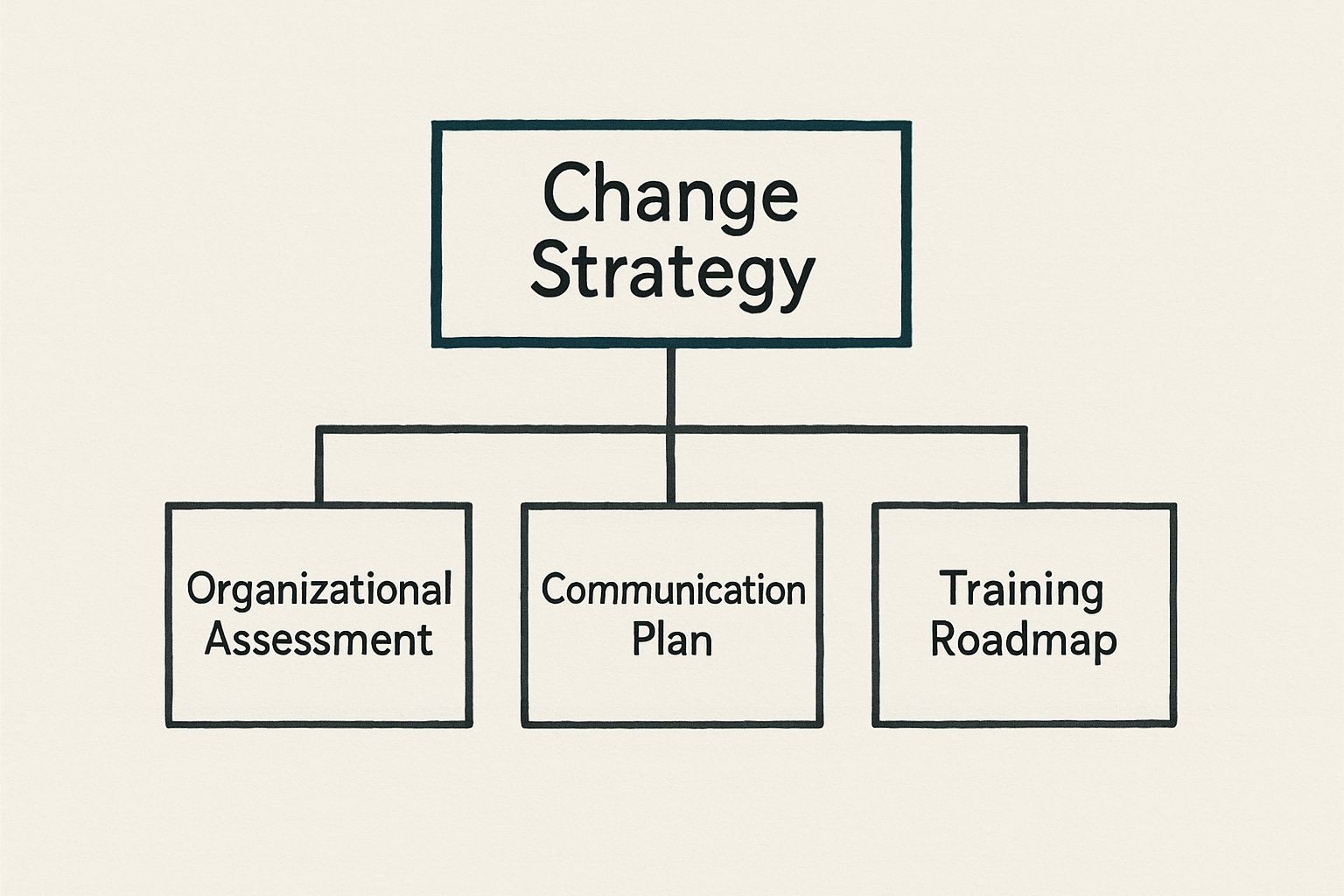
As the visual shows, a successful plan is built on understanding the organisation first. Only then can you communicate and train in a way that actually resonates with users and drives adoption of the new CRM.
People: The Heart of Salesforce Adoption
This pillar is all about your team. A consultant’s first move is often to secure visible executive sponsorship. When leaders are championing the Salesforce project, it sends a powerful signal about its importance. They also find and empower internal champions—enthusiastic users who can build support from the ground up and help their peers, making the change feel like a shared goal, not a top-down mandate.
Process: Transforming How Work Gets Done with Salesforce
Next, we look at the 'how'. A consultant meticulously maps your current workflows to pinpoint friction points and inefficiencies. They then collaborate with your team to redesign these processes, tapping into Salesforce's automation capabilities to eliminate tedious manual tasks. The goal is to create streamlined, logical workflows within the CRM that genuinely make everyone's job easier. You can find out more about this in our complete Salesforce implementation guide for Australia.
The most powerful shift happens when new processes are co-designed with the users themselves. This collaborative approach creates a sense of ownership and ensures the final Salesforce solution solves real-world problems your team actually faces.
Technology: Salesforce as the Enabler, Not the Dictator
Finally, the technology itself must serve the people and the processes—not the other way around. A change management consultant ensures the Salesforce user experience is intuitive and easy to navigate. To make adoption stick long-term, they also help craft effective training strategies, including designing online courses that users actually complete and find valuable. This guarantees the platform is configured to support your new, improved ways of working, rather than dictating them.
Case Study: How We Sparked a Sales Revolution with Salesforce
Here’s a real-world story of how our change management consultants helped an Australian professional services firm transform its sales operations.
The Challenge: The firm was trapped by spreadsheets and siloed data. Their sales data was a mess, client management was inconsistent, and without a clear view of their pipeline, growth had completely stalled. Teams were bogged down in manual workarounds, and frustration was high.
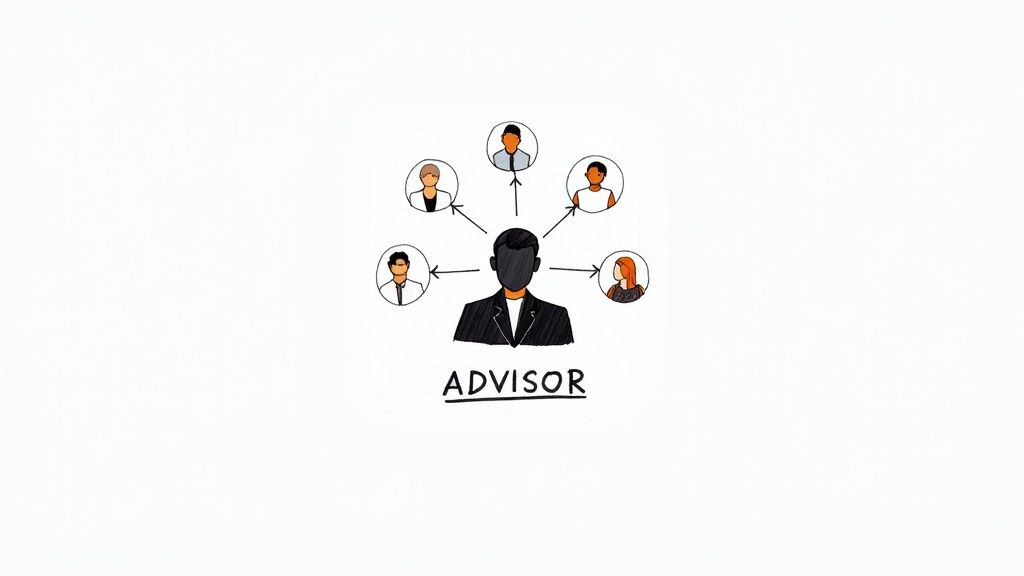
The Salesforce Solution: We knew technology alone wasn't the answer. Our strategy blended a powerful Salesforce Sales Cloud implementation with a deep focus on the people who would use it every day. Our change management approach included:
- Discovery workshops to get to the heart of user frustrations and map out their biggest pain points.
- A visionary roadmap that clearly showed the benefits of Salesforce for every single role, from sales associates to the leadership team.
- Targeted communication that didn't just explain what was changing, but articulated the why to get everyone on board and reduce resistance.
- Role-based training sessions and a Salesforce Champions programme to build internal expertise and momentum.
Our Change Management Approach in Action
Getting buy-in from the start was non-negotiable. We sat down and interviewed 12 senior leaders and front-line staff to ensure the Salesforce solution was tailored to their actual needs, not just what we assumed they needed. This hands-on approach was crucial for turning potential sceptics into advocates.
From there, we orchestrated a communication campaign that used everything from emails and intranet updates to interactive demos to keep everyone informed and excited about the new CRM.
We made sure the training wasn't generic. Instead, it was designed around daily workflows in Sales Cloud, so every team member could see the immediate value in their day-to-day tasks. To sustain momentum, we launched a Salesforce Champions programme, empowering enthusiastic users to coach their peers.
Our rollout followed a clear, four-phase plan:
- Assess existing sales processes and identify data silos.
- Design the future state in Salesforce, building in smart automation.
- Train and mentor end-users based on their specific roles.
- Monitor adoption rates and use feedback loops to continuously refine the system.
The Results and Business Impact
The difference was clear within just three months. The firm saw a 40% increase in pipeline visibility across all its divisions. For the first time, everyone was on the same page.
Salesforce automation handled the tedious administrative tasks, cutting them by a whopping 25% and freeing up consultants to focus on billable client work.
Best of all, user adoption hit an incredible 90% engagement rate. Salesforce was no longer just a tool; it became the central, trusted source for all client information, transforming how they managed their sales and client relationships.
"A human-centred approach delivered direct ROI and cultural buy-in."
For more stories like this, feel free to explore our Salesforce case studies.
Collaboration Across Business Teams
This wasn't just an IT project. Our consultants worked shoulder-to-shoulder with IT, sales leadership, and marketing to align the Salesforce configuration with the entire organisation's goals. This cross-functional teamwork was the secret sauce for ensuring data integrity and consistent processes across the business.
We established monthly governance meetings to track key adoption metrics and keep everyone accountable. Executive sponsors were just as involved, reviewing adoption dashboards weekly to celebrate wins and proactively address any gaps. This high level of oversight was key to keeping the project on track and reinforcing the vision for change.
Key Lessons Learned
This project proves that a structured change management strategy is what truly unlocks the value of a platform like Salesforce. When you engage users early and empower internal champions, you don't just get compliance; you build lasting adoption. It's a powerful combination: Sales Cloud's technical capabilities fused with a human-centred change approach delivers results you can actually measure.
The Shifting Pressures on Modern Australian Businesses
In Australia's fast-moving business world, the need for expert change management consulting isn't just a "nice-to-have" anymore—it's become essential for successful digital transformation. We're seeing a huge uptick in demand for strategic guidance as companies grapple with new pressures.
The biggest shifts? The explosion of hybrid work and the relentless pace of new technology. These forces are pushing organisations to get a much tighter grip on their digital projects. But it's not just about managing the technology; it's about guiding your people through massive operational changes. The way we deliver consulting is also changing, with remote and virtual engagements becoming the norm. In fact, this model is expanding at an estimated 7.66% CAGR in Australia. You can dig deeper into this trend with insights from Mordor Intelligence about the Australian management consulting market.
New Regulations, New Challenges
It’s not only internal workplace dynamics driving change. A fresh wave of external factors is forcing businesses to get serious about structured, organised transformation. These pressures make platforms like Salesforce absolutely critical for staying compliant and keeping daily operations on track.
Two key drivers are shaking things up:
- Government Procurement Rules: New Commonwealth rules now set aside at least 25% of federal contracts under AUD 1 billion for small and medium-sized enterprises (SMEs). To even compete for this work, SMEs need scalable, well-managed systems like a properly implemented CRM.
- Legislative Requirements: There's also a raft of new laws around ESG (Environmental, Social, and Governance) data governance. This is forcing organisations to formalise how they collect and report on data, which almost always means bringing in new technology and creating new workflows within platforms like Salesforce.
With all these moving parts, bringing in a consultant for change management during a Salesforce implementation has shifted from a best practice to a strategic necessity for any Australian business looking to stay competitive, compliant, and resilient.
How to Choose the Right Salesforce Change Partner
Picking the right change management partner for your Salesforce project is one of the most critical decisions you'll make. It’s not just about finding technical gurus; it's about finding a guide who can translate Salesforce's powerful features into real, tangible business results. You need to look past certifications and find a partner with a battle-tested change management methodology and deep, relevant experience in your industry.

This decision is even more critical in Australia’s crowded consulting space. While the broader management consulting industry is projected to hit a market size of AUD 45.9 billion by 2025, a government push to reduce external spending means the pressure is on to prove value. You need a partner who delivers, not one who just talks a good game. You can find more details about the Australian consulting market dynamics on IBISWorld.
Key Questions to Ask Potential Salesforce Partners
To properly vet a potential firm, you need to ask questions that get to the heart of their approach to user adoption and change management.
Here are a few essential questions to get you started:
- How do you measure the success of a Salesforce change initiative, both with hard data and in terms of team morale and feedback?
- What is your specific strategy for identifying and managing user resistance during a Salesforce rollout?
- Can you walk me through a communication plan you've actually used for a similar Salesforce project?
- How do you ensure our executive sponsors remain actively engaged and visible throughout the project?
A true strategic partner won't just give you textbook answers. They'll use these questions to spark a genuine conversation about your unique business goals and the specific hurdles you're facing with your CRM implementation.
Their responses should give you confidence that they understand the human side of digital transformation, not just the technology. Finding the right fit is about engaging a firm that truly aligns its expertise with the business outcomes you need to achieve.
If you’re ready to find a Salesforce partner who can guarantee your project's success, have a look at our Salesforce consulting services or get in touch with our team today.
Frequently Asked Questions about Salesforce Change Management
Thinking about change management for your next Salesforce project? It’s a common area of uncertainty, so let's clear up a few common questions.
When is the right time to bring in a change management consultant for a Salesforce project?
Ideally, you should engage them from the very beginning—during the initial discovery and planning phases of your Salesforce project, long before any technical configuration begins. Bringing a consultant in early ensures that your “people strategy” is baked into the project from day one, not tacked on as an afterthought. This proactive approach is crucial for spotting potential resistance and building genuine support across the organisation well before you go live with your new CRM.
What’s the difference between change management and project management in a Salesforce implementation?
It’s easy to confuse these two roles, but they have distinct responsibilities, even though they work side-by-side. Your project manager is focused on the technical delivery of your Salesforce solution. They manage timelines, budgets, and resources to ensure the system is built correctly and on schedule. Your change management consultant is focused entirely on the people who will use it. They handle the communication, training, and stakeholder engagement required to drive high user adoption and ensure your business achieves its goals with the new technology.
How do you measure the ROI of change management in a Salesforce project?
The return on investment (ROI) from change management is measured through concrete adoption metrics and their impact on business performance. We look for tangible proof that the new Salesforce processes are sticking. This often includes tracking:
- User Adoption Rates: Are people logging in and actively using Salesforce? We track metrics like daily active users.
- Data Quality: Is the data being entered into the CRM accurate and complete? This is a key indicator of effective use.
- Business Impact: This is the ultimate measure. We look at real-world improvements in key business metrics, like shorter sales cycles, faster case resolution times in Service Cloud, or improved marketing campaign engagement.
Ready to make sure your Salesforce investment pays off? The expert team at Adaptal specialises in guiding Australian businesses through successful, human-centred digital transformations. Get in touch today to chat about your project.