

The real power of a cloud computing sales force is a simple but transformative idea: you're moving all your critical sales information from a lonely filing cabinet in one office to a secure, shared digital space. It’s the difference between having one physical copy of a book and giving your team an entire library they can access from anywhere, at any time. This is the magic behind platforms like Salesforce, empowering your team with the freedom and flexibility they need to close deals and drive growth.
The Strategic Shift from On-Premise Silos to Cloud-Powered Agility
Not too long ago, sales data was trapped on local servers, creating huge roadblocks for any team member not physically in the office. A sales rep visiting a client had to thumb through old notes or frantically call back to the office just to retrieve a simple piece of information. That old model was clunky, slow, and created messy data silos that made it impossible to get a clear picture of the customer. A cloud-powered sales force, running on a CRM like Salesforce, smashes those barriers to pieces.

This shift isn't just a hypothetical benefit; it brings immediate, real-world advantages that directly boost your bottom line. Instead of being chained to a desk, your team is equipped to get things done out in the field—where business actually happens.
Why Moving to the Cloud is a Core Business Strategy
Moving to the cloud with Salesforce is far more than a tech upgrade. It's a strategic move to build a more responsive, intelligent, and effective sales machine. As a Salesforce partner, we've seen these key advantages transform businesses firsthand:
- Real-Time Data Access: Your team can pull up and update customer information, check sales opportunities, and view service histories instantly, from any device. This ensures everyone is on the same page, working with the latest data, which cuts out confusion and costly mistakes.
- Location Independence: Sales reps can prepare for meetings, log call notes, or close a deal directly from a client’s office, a cafe, or their home. This freedom is a massive productivity booster, allowing them to spend more time selling.
- Enhanced Collaboration: When sales, marketing, and service teams share a single platform, the endless email chains of spreadsheets disappear. They can share insights seamlessly, creating a unified customer experience and spotting new opportunities to cross-sell or upsell.
This digital transformation is accelerating across Australia. The national cloud computing market generated approximately USD 14.98 billion in 2024 and is set for further growth, showing how heavily local businesses are investing in platforms like Salesforce. With Australian organisations prioritising AI and automation, this trend is only gaining momentum. You can read the full research on Australia's cloud market growth and see why this strategic shift is essential for staying competitive.
What are the Real-World Benefits of a Cloud-Based Sales Force?
Moving your sales team to a cloud platform like Salesforce is about more than just swapping old software for new. It's about giving your team a fundamental advantage—making them more agile, better informed, and ready to scale. This is how you equip your people with the tools they need to win in today's competitive market.
This shift delivers three major benefits that Australian businesses feel almost immediately. These aren't just buzzwords; they are tangible upgrades to the day-to-day reality of sales.
On-Premise CRM vs. Salesforce Cloud Computing
To appreciate the significance of this shift, it helps to compare the old way of doing things with the new. Traditional, on-premise CRMs kept your business data locked away on a server in the office. Cloud computing with Salesforce sets it free.
| Feature | Traditional On-Premise CRM | Salesforce Cloud Platform |
|---|---|---|
| Accessibility | Limited to the office network; remote access is complex and slow. | Access from anywhere with an internet connection, on any device. |
| Scalability | Requires purchasing and installing new server hardware—a slow, expensive process. | Scales instantly. Simply add new user licenses as your team grows. |
| Maintenance | Your IT team is responsible for all updates, security patches, and server upkeep. | Salesforce manages all infrastructure, security, and automatic updates. |
| Upfront Cost | High initial investment in hardware, software licenses, and installation. | Lower upfront cost with a subscription-based (SaaS) model. |
| Data | Data is often siloed and difficult to share across departments. | Creates a single source of truth for all customer data, accessible in real time. |
The difference is clear. One model was built for a world that no longer exists, while the other is designed for the flexible, fast-moving way modern businesses operate.
Untethered Mobility and Flexibility
The biggest and most immediate win? Your team is no longer chained to a desk.
With Salesforce, your team has secure, live access to the entire CRM—contacts, deals, dashboards—from their phone, tablet, or laptop. A rep can update a deal's status from their car right after a client meeting or prepare for their next appointment while grabbing a coffee.
This mobility eliminates dead time. It means data is captured when it's fresh, reducing the risk of forgotten details or mistakes. Your reps spend less time on administrative tasks and more time where it matters: building relationships and closing deals.
Effortless and Cost-Effective Scalability
Remember the pain of outgrowing your old systems? As your business expanded, you had to pour money into new server hardware, maintenance, and IT staff just to keep the lights on. It was expensive, slow, and a significant operational headache.
Salesforce eliminates that problem entirely.
As a cloud platform, it grows right alongside you. Whether you’re a startup with five reps or a national company hiring fifty, the system adapts. You pay for what you need, and Salesforce handles all the heavy lifting—infrastructure, security, updates—in the background. This frees your business to grow without being held back by its own technology.
Smarter, Data-Driven Selling
This might be the most powerful benefit of all: the shift to intelligent, data-driven selling. A cloud CRM builds a single, unified view of every customer. Your team can see it all in one place—every marketing email opened, every past support ticket, and their entire purchase history.
This 360-degree view empowers your people to make smarter decisions on the fly. They can personalise their calls, anticipate customer needs, and spot upsell opportunities with far greater accuracy. To maximise this, you can discover how sales automation processes can cut busywork and close more deals by building on this solid data foundation.
For any business ready to make the move, exploring the core platform is the perfect first step. Take a look at the features of Salesforce Sales Cloud to see how it acts as the central engine for this data-first approach. When you put real-time insights at your team’s fingertips, every sales call becomes a more strategic conversation.
Choosing the Right Tools from the Salesforce Ecosystem
The Salesforce platform is much more than a single piece of software; it's a powerful ecosystem of interconnected tools designed to work together. Real success on the platform comes from selecting the right combination for your specific business goals.
It's less about buying a product and more about designing a seamless journey for your customers, from their first interaction right through to becoming a loyal advocate. This journey needs a central hub—a command centre for your entire sales operation.
Sales Cloud: The Engine of Your Sales Force
Think of Sales Cloud as the engine room for your entire sales process. It's the dedicated space where you manage leads, track opportunities through the pipeline, and build accurate revenue forecasts you can actually trust. This becomes the single source of truth for your team.
With real-time data at their fingertips, your reps can instantly prioritise their efforts and zero in on the deals most likely to close. It replaces guesswork with clear, actionable insights, from the moment a lead enters the system to the final signature on a contract.
The image below illustrates the core benefits a well-implemented cloud platform like Salesforce delivers, focusing on mobility, scalability, and data-driven selling.
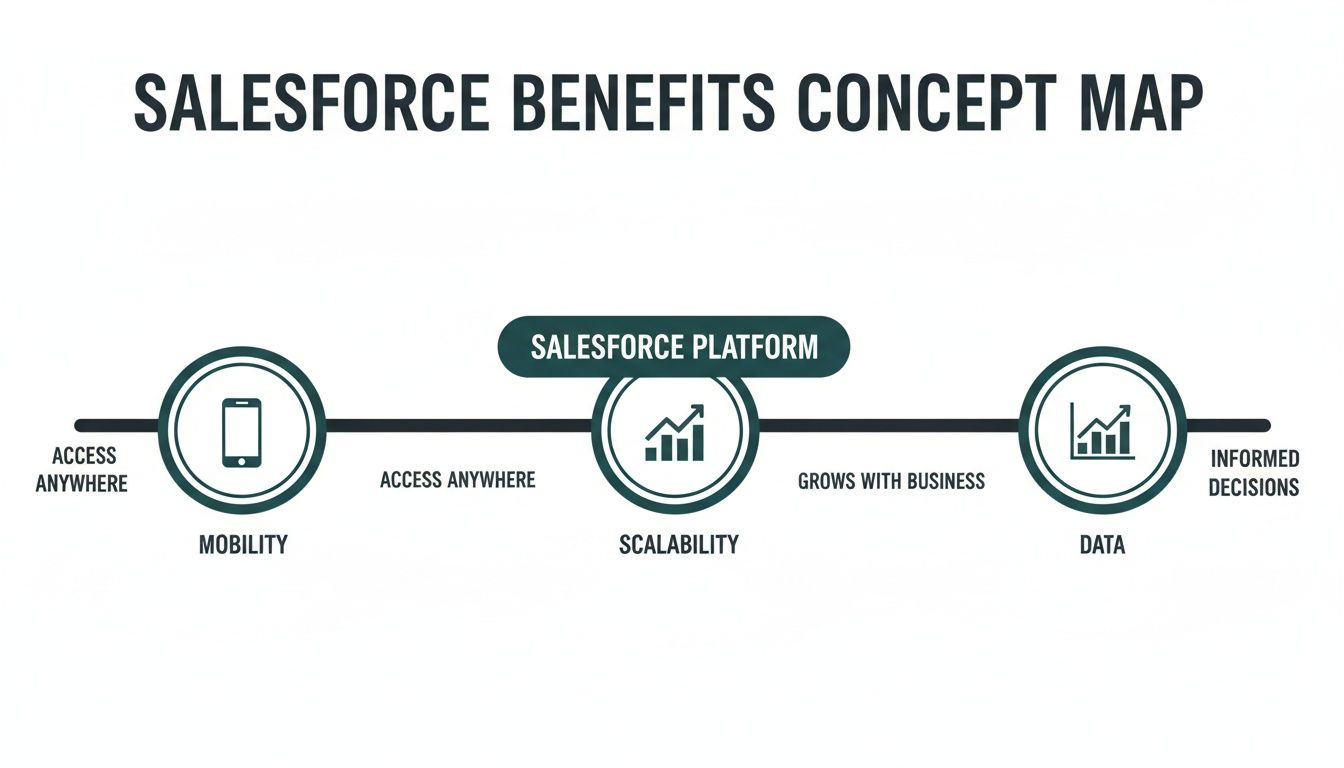
These three pillars—working from anywhere, growing without limits, and making smarter decisions—are the foundation of a modern cloud computing sales force.
Service Cloud: Uncovering Post-Sale Opportunities
A customer relationship doesn't end when the deal is won; that’s often just the beginning. This is where Service Cloud becomes a crucial tool for your sales team. By tracking every post-sale interaction, from support tickets to customer feedback, you begin to see patterns.
This information is a goldmine for your sales force. A string of support queries about a particular feature might signal an opportunity to sell additional training. Glowing feedback from a happy client could be the perfect opening to discuss an upgrade. Suddenly, customer support shifts from a cost centre to a proactive revenue driver.
Marketing Cloud and Account Engagement: Filling the Funnel
Of course, none of this matters if your sales team doesn't have a steady stream of high-quality leads. Marketing Cloud and Account Engagement (formerly Pardot) are the tools built to do exactly that. These platforms automate the heavy lifting of attracting, nurturing, and qualifying prospects long before they reach a sales rep's desk.
By connecting these marketing tools directly into Sales Cloud, you create a seamless handover. Sales reps receive warm, informed leads, complete with a full history of every email opened and every link clicked. This allows for far more relevant and effective conversations from the very first call.
Together, these platforms create a connected ecosystem where your marketing, sales, and service teams are all working in unison. As an experienced Salesforce partner, we've helped countless Australian businesses implement these exact tools to build a complete, 360-degree view of their customer lifecycle.
To see how this integrated approach could work for you, learn more about our specialised Salesforce cloud services and how we tailor them to specific business needs. This is the key to creating a truly effective cloud computing sales force.
How Australian Businesses Are Driving Growth with Salesforce
It's one thing to discuss cloud computing in theory, but it's another to see it make a real difference on the ground. Across Australia, savvy businesses are treating Salesforce not as just another piece of software, but as a genuine engine for growth.
Let's dive into a few real-world stories that show how the platform solves tangible problems for different industries. You’ll see a common thread: a clear business challenge, a smart Salesforce solution, and the impressive results that followed.
Case Study: A National Franchise Gets Everyone on the Same Page
The Challenge: A well-known Aussie franchise with locations across the country had a classic headache that comes with rapid growth: every franchisee had their own quirky way of tracking leads and sales. This meant reporting was a mess, and head office had virtually zero visibility into national performance. Forecasting was essentially a shot in the dark.
The Salesforce Solution: We stepped in as their Salesforce partner to implement Sales Cloud as their new national standard.
- The Implementation: We designed a single, unified sales process within Salesforce. This included building custom dashboards for individual franchisees and a master dashboard for the national management team. Suddenly, every location had a clear, consistent playbook for managing leads and opportunities.
- The Results: For the first time, head office could see a real-time, consolidated view of the entire network's sales pipeline. Franchisees embraced the structured process, which helped them close deals more efficiently. Leadership could finally make sharp, data-backed decisions on everything from national marketing campaigns to future growth strategies.
Case Study: A Construction Firm Builds Stronger Client Relationships
The Challenge: For a construction firm juggling high-value commercial projects, managing complex bids and long-term client relationships was a huge drain on time. Critical information was scattered across spreadsheets, emails, and notebooks. Tracking tender progress and staying on top of stakeholder communication was a constant battle.
This lack of a central hub meant valuable opportunities were slipping through the cracks, and client communication was often reactive instead of proactive. They needed a single source of truth to manage a project’s entire life, from initial bid to final handover.
The Salesforce Solution: Salesforce provided the perfect blueprint for building that unified view.
- The Implementation: We customised Salesforce to mirror their unique bidding process, tracking every stage from initial tender to contract award. We also integrated it with their project management tools, giving them a complete picture of each client relationship.
- The Results: The firm saw a massive leap in efficiency for managing bids and communicating with clients. With all data in one place, the team could collaborate seamlessly, respond to client needs faster, and build the solid, long-term relationships that guarantee repeat business.
These solutions are becoming even more powerful with AI. Recent Salesforce research found that Australian service teams expect AI to handle roughly half of all customer cases by 2027. This frees up your people to focus on the high-value conversations that close deals. You can discover more insights from Salesforce's State of Service report to get ahead of this trend.
Planning Your Salesforce Integration and Data Migration
A successful Salesforce rollout is about more than just activating new software; it's about weaving it into the very fabric of your business. The real magic happens when you connect Salesforce with the systems you already rely on, creating a single source of truth for your entire operation.
For most Australian businesses, this means bridging the gap between sales and finance. We’ve managed countless projects linking Salesforce to popular accounting software like Xero and MYOB, not to mention enterprise-level systems like NetSuite. The goal is always the same: make information flow seamlessly.
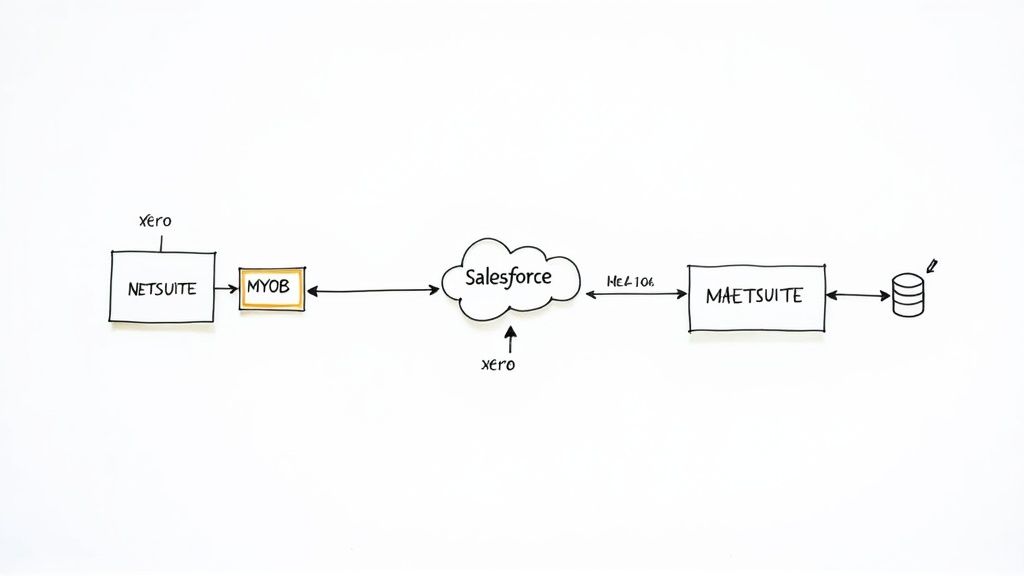
This is where you find the genuine return on your investment. Integration automates the quote-to-cash cycle, eliminating the manual data entry that breeds costly mistakes and kills productivity. When sales and finance data speak the same language, your business moves faster and more accurately.
Key Considerations for a Smooth Transition
To unlock the full potential of Salesforce, you need a solid plan for migration and a clear understanding of mastering integration in Salesforce CRM. This is not a stage to rush; cutting corners here almost always leads to headaches down the line.
Drawing from our experience across more than 110 Salesforce implementations, we’ve learned that a successful project stands on a few core pillars:
- Clean Data In, Clean Data Out: Your new CRM is only as good as the data you feed it. Before moving a single record, conduct a thorough data audit. This is your chance to clean up duplicates, fix errors, and archive irrelevant information.
- A Phased Rollout: Don't try to boil the ocean. A phased approach that delivers quick, tangible wins is far more effective. Start with core sales processes, build momentum, and then expand to other departments.
- User-Centric Change Management: The technology is the easy part. Getting your team to embrace it is the real challenge. Your adoption strategy must include tailored training, clear communication about what’s in it for them, and identifying internal champions to lead the charge.
The Critical Role of Data Migration
Getting your historical data into Salesforce correctly is arguably the most critical—and complex—part of any implementation. A botched migration can cripple your new system before you’ve even had a chance to use it.
This process is far more than a simple copy-paste job. It demands careful mapping of data fields from your old system to the new one, rigorous testing to protect data integrity, and a clear cutover plan to minimise business disruption.
The technical steps here have massive business implications. When done right, your team has a complete and accurate customer history from day one. To better understand the process, explore our guide on what is data migration. As your Salesforce partner, we guide you through this journey, ensuring your cloud computing sales force is built on a solid foundation of clean, reliable data.
Measuring ROI and Driving User Adoption for Your Salesforce Investment
Turning a Salesforce investment into a powerful engine for growth requires more than just slick technology; it needs a smart strategy for measuring your return and, crucially, getting your team on board. The end goal is a culture where your sales team sees the platform not as a chore, but as their secret weapon for success.
A phased rollout is often the best approach. It delivers quick, tangible wins that build momentum and get people genuinely excited about what’s possible.
However, the single biggest factor that will determine your success is user adoption. If your team doesn't use the system, even the most perfectly customised CRM is just an expensive digital paperweight.
Strategies for Driving Platform Adoption
Genuine adoption isn’t about forcing your team into a rigid process. It’s about making Salesforce fit the way they actually sell. This starts with clear communication, showing them exactly how it helps them—think less admin time and more qualified leads.
Getting this right comes down to a few key actions:
- Tailored Training: Forget generic videos. Your team needs hands-on sessions that tackle their specific, day-to-day workflows and real-world challenges.
- Find Your Internal Champions: Identify enthusiastic users in your team who just get it. These individuals can become go-to resources for their colleagues, offering practical tips and encouragement.
- Customise for Simplicity: Work with a Salesforce partner to strip back the clutter. Refine page layouts, remove unnecessary fields, and reduce clicks to make the system as intuitive as possible.
Building this internal support structure is the bedrock of successful adoption. For a deeper look at guiding your team through this shift, our insights on effective change management offer a practical framework.
Measuring the True Return on Investment
Calculating your ROI is about more than just comparing licence fees to sales figures. A true measure looks at both direct financial gains and the critical operational efficiencies you’ve unlocked.
For instance, scaling a team in Australia with Salesforce Enterprise licenses can be a significant cost, often landing between AUD $210–$230 per user, per month. While that’s a real investment, the returns are found in productivity boosts across the entire business. You can discover more about the Salesforce pricing and skills landscape in Australia to get a better handle on these costs.
You have to look beyond the initial price tag and measure the full picture: the gains from increased sales productivity, the hours saved on admin tasks, and the tangible lift in customer retention. These are the metrics that show how a well-adopted Salesforce platform drives real, sustainable growth.
Frequently Asked Questions About Salesforce for Your Sales Team
We understand. Moving to a new platform is a major decision, and it’s natural to have questions. To help you get a clearer picture, here are some straight answers to common questions Australian business leaders ask us when considering a cloud computing sales force solution like Salesforce.
Is Salesforce a good fit for my small or medium-sized business (SMB)?
Absolutely. It's a common misconception that Salesforce is only for large enterprises. The platform is built to scale with you.
Versions like Sales Cloud Essentials and Professional are designed specifically for the needs and budgets of small to medium-sized businesses. You can start with the core features you need now and add more advanced tools as your business grows, ensuring the investment aligns with your trajectory.
How long does a Salesforce implementation take?
The timeline depends on the project's complexity. A straightforward 'quick start' implementation for a small, focused sales team can be up and running in just a few weeks.
However, a more complex project involving deep customisation, integrations with systems like MYOB or Xero, and a significant data migration will naturally take several months.
A phased approach is almost always the key to success. By focusing on delivering the highest-impact features first, you start seeing value quickly. This builds positive momentum and gets your team excited about the changes, rather than overwhelmed by them.
What support will my team need after go-live?
Long-term success isn't just about the launch; it's about what happens next. The best structure we've seen involves having a designated internal 'Salesforce Champion' or administrator. This person becomes the go-to for day-to-day questions from the team.
This is usually paired with ongoing support from a Salesforce partner for strategic improvements, additional training, and technical hurdles. Viewing it as a process of continuous improvement is the best way to maximise your investment over the long haul.
Ready to see how a cloud-powered sales force can drive genuine growth for your business? As an experienced Salesforce partner, Adaptal specialises in guiding Australian businesses just like yours through every stage of their Salesforce journey.