
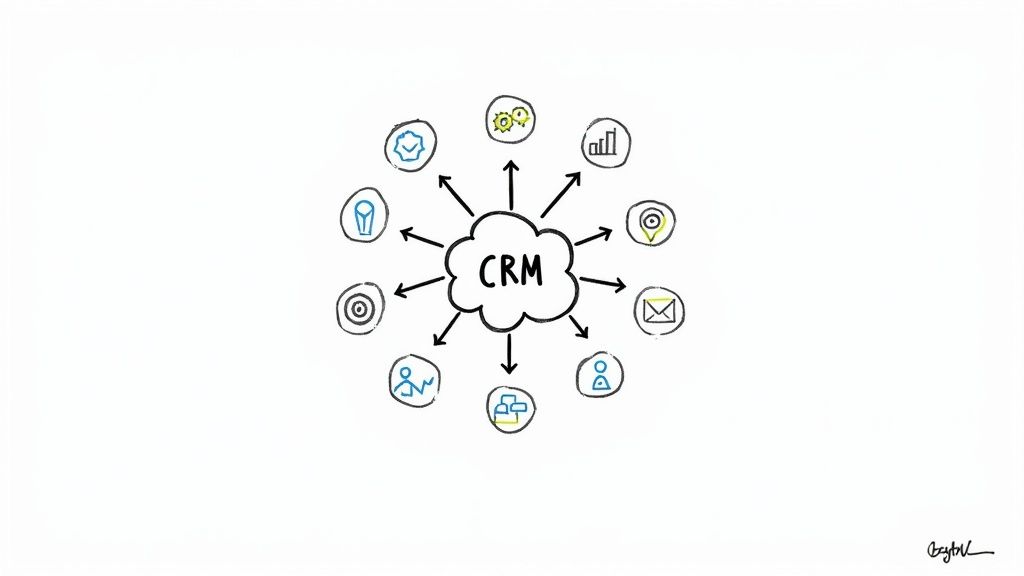
In today’s competitive market, mastering client relationships is the cornerstone of sustainable growth. For Australian businesses, especially SMEs and franchise networks, the ability to build and maintain strong client connections is a key differentiator. This requires moving beyond simple transactions to create lasting partnerships through deliberate and well-executed client relationship management strategies, supercharged by a powerful platform like Salesforce.
As a leading Australian Salesforce Consulting Partner, we’ve guided countless businesses through their digital transformation, placing client-centricity at the core of their operations. This article draws on that real-world project experience to detail nine proven strategies that leverage the full power of the Salesforce ecosystem. We won’t just list concepts; we’ll share a practical roadmap to turn your CRM from a database into your greatest competitive advantage.
You will learn how to implement actionable tactics, from advanced customer segmentation in Sales Cloud to proactive communication workflows in Account Engagement. We’ll explore the common business challenges these strategies solve, the Salesforce solutions that power them, and the tangible results you can achieve. Ultimately, the goal is to improve customer satisfaction and boost loyalty, transforming clients into advocates and securing long-term success.
1. Precision Client Segmentation with Salesforce Data Cloud
Effective client relationship management strategies begin with understanding that not all clients are the same. Precision client segmentation involves dividing your client base into meaningful groups based on shared characteristics, going beyond basic demographics to include behaviour, purchase history, and lifetime value.
- The Business Challenge: An SME or franchise network treats all clients equally, leading to wasted marketing spend on low-value segments and missed opportunities to nurture high-value relationships. This one-size-fits-all approach results in low engagement and potential churn.
- The Salesforce Solution: By implementing Salesforce Data Cloud, you can unify data from your sales CRM, marketing platforms, and service interactions into a single client profile. This creates the foundation for sophisticated segmentation. For example, a professional services firm can segment clients by project frequency and a calculated “Client Lifetime Value” (CLV) score. The high-CLV segment can then receive exclusive invitations and proactive check-ins, strengthening crucial relationships.
- The Result: This strategy enables hyper-personalised communication and tailored service. Resources are allocated effectively, marketing messages resonate, and service experiences foster loyalty, turning your CRM into a dynamic strategic asset.
Key Insight: Precision segmentation isn’t about exclusion; it’s about customisation. It ensures that every client receives the most relevant and valuable experience, making them feel understood and appreciated.
Actionable Tips for Success
- Start Simple: Begin with broad segments like “High-Value Clients,” “New Clients,” and “At-Risk Clients” using Salesforce reports, then layer in behavioural data for more granular insights.
- Combine Data Sources: Integrate data from Sales Cloud (opportunity history), Service Cloud (case history), and Account Engagement (email engagement) to build comprehensive client profiles.
- Automate Journeys: Use Marketing Cloud to create automated communication journeys tailored to each segment.
- Review and Adapt: Use Salesforce Dashboards to schedule quarterly reviews of your segment criteria to ensure they remain relevant.
2. Proactive Communication Using Salesforce Account Engagement
The best client relationship management strategies are proactive, not reactive. A proactive communication strategy involves initiating regular, value-driven communication before issues arise. This approach shifts the dynamic from problem-solving to partnership, building deep-seated trust.

- The Business Challenge: A business only communicates with clients when there’s a problem or a transaction. Clients feel forgotten between projects, making them susceptible to competitor offers and reducing their lifetime value.
- The Salesforce Solution: Salesforce Account Engagement (formerly Pardot) automates sophisticated, proactive communication. For instance, a wealth management client of ours used Account Engagement to automatically send quarterly portfolio summaries and invitations to exclusive webinars. When a client engaged with an article on their website, it triggered a notification for their advisor to follow up, demonstrating attentive service.
- The Result: This digital transformation shifts the relationship from transactional to advisory. Clients feel valued and understood, leading to significantly higher retention rates and identifying new opportunities for growth.
Key Insight: Proactive communication is about providing value, not just making contact. Every touchpoint should offer a useful insight or resource that reinforces your role as a valuable partner.
Actionable Tips for Success
- Map the Client Journey: Use Salesforce to identify key milestones (e.g., 90 days post-onboarding, project completion) and build automated communication journeys around them in Account Engagement.
- Create Value-Based Content: Develop a library of industry reports, best practice guides, or case studies to use as the foundation for your outreach.
- Leverage Engagement Studio: Build automated, multi-step nurture programs that adapt based on client engagement. Learn more about these advanced account engagement best practices.
- Track and Measure: Use Salesforce reports to monitor engagement rates and continually refine what “value” means to your different client segments.
3. Value-Based Relationship Building with Salesforce Service Cloud
Exceptional client relationship management strategies extend beyond providing a service; they involve actively contributing to a client’s success. Value-based relationship building means demonstrating measurable value that aligns directly with your client’s most important business outcomes.
- The Business Challenge: A professional services firm struggles to prove its ROI. Conversations with clients often revolve around cost, and the firm is treated like a commodity vendor rather than a strategic partner, making it difficult to retain high-value accounts.
- The Salesforce Solution: We worked with a business consultancy to implement Salesforce Service Cloud to track and measure value delivery. They now use custom fields on the Account object to track metrics like “Client Cost Savings” and “Lead Generation Increase.” These metrics are then pulled into dashboards for quarterly business reviews, tangibly proving their value.
- The Result: This data-driven approach shifts the conversation from cost to ROI. The consultancy solidifies its role as an indispensable partner, insulating the relationship from price competition and fostering profound long-term loyalty.
Key Insight: Value-based relationships shift the focus from what you do to what your clients achieve. This fundamental change transforms your business into an essential partner in their success.
Actionable Tips for Success
- Establish Value Metrics Early: During onboarding, collaborate with clients to define success and document these KPIs in their Salesforce Account record.
- Create Value Review Cadences: Use Salesforce tasks to schedule regular “Value Review” meetings, using dashboards to showcase progress against goals.
- Train Your Team: Empower your account managers to think like business consultants, asking questions about the client’s broader strategic objectives.
- Document Wins: When your service leads to a positive outcome, document it in Salesforce using a custom object like “Client Wins” to reinforce value.
4. Multi-Touch Attribution and Journey Mapping in Salesforce
Effective client relationship management strategies require understanding the entire client lifecycle. Multi-touch attribution and journey mapping is a comprehensive approach that tracks and optimises every touchpoint a client has with your organisation, from first contact to long-term loyalty.
- The Business Challenge: An organisation has multiple departments (marketing, sales, service) that interact with clients, but no one has a complete picture. This creates a disjointed and frustrating client experience, with clients having to repeat information at each step.
- The Salesforce Solution: Salesforce Journey Builder, part of the Marketing Cloud, allows you to design, visualise, and automate client journeys across departments. We helped a real estate agency map their “First Home Buyer” journey, visualising touchpoints from a website enquiry to an agent viewing (tracked in Sales Cloud) and post-viewing feedback (sent via Marketing Cloud).
- The Result: The agency identified friction points where prospects were dropping off and optimised those touchpoints. This created a seamless, personalised experience, improving conversion rates and overall client satisfaction.
Key Insight: Journey mapping isn’t just about visualising the path; it’s about understanding the client’s emotional and practical experience at each step, a crucial element for building relationships that last.
Actionable Tips for Success
- Map Critical Journeys First: Start with high-value journeys like client onboarding or service resolution, using Salesforce reports to identify common paths.
- Involve Client-Facing Staff: Involve sales reps, service agents, and account managers in mapping exercises to ensure the journeys reflect reality.
- Use Visualisation for Action: Use Journey Builder’s visual maps to identify friction points and then build automation to fix them.
- Focus on Eliminating Friction: Prioritise optimisations that remove unnecessary steps, clarify communication, or reduce client effort.
5. Empathy-Driven Engagement Powered by Salesforce Service Cloud
Superior client relationship management strategies recognise that business interactions are fundamentally human. Empathy-driven engagement prioritises understanding and responding to the emotional needs of clients, building deep, trust-based relationships through genuine connection.
- The Business Challenge: A customer support team is measured solely on metrics like call duration and case closure rates. While efficient, this approach leaves clients feeling like a number, leading to low satisfaction scores despite quick resolutions.
- The Salesforce Solution: We helped a healthcare provider configure Salesforce Service Cloud to support empathy-driven engagement. They added a custom “Patient Sentiment” field to the Case layout, prompting agents to capture qualitative feedback. Macros were then used to automate follow-up tasks based on sentiment, like sending a personalised check-in email after a difficult support case.
- The Result: The provider transformed its service from transactional to relational. Patients felt heard and valued, leading to higher satisfaction, increased loyalty, and more positive reviews. To effectively drive Empathy-Driven Engagement, explore proven tactics to increase customer engagement.
Key Insight: Empathy is a business asset. When clients feel emotionally understood, they are more loyal, forgiving of mistakes, and likely to advocate for your brand. It transforms client service into client care.
Actionable Tips for Success
- Train for Empathy: Invest in training for all client-facing staff on active listening and empathetic communication.
- Customise Your CRM: Add fields in Salesforce to track client sentiment or emotional context to inform future interactions.
- Empower Your Team: Give your team the autonomy to solve problems creatively based on a client’s emotional needs.
- Measure Relationship Quality: Use Salesforce Surveys to ask questions that go beyond simple satisfaction to measure how valued and understood clients feel.
6. Technology-Enabled Personalization at Scale with Salesforce Einstein AI
One of the most powerful modern client relationship management strategies is using technology to deliver one-to-one experiences at scale. This involves leveraging artificial intelligence (AI) and automation to combine systemic efficiency with the impact of individualised attention.
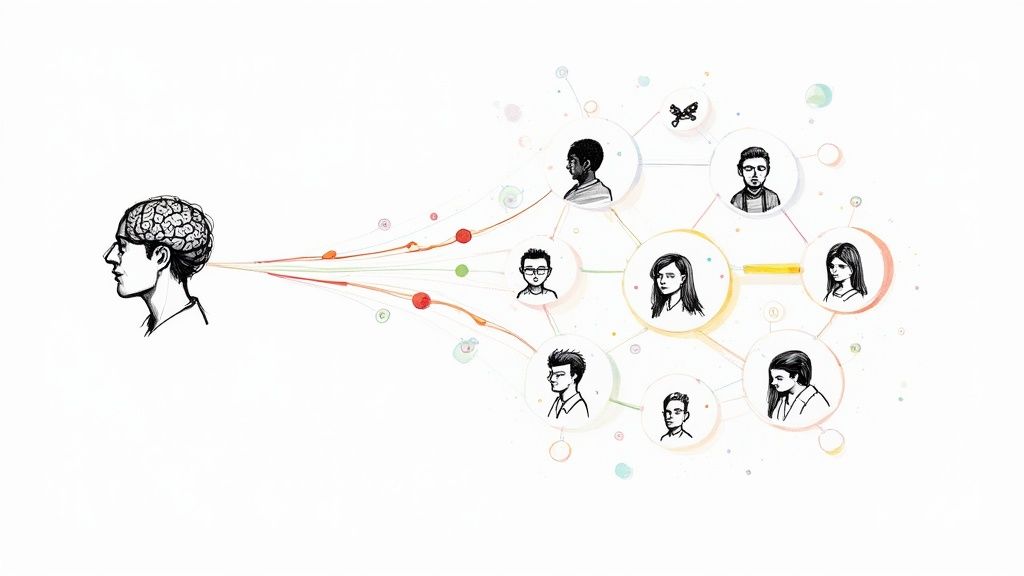
- The Business Challenge: A growing franchise network has thousands of clients but a small marketing team. They lack the resources to manually analyse data and identify cross-sell or upsell opportunities, resulting in missed revenue and generic marketing campaigns.
- The Salesforce Solution: Salesforce Einstein, the AI layer built into the platform, is the engine for this strategy. For one retail client, we used Einstein to analyse purchasing patterns. It identified that clients who bought ‘Product A’ were 85% more likely to need ‘Service B’ within six months. This insight triggered an automated, personalised email campaign from Marketing Cloud, dramatically increasing cross-sell opportunities without manual effort.
- The Result: The franchise network was able to deliver highly relevant offers at the perfect time, increasing sales and making clients feel that the brand truly understood their needs. This automation freed up the team to focus on more strategic initiatives.
Key Insight: Personalisation at scale doesn’t replace the human touch; it amplifies it. By using AI for predictive analysis, you free up your team to engage in more meaningful, strategic client conversations.
Actionable Tips for Success
- Start with High-Impact Automation: Use Einstein Prediction Builder to answer a key business question, such as “Which clients are most likely to churn?”, and build automated workflows to address that segment first.
- Maintain Human Oversight: Design automated systems with a “human-in-the-loop” option, allowing an agent to review an AI-generated response before it’s sent.
- Continuously Test and Optimise: Use A/B testing in Marketing Cloud for your AI-driven campaigns to refine messaging and offers.
- Train Your Team: Equip your staff to work alongside AI, training them to interpret Einstein’s recommendations to enhance their client conversations.
7. Strategic Account Management and Partnership Development in Sales Cloud
Transformative client relationship management strategies move beyond transactional service to build deep, symbiotic partnerships. Strategic account management involves identifying your most valuable clients and treating them as essential business partners.
- The Business Challenge: An SME’s revenue is heavily reliant on a few key clients, but interactions are ad-hoc and reactive. There is no long-term plan, putting these crucial revenue streams at risk if a key contact leaves or a competitor makes a better offer.
- The Salesforce Solution: Salesforce Sales Cloud provides the framework for high-touch relationship management. We helped an engineering consultancy use Salesforce to create detailed Account Plans, outlining joint project milestones for the next three years with a major client. They track executive review meetings as Events and use Chatter to collaborate internally, ensuring the entire team works from the same strategic playbook.
- The Result: The consultancy solidified its partnership, securing long-term revenue and becoming deeply embedded in the client’s operations. This proactive approach turned a high-risk dependency into a powerful, collaborative advantage.
Key Insight: Strategic account management is an investment in shared success. It’s about proactively aligning your capabilities with your client’s future needs, making your business integral to their long-term strategy.
Actionable Tips for Success
- Assign Dedicated Senior Managers: Use a custom “Strategic Account Manager” field on the Salesforce Account object for clear ownership.
- Create Joint Business Plans: Work with the client to develop a shared vision and document it within their Salesforce Account record.
- Establish Executive-Level Reviews: Schedule regular meetings between leadership teams and track these high-level interactions as key activities in Salesforce.
- Measure Partnership Success: Use Salesforce Dashboards to track shared KPIs beyond sales figures, such as joint project success rates or client growth metrics. For more insights, explore how Salesforce consulting services can help build these frameworks.
8. Continuous Feedback Loop and Adaptive Service Delivery
Static service models are a thing of the past. A continuous feedback loop is a systematic process for collecting, analysing, and acting on client input, transforming your service delivery from a fixed offering into an adaptive system that evolves in real-time.
- The Business Challenge: A business only collects client feedback through an annual survey. The data is often outdated by the time it’s analysed, and clients don’t see any tangible changes based on their input, leading to survey fatigue and a feeling that their opinion doesn’t matter.
- The Business Solution: Salesforce Service Cloud is the ideal platform for building a robust feedback ecosystem. For a healthcare clinic, we implemented a system that automatically sends a short NPS survey via SMS after each appointment. If a patient leaves a low score, a Salesforce Flow automatically creates a high-priority Case, assigns it to a care coordinator for follow-up, and flags the patient’s record.
- The Result: This “closed-loop” process demonstrates that the clinic is listening and taking immediate action. Patient trust and satisfaction soared, and the clinic was able to identify and fix systemic service issues before they became widespread problems.
Key Insight: A continuous feedback loop isn’t just about collecting data; it’s about creating a demonstrable cycle of listening, acting, and communicating. When clients see their feedback leads to improvements, it builds profound trust.
Actionable Tips for Success
- Implement Multi-Channel Feedback: Use Salesforce to create various feedback channels like post-interaction surveys, email forms, or an Experience Cloud portal.
- Automate Feedback-to-Action Workflows: Use Flow to create rules that trigger specific actions based on feedback (e.g., a thank-you email for positive reviews, a service recovery case for negative ones).
- Close the Loop: Train your team to always communicate the actions taken as a result of feedback.
- Analyse Trends with Dashboards: Use Salesforce Dashboards to visualise feedback trends over time to inform larger strategic decisions. You can learn more about building this Continuous Feedback Loop model on adaptal.com.au.
9. Omnichannel Experience Integration with Salesforce Customer 360
Omnichannel experience integration is a strategy focused on providing a seamless and consistent journey across all channels. It ensures a client’s context and history travel with them, whether they are interacting via a mobile app, call centre, or website, creating a single, unified brand experience.
- The Business Challenge: A client starts a service request via a chatbot, has to repeat all the information when they call the support line, and then receives a generic marketing email about the very product they’re having an issue with. This fragmented experience causes frustration and erodes trust.
- The Salesforce Solution: Salesforce’s Customer 360 platform unifies data from Sales Cloud, Service Cloud, and Marketing Cloud to create a single source of truth for every client. For a professional services client, this means an agent using Service Cloud can see a client’s entire interaction history—from the ad they clicked in a Marketing Cloud campaign to the Lead created in Sales Cloud—providing complete context for the conversation.
- The Result: The client enjoys a seamless, friction-free experience. Their problem is resolved faster, they feel understood, and their trust in the brand grows, leading to higher lifetime value and a better overall relationship.
Key Insight: The core of an omnichannel strategy is data continuity. When client information flows freely between all touchpoints, you eliminate friction and create an effortless experience that boosts satisfaction.
Actionable Tips for Success
- Map Client Journeys: Identify the most common channels clients use and the points where transitions occur to prioritise integration efforts.
- Unify Your Data: Connect your various systems to Salesforce using tools like MuleSoft to ensure all data flows into one unified client profile.
- Empower Your Teams: Train your staff to use the unified client view so they have full context for every interaction.
- Test Channel Transitions: Act like a client. Start an interaction on your website, switch to mobile, and then call customer service to identify and fix any gaps in the experience.
Client Relationship Management Strategies Comparison
| Strategy | Salesforce Platform | Implementation Complexity | Expected Outcomes | Ideal For | Key Advantage |
|---|---|---|---|---|---|
| Precision Client Segmentation | Data Cloud, Sales Cloud | Moderate | Personalised marketing, improved resource use | Businesses needing targeted client groups | Enhances marketing ROI and focus. |
| Proactive Communication | Account Engagement | Moderate | Increased loyalty, issue prevention | Businesses focused on retention and relationships | Builds trust through timely, value-driven outreach. |
| Value-Based Relationship Building | Service Cloud, Sales Cloud | High | Strong loyalty, premium pricing, measurable value | Strategic, long-term client partnerships | Positions you as a strategic partner, not a vendor. |
| Multi-Touch Attribution | Marketing Cloud, Datorama | High | Complete journey visibility, optimisation opportunities | Businesses with complex customer journeys | Enables data-driven decisions and experience consistency. |
| Empathy-Driven Engagement | Service Cloud | Moderate | Stronger emotional bonds, reduced churn | Service industries emphasising personal connection | Differentiates with deep client trust and loyalty. |
| Personalization at Scale | Einstein AI, Marketing Cloud | High | Scalable personalisation, improved efficiency | Businesses with large client bases | Combines personalisation with automation efficiency. |
| *Strategic Account Management | Sales Cloud | High | Long-term partnerships, predictable revenue | Managing key accounts and enterprise clients | Creates competitive moats and justifies premium pricing. |
| Continuous Feedback Loop | Service Cloud, Surveys | Moderate | Faster issue resolution, continuous improvement | Client-centric businesses seeking agility | Drives responsiveness and competitive advantage. |
| Omnichannel Integration | Customer 360 Platform | High | Seamless client experience across all channels | Businesses with multiple client touchpoints | Enhances convenience and operational efficiency. |
Partnering with Adaptal to Revolutionise Your Client Relationships
The journey to exceptional client relationships is a continuous process of refinement and strategic execution. We’ve explored a powerful suite of client relationship management strategies, each representing a vital pillar in building a client-centric organisation powered by Salesforce.
These aren’t just isolated tactics; they are interconnected components of a holistic ecosystem. A robust feedback loop informs your value-based offerings, while AI-driven personalisation brings your journey maps to life. For SMEs and franchise businesses, mastering this integrated approach is the key to unlocking sustainable growth, fostering unwavering loyalty, and creating a formidable competitive advantage.
From Theory to Tangible Business Impact
Implementing these advanced client relationship management strategies requires a clear vision and the right Salesforce configuration. The difference between a CRM that simply stores data and one that drives revenue lies in its strategic implementation.
Key takeaways to anchor your strategy include:
- Data is Your Foundation: Every strategy relies on clean, accessible, and well-integrated data within your Salesforce instance.
- Proactivity Wins Loyalty: Anticipating needs, offering value-added insights, and maintaining consistent communication builds trust and transforms you from a vendor into a genuine partner.
- Technology Amplifies, It Doesn’t Replace: Salesforce is an incredible amplifier, but it cannot replace the genuine human element of empathy and strategic thinking.
- Adaptation is Non-Negotiable: The most successful organisations treat client feedback as a gift, using it to continuously adapt and improve their service delivery.
Your Next Steps on the Path to CRM Excellence
The challenge now is to translate these concepts into action. Begin by auditing your current approach. Where are your strengths? Where are the most significant opportunities for improvement in your use of Sales Cloud or Service Cloud?
This transformation is a significant undertaking, but you don’t have to navigate it alone. Achieving a true 360-degree view of your client and customising Salesforce to your business logic requires specialist expertise. This is where a dedicated Salesforce partner becomes an invaluable asset, ensuring your technology investment delivers maximum return. The goal is to build a system that empowers your team to forge stronger, more profitable, and longer-lasting client relationships.
Ready to put these strategies into action? The team at Adaptal specialises in implementing sophisticated Salesforce solutions that bring these powerful client relationship management strategies to life. Contact us today for a no-obligation consultation and discover how we can help you build the client-centric business of the future.