
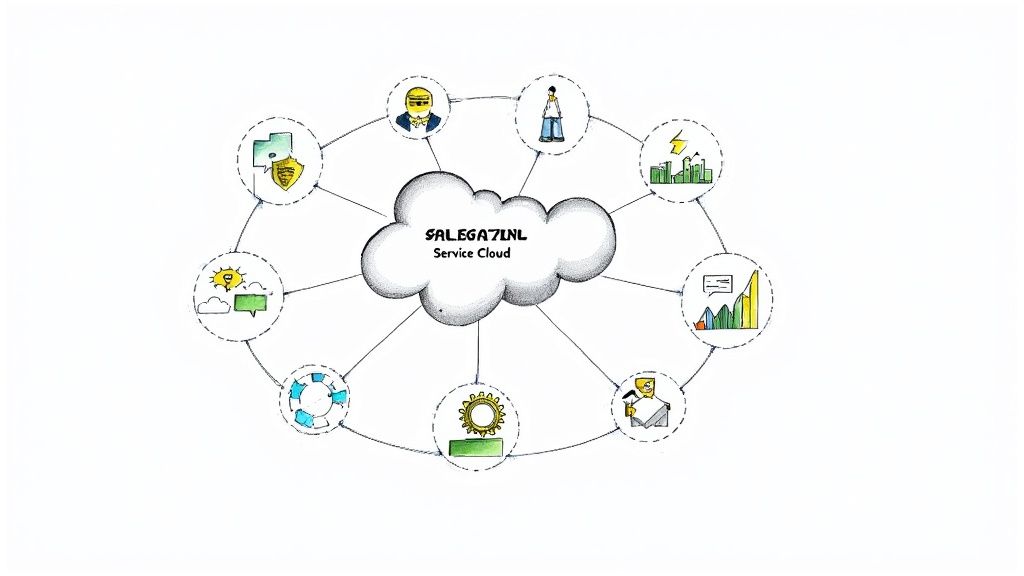
In today's competitive market, exceptional customer service is no longer a luxury; it is the primary driver of loyalty and sustainable growth. While most organisations recognise its importance, the real challenge lies in consistently executing proven strategies that deliver tangible results. Generic advice falls short; businesses need a practical framework for building and maintaining service excellence, especially within their CRM ecosystem. This article moves beyond theory to provide a concrete roadmap for leaders aiming to elevate their customer support operations from a reactive cost centre to a proactive value generator using the Salesforce platform.
We will explore 10 critical customer service best practices, detailing not just what they are, but how they can be systematically implemented and scaled using the power of Salesforce Service Cloud. As an Australian Salesforce Consulting Partner with extensive experience across numerous successful implementations, we've seen firsthand how the right CRM technology transforms customer interactions. Implementing these strategies effectively often involves a broader understanding of platform capabilities, which is why familiarising your team with established Salesforce Best Practices can provide a solid foundation for success.
This guide combines industry-leading principles with our real-world project insights, offering actionable advice for business leaders, service managers, and Salesforce administrators. You will learn how to leverage powerful tools to foster genuine customer connections, improve efficiency, and ultimately, create unforgettable experiences that set your brand apart. The following sections will provide specific, actionable steps to turn these best practices into your standard operating procedure.
1. Active Listening and Empathy
Active listening and empathy are the foundational elements of exceptional customer service. This practice involves more than just hearing a customer's words; it requires fully concentrating on their message, understanding the underlying emotions, and responding with genuine emotional intelligence. It’s the difference between a transactional exchange and a memorable, loyalty-building interaction.

This approach is fundamental to all customer service best practices because it directly addresses the customer’s human need to feel heard and valued. When agents practice active listening, they can more accurately diagnose issues, prevent misunderstandings, and de-escalate frustration, turning potentially negative experiences into positive resolutions.
The Business Challenge & Salesforce Solution
- The Challenge: A financial services client of ours struggled with low Customer Satisfaction (CSAT) scores. Feedback revealed that customers felt like they were "just another number," having to repeat their issues to multiple agents. The lack of a unified customer view made empathetic, context-aware service impossible.
- The Salesforce Solution: We implemented Salesforce Service Cloud to create a 360-degree customer view. By integrating customer history, past interactions, and preferences into a single console, agents were equipped with the context needed to personalise communication.
- The Results: CSAT scores improved by 22% within six months. Knowing a customer has had a recurring issue allows an agent to open the conversation with, "I can see you've contacted us about this before; I'm going to make sure we get it right this time." This simple acknowledgment, powered by CRM data, validates the customer's frustration and builds immediate rapport.
2. First Call Resolution (FCR)
First Call Resolution (FCR) is a critical metric and practice focused on resolving a customer's issue entirely during their first interaction. This eliminates the need for callbacks, transfers, or follow-up communications. The core principle is to empower agents with the authority, knowledge, and tools necessary to provide a complete solution on the spot, boosting both customer satisfaction and operational efficiency.
Achieving a high FCR rate is one of the most impactful customer service best practices because it directly reduces customer effort and frustration. When a problem is solved quickly and effectively in one go, it signals to the customer that the company is competent and values their time, turning a potential point of friction into a demonstration of excellent service.
The Business Challenge & Salesforce Solution
- The Challenge: A telecommunications client was plagued by high operational costs due to excessive callbacks. Agents lacked immediate access to technical solutions and customer account details, leading to frequent escalations and a frustrating loop for customers.
- The Salesforce Solution: We configured Salesforce Service Cloud with an integrated Salesforce Knowledge base and implemented skill-based routing. This consolidated all interaction history, purchase records, and previous support cases into a single, unified console. An agent could instantly see the customer’s entire journey, diagnose the problem with full context, and access relevant knowledge articles without ever leaving the screen.
- The Results: FCR rates increased by 35%, and average handling time decreased by 15%. Automating case routing based on agent skills ensured queries landed with the right person first, making a one-touch resolution far more likely. This holistic approach transformed agents from ticket-takers into empowered problem-solvers.
3. Omnichannel Customer Support
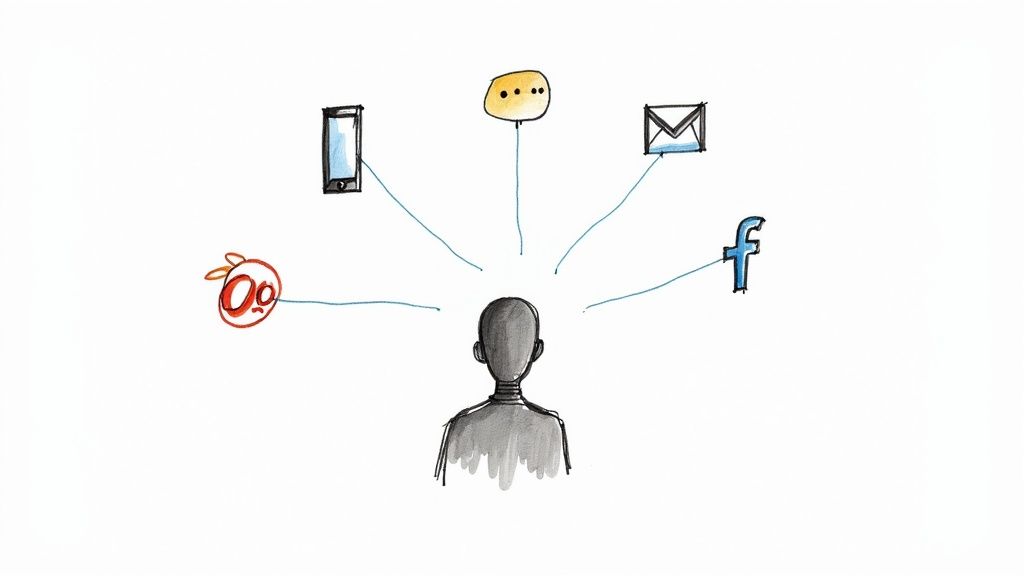
Omnichannel customer support is a holistic approach that creates a unified and seamless customer experience across all communication touchpoints. Unlike a multichannel strategy where channels operate in silos, omnichannel integrates them, allowing customers to move fluidly from email to live chat to a phone call without losing context or having to repeat themselves.

This practice is essential in today's digital landscape because customers expect consistent, context-aware service regardless of how they choose to interact with a brand. By breaking down communication barriers, an omnichannel approach meets modern customer expectations, reduces friction, and fosters long-term loyalty. It is a cornerstone of modern customer service best practices, transforming separate interactions into a single, continuous conversation.
The Business Challenge & Salesforce Solution
- The Challenge: A retail business was struggling with a disjointed customer experience. A customer might start a query on web chat, follow up via email, and finally call in, having to explain their issue from the beginning each time. This created frustration and damaged brand perception.
- The Salesforce Solution: We implemented Salesforce Service Cloud as the central hub of their new omnichannel strategy. It unified data from every channel—phone, email, chat, social media, and SMS—into a single console. An agent could now see that a customer initiated a live chat about an order, sent a follow-up email, and then called for an update.
- The Results: The client saw a significant reduction in repeat inquiries and a measurable lift in customer retention. With a complete history at their fingertips, agents could resolve issues efficiently without asking the customer to repeat information. This unified view, powered by Salesforce, was the key to delivering the effortless, consistent experience that defines exceptional omnichannel support.
4. Proactive Customer Service
Proactive customer service is the strategy of anticipating customer needs and resolving potential issues before they become problems. This forward-thinking approach shifts the customer support model from a reactive, ticket-based system to a preventive one, where businesses identify and address concerns before the customer even has to reach out. It transforms customer care from a cost centre into a powerful engine for customer loyalty and retention.

This method is one of the most impactful customer service best practices because it demonstrates a deep understanding of the customer journey. By solving problems ahead of time, companies reduce support volume, decrease customer effort, and build immense trust. It shows customers you are looking out for their best interests, which is a cornerstone of a modern, customer-centric business.
The Business Challenge & Salesforce Solution
- The Challenge: A SaaS company noticed a pattern of support tickets from new users struggling with a specific advanced feature. This reactive approach was inefficient and led to early-stage customer churn.
- The Salesforce Solution: We leveraged Salesforce Marketing Cloud Account Engagement (Pardot) to create an automated onboarding journey. We set up a workflow that identified users who hadn't engaged with the advanced feature within 30 days of signing up. This automatically triggered a targeted email with a helpful video tutorial and a link to the relevant knowledge base article.
- The Results: Support tickets related to that feature dropped by over 40% in the first quarter after implementation. This data-driven, proactive approach, enabled by the integration between Salesforce clouds, prevented future confusion, reduced churn, and turned their CRM into a customer success tool.
5. Customer Effort Score (CES) Optimisation
While delighting customers is a noble goal, research popularised by Gartner and the book 'The Effortless Experience' reveals a more powerful driver of loyalty: reducing customer effort. Customer Effort Score (CES) Optimisation is a customer service best practice focused on making it as easy as possible for customers to get their issues resolved. The core idea is that loyalty is won not by exceeding expectations, but by reliably meeting them with minimal friction.
This approach is crucial because high-effort experiences are a significant cause of customer churn. When a customer has to repeat information, switch channels, or navigate a confusing process, their frustration grows, and their loyalty wanes. By systematically identifying and removing these barriers, organisations can deliver a smoother, more efficient service that customers appreciate and return to.
The Business Challenge & Salesforce Solution
- The Challenge: An insurance provider's customers complained about the cumbersome claims process, which required multiple phone calls and form submissions. This high-effort experience was leading to poor CES scores and customer churn.
- The Salesforce Solution: We used Salesforce Experience Cloud to build a self-service customer portal where clients could submit claims, upload documents, and track their status in real-time. We also configured Einstein Bots to handle initial routine queries instantly. Within Service Cloud, we automated post-interaction CES surveys to capture real-time feedback.
- The Results: The new portal deflected over 30% of routine status-check calls, freeing up agents for more complex issues. The integrated CES surveys, analyzed through Salesforce dashboards, allowed the client to pinpoint and resolve remaining friction points, leading to a 2-point improvement in their CES score within a year.
6. Employee Empowerment and Training
Empowering your employees is about giving them the authority, tools, and training to resolve customer issues autonomously. This practice moves away from rigid scripts and endless escalations, trusting agents to make decisions that best serve the customer. It's a core component of the best customer service practices, transforming representatives from ticket-closers into genuine problem-solvers.
When employees are empowered and well-trained, they take ownership of customer outcomes. This leads to faster resolutions, higher first-contact resolution rates, and a significant boost in both customer and employee satisfaction. Instead of saying, "I'll have to ask my manager," they can say, "I can fix this for you right now."
The Business Challenge & Salesforce Solution
- The Challenge: A fast-growing e-commerce company found its service agents were constantly escalating simple issues like refunds or shipping changes, creating bottlenecks and delaying resolutions. Agents lacked the authority and the information to act decisively.
- The Salesforce Solution: Salesforce Service Cloud became the critical enabler for empowerment. We built a comprehensive Salesforce Knowledge base with clear guidelines and troubleshooting guides. We then configured automated workflows to handle the administrative tasks associated with an empowered decision (e.g., processing a refund up to a certain amount), freeing the agent to focus on the customer.
- The Results: Escalation rates dropped by 50%, and employee satisfaction scores rose. By providing a 360-degree customer view and instant access to policies within a single platform, Salesforce gave agents the confidence and context to make informed decisions. By centralising these tools, we helped build a support structure that makes empowerment a scalable reality. For organisations looking to build this capability, exploring expert Salesforce consulting services can provide a strategic roadmap for implementation.
7. Personalization at Scale
Personalization at scale is the practice of using customer data and technology to deliver individualised service experiences that feel uniquely tailored, even across a large customer base. It moves beyond simply using a customer's name in an email; it involves anticipating their needs, understanding their history, and customising interactions to be deeply relevant. This approach is one of the most powerful customer service best practices for building loyalty in a competitive market.
This method is crucial because modern customers expect businesses to know them. When companies leverage data effectively, they can solve problems faster, offer more relevant solutions, and make customers feel valued rather than like just another ticket number. It transforms a reactive support model into a proactive and intelligent one.
The Business Challenge & Salesforce Solution
- The Challenge: A membership-based organization wanted to provide a premium, concierge-like service but its agents had no visibility into a member's history, event attendance, or preferences. Every interaction felt generic and impersonal.
- The Salesforce Solution: We configured Salesforce Service Cloud to create a true 360-degree view of each member, integrating data from their CRM, marketing interactions (via Marketing Cloud), and event platform. This equipped agents with every piece of relevant information on a single screen.
- The Results: Member retention rates increased by 10% in the first year. Agents could now greet members with context-aware openers like, "I see you attended our webinar last week; can I help with any follow-up questions on that topic?" This level of foresight, powered by a unified CRM, made members feel truly understood and valued.
8. Continuous Feedback Loop and Improvement
Exceptional customer service isn't a static goal; it's a dynamic process of continuous improvement. A systematic feedback loop is the engine that drives this evolution, allowing an organisation to consistently collect, analyse, and act on customer insights. This practice involves creating channels for feedback across all touchpoints and using that data to refine processes, products, and service delivery.
This methodology is crucial among customer service best practices because it transforms customer voices from simple metrics into actionable intelligence. By actively seeking and responding to feedback, companies demonstrate that they value their customers' opinions, fostering a culture of partnership and co-creation that builds profound loyalty.
The Business Challenge & Salesforce Solution
- The Challenge: A software company was collecting feedback via annual surveys, but the data was too infrequent to drive meaningful, timely improvements. They were missing opportunities to address emerging issues before they became widespread.
- The Salesforce Solution: We implemented Salesforce Surveys to automate the feedback process. We configured workflows to automatically trigger a short, targeted survey after a support case was closed. This data flowed directly back into the customer's record and was aggregated into real-time dashboards in Salesforce.
- The Results: Management could now track service trends daily instead of annually. A dashboard quickly revealed that cases related to a new feature were consistently receiving low scores. This allowed the product team to release a clarifying update within weeks, not months, demonstrating responsiveness and turning a potential friction point into a trust-building experience.
9. Service Recovery Excellence
Service recovery excellence is the strategic process of transforming a negative customer experience into a positive, loyalty-building one. This practice goes beyond a simple apology; it involves a swift, empowered, and empathetic response that not only solves the problem but often leaves the customer more loyal than if the failure had never occurred. This outcome is famously known as the "service recovery paradox."
This approach is one of the most critical customer service best practices because mistakes are inevitable in any business. How an organisation responds to failure is a defining moment in the customer relationship. A well-executed recovery demonstrates accountability, values the customer's business, and reinforces their decision to choose your brand, turning a potential churn risk into a vocal advocate.
The Business Challenge & Salesforce Solution
- The Challenge: A logistics company's response to delivery issues was inconsistent and slow. There was no standard process for handling complaints, leading to customer frustration and negative online reviews.
- The Salesforce Solution: We systematised their service recovery using Salesforce Service Cloud. We created automated workflows that triggered specific recovery protocols based on case severity. For example, a high-priority complaint could automatically create a follow-up task for a manager and flag the customer's account for a complimentary credit on their next shipment.
- The Results: This structured approach ensured consistency and speed. By using case history within Salesforce, agents could see if a customer was experiencing a repeat issue and provide a more empathetic response like, "I see you've faced this challenge before, and I sincerely apologise. Let's find a permanent solution." This data-driven process turned a reactive apology into a proactive, trust-building resolution.
10. Knowledge Management Systems
A robust knowledge management system is the single source of truth that empowers your customer service team to deliver fast, accurate, and consistent support. These comprehensive digital platforms organise, maintain, and make accessible all critical service information, including FAQs, troubleshooting guides, internal policies, and product details. It’s the backbone of an efficient and knowledgeable service operation.
This practice is essential because it eliminates guesswork and reduces the time agents spend searching for answers. By centralising information, you ensure every customer receives the same correct information, regardless of which agent they speak to or which channel they use. This consistency is a cornerstone of trust and a key component of modern customer service best practices.
The Business Challenge & Salesforce Solution
- The Challenge: A real estate agency's support staff struggled to provide consistent answers on complex contract clauses and property management policies. Information was scattered across documents and emails, leading to long hold times and incorrect advice.
- The Salesforce Solution: We implemented Salesforce Knowledge within their Service Cloud instance. This allowed them to create, edit, and share articles with both internal staff and external clients via a self-service portal. By connecting articles directly to cases, agents could find and attach relevant policy information with a single click.
- The Results: Agent onboarding time was reduced by 30%, and resolution times improved significantly. The integration was crucial, ensuring that every agent was empowered with the right information at the right time. You can learn more about creating a single source of truth with Salesforce for your business.
Top 10 Customer Service Best Practices Comparison
| Item | Implementation Complexity | Resource Requirements | Expected Outcomes | Ideal Use Cases | Key Advantages |
|---|---|---|---|---|---|
| Active Listening and Empathy | Moderate; requires ongoing training and coaching | Skilled staff, training programs | Stronger relationships, higher satisfaction | Customer interactions needing emotional connection | Builds trust, reduces escalation, emotional bonds |
| First Call Resolution (FCR) | High; needs advanced training and system integration | Comprehensive training, CRM systems | Higher satisfaction, reduced repeat contacts | Complex issues requiring full resolution on first contact | Increases efficiency, lowers operational costs |
| Omnichannel Customer Support | Very High; complex technology and platform integration | Technology infrastructure, multi-channel training | Seamless customer experience across channels | Businesses with diverse communication channels | Flexibility, consistent service, better data insights |
| Proactive Customer Service | High; needs predictive analytics and automation | Analytics tools, monitoring systems | Reduced ticket volume, increased loyalty | Proactive issue prevention and customer engagement | Anticipates needs, builds loyalty, cost reduction |
| Customer Effort Score (CES) Optimization | Moderate to High; involves process redesign | Survey tools, process reengineering | Lower customer effort, higher loyalty | Improving customer journey simplicity | Directly drives loyalty, reduces churn and costs |
| Employee Empowerment and Training | Moderate to High; needs comprehensive training and clear guidelines | Training programs, decision frameworks | Faster resolutions, higher employee satisfaction | Frontline staff handling diverse customer needs | Increases speed, personalization, employee retention |
| Personalization at Scale | High; requires advanced data management and AI | Data platforms, AI tools, analytics | Higher satisfaction, increased revenue | Large customer bases needing individual experiences | Enhances loyalty, drives upselling, competitive edge |
| Continuous Feedback Loop and Improvement | Moderate; ongoing system and cultural commitment | Feedback systems, analysis teams | Rapid improvement, customer engagement | Organizations focused on service innovation | Drives innovation, builds trust, rapid issue resolution |
| Service Recovery Excellence | Moderate; training and empowerment required | Skilled agents, compensation tools | Higher loyalty after failures, brand reputation | Handling service failures and complaint recovery | Turns negatives positive, reduces churn, improves loyalty |
| Knowledge Management Systems | High; requires setup and continuous maintenance | Digital platforms, content teams | Consistent info delivery, improved resolution | Large teams needing centralized knowledge access | Reduces training time, enables self-service, improves resolution |
From Best Practices to Business Reality with Adaptal
We've explored a comprehensive roadmap for transforming your customer interactions, covering ten essential pillars from active listening and first-call resolution to proactive support and service recovery. Each of these principles represents a critical opportunity to build trust, foster loyalty, and create powerful brand advocates. Moving beyond theoretical knowledge is where the real challenge, and the greatest reward, lies. The goal is not just to understand these customer service best practices but to weave them into the very fabric of your daily operations, making excellence the standard, not the exception.
True implementation requires more than just a commitment from your team; it demands a unified technological foundation. This is where a platform like Salesforce Service Cloud becomes indispensable. It acts as the central nervous system for your service organisation, connecting disparate channels, automating routine tasks, and providing your agents with the 360-degree customer view needed to deliver personalised, empathetic support.
Turning Principles into Performance
Translating concepts like omnichannel support or continuous feedback loops from a listicle into your live business environment is a significant undertaking. Consider the practical steps involved:
- Omnichannel Integration: This isn't just about being present on multiple channels. It's about configuring Salesforce to ensure a customer's conversation can move seamlessly from a web chat to a phone call without losing context. It involves setting up sophisticated routing rules so inquiries are always directed to the agent best equipped to handle them.
- Proactive Service: To implement this, you need to leverage data. This could mean setting up Salesforce workflows that trigger an alert when a customer's usage pattern changes, or integrating IoT data to identify potential equipment issues before the customer is even aware of a problem.
- Personalisation at Scale: This is achieved by centralising all customer data within Salesforce. Every previous interaction, purchase history, and support ticket becomes a source of insight, allowing your agents to tailor their communication and solutions instantly, making every customer feel uniquely valued.
Your Strategic Partner in Service Excellence
Mastering these strategies is an ongoing journey of refinement and adaptation. To truly move from best practices to business reality, a solid foundation of principles is essential. Consider these top 10 customer service best practices as a starting point for building a culture of excellence within your team. However, the most successful organisations recognise they don't have to navigate this digital transformation alone.
Engaging a partner with deep expertise in both customer service strategy and the Salesforce platform can dramatically accelerate your progress. A specialist partner can help you avoid common pitfalls, customise the platform to your specific industry needs, and ensure you’re maximising your return on investment. They bring the experience needed to configure complex automation, integrate critical third-party systems, and train your team to leverage these powerful new tools effectively. This partnership transforms a powerful CRM into a bespoke engine for driving unparalleled customer satisfaction and business growth.
Ready to elevate your customer service from an operational cost to a strategic advantage? Adaptal specialises in implementing and optimising Salesforce Service Cloud to embed these best practices directly into your business processes. Contact us today for a consultation to discover how we can help you build a world-class service organisation powered by Salesforce.