
Trying to manage project finances with a jumble of disconnected spreadsheets is like building a house on shaky ground. It’s a recipe for budget overruns and disputes. The solution is construction cost management software, but its true power is unlocked when integrated with a CRM like Salesforce. This creates a single, powerful hub that links your financial data, on-site operations, and client relationships in real time. It's about moving your firm from putting out fires to achieving complete financial control and strategic growth.
Moving Beyond Spreadsheets: A Salesforce-Powered Approach to Profitability
For too long, construction firms have been stuck juggling countless spreadsheets to track budgets, expenses, and change orders. This manual process isn't just slow; it’s a direct threat to your bottom line. Data entry mistakes, outdated information, and a lack of a live financial picture create the perfect storm for costly errors and client disputes.
The business challenge is clear: a project manager on-site makes decisions without knowing the immediate financial impact, while the back office tries to reconcile costs against a budget that's weeks old. This gap is where budget overruns are born. When every decision is based on a guess, profit margins are chipped away with every unexpected cost.
The Salesforce Solution: A Single Source of Truth
This is where dedicated construction cost management software, integrated with Salesforce, flips the script. It replaces that chaotic, fragmented system with one unified platform. It becomes the central nervous system for your projects, ensuring everyone—from executives to field supervisors—works from the exact same up-to-the-minute financial data within your CRM.
This unified approach delivers significant business benefits:
- Real-time Visibility: Instantly see how daily costs, labour hours, and material orders impact the overall budget. Spot and fix problems today, not next month.
- Improved Accuracy: Automation eliminates the human errors that plague spreadsheets. You can finally trust your financial reports and forecasts.
- Proactive Decision-Making: With live data at their fingertips, project managers can anticipate cost issues and make smart decisions to protect profits, instead of reacting after the fact.
- Enhanced Accountability: With every dollar tracked in a central system, it’s clear who spent what and when, creating a transparent audit trail.
By bringing all your financial and project data into a Salesforce-centric ecosystem, you shift from constant financial anxiety to predictable control. This is more than just better bookkeeping—it’s a fundamental digital transformation in how you manage projects for maximum profitability.
Linking Project Health to Business Growth with Salesforce
The real magic happens when you connect construction cost management software with a powerful CRM like Salesforce. This integration provides a complete, 360-degree view of your business, directly linking on-site project health to customer relationships and your future sales pipeline.
Here’s a real-world use case: your sales team is preparing a quote for a returning client. With a Salesforce integration, they can pull up profitability reports from every past job you completed for them. This allows them to craft bids that are not only more accurate and competitive but also guaranteed to be profitable.
This connection between operations and sales turns your data into a strategic weapon, ensuring every new project is built on a foundation of solid financial intelligence. For anyone managing the books, knowing the best practices is crucial, which is why our guide for certified bookkeepers is a great resource for maintaining financial precision. This connected cloud solution isn't just a nice-to-have; it's the future of profitable construction management.
Essential Features for Total Financial Control in a Salesforce Ecosystem
Effective construction cost management software is more than a digital ledger. It’s a complete toolkit designed to protect your profit margins at every project stage. When selecting a platform, you’re looking for specific capabilities that provide total visibility and command over your financials, especially when integrated with your Salesforce CRM. This is how you shift from reacting to problems to proactively managing them.
These platforms are the bedrock of a construction company's financial health. In fact, industry data shows that the largest slice of the Australian construction and design software market in 2024 was project management and scheduling, making up 19.21% of the total market. This highlights how much the industry leans on tools that handle core functions like cost accounting and estimation.
The image below breaks down the core pillars you'll find in modern construction cost management software.
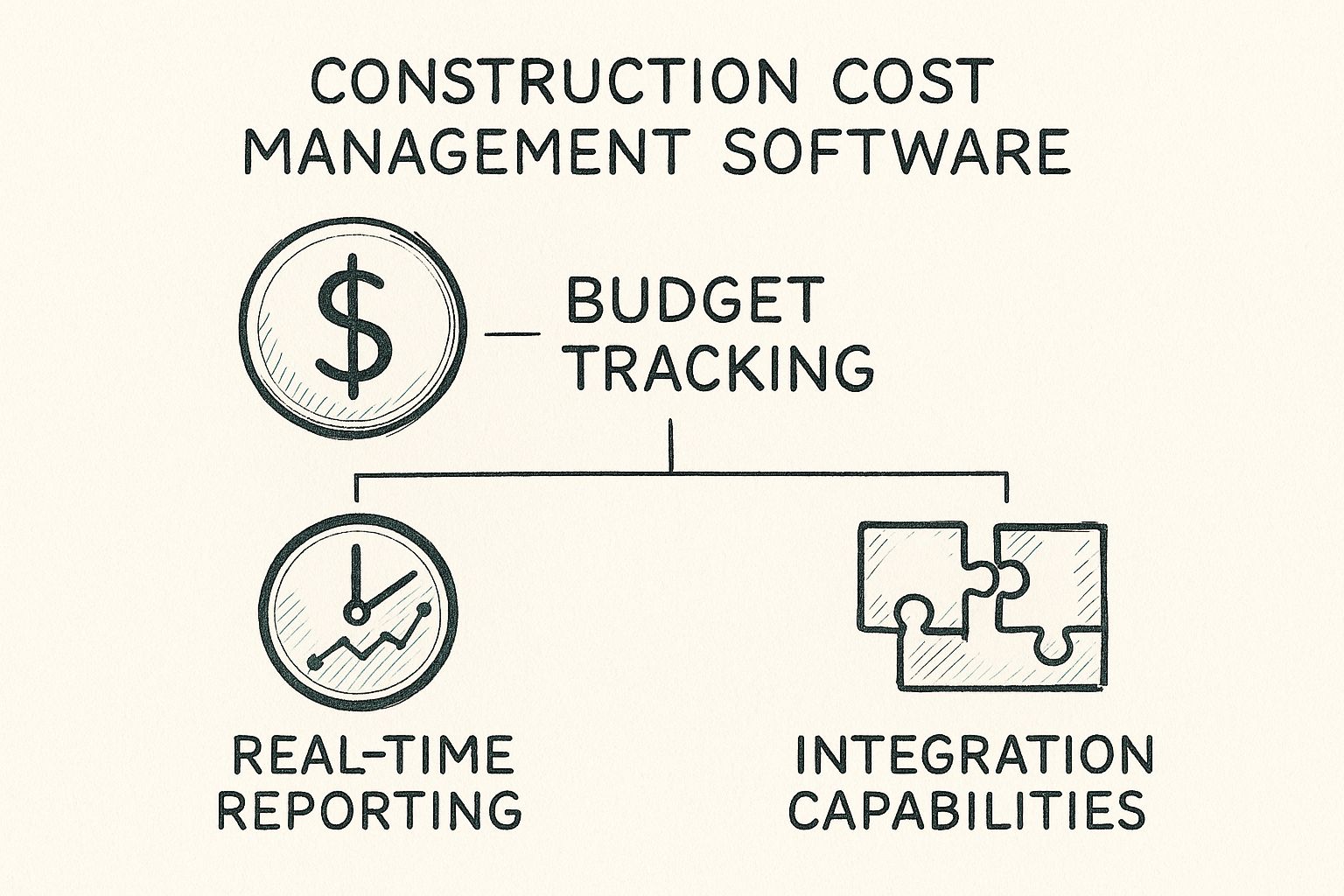
It’s the combination of budget tracking, live reporting, and smart Salesforce integration that creates a single, powerful system for financial oversight.
How Core Features Solve Business Challenges
Let's look at the key features and connect them to the real-world business challenges construction firms face.
| Feature | Business Challenge Addressed | The Salesforce-Integrated Solution & Results |
|---|---|---|
| Dynamic Budgeting & Forecasting | Static budgets become obsolete almost immediately, leading to inaccurate financial planning and surprise overruns. | Allows for proactive adjustments to spending, protecting margins by anticipating costs before they spiral out of control. |
| Real-Time Job Costing | Delays in expense reporting mean budget blowouts are only discovered at the end of the month, when it's too late to fix them. | Provides immediate visibility into spending on labour and materials, enabling quick corrections to keep projects on track. |
| Change Order Management | "Scope creep" and informal client requests lead to unbilled work, disputes, and significant profit erosion. | Turns extra work into documented, approved, and billable revenue, ensuring every hour and material is accounted for. |
| Reporting & Analytics | Raw financial data spread across multiple systems makes it impossible to get a clear, high-level view of portfolio health. | Consolidates data into easy-to-understand Salesforce dashboards, enabling strategic decisions based on real-time profitability insights. |
Each of these features directly tackles a common source of financial pain, turning potential losses into protected—or even enhanced—profits.
Dynamic Budgeting and Forecasting
A budget created at the start of a project is a great starting point, but it's guaranteed to be outdated within weeks. That’s where dynamic budgeting comes in. The software treats the budget as a living document that flexes and adjusts as the project moves forward. This feature lets you see the real-time financial impact of every expense and change order as it happens.
Forecasting tools take this a massive step further. They analyse current project data and even historical trends to predict the final project cost, often called the Estimate at Completion (EAC). This predictive insight is gold; it allows project managers to spot potential overruns weeks or even months ahead, giving them plenty of time to take corrective action before margins get squeezed.
Real-Time Job Costing and Expense Tracking
To stop budget leaks, you have to see them the moment they start. Real-time job costing is the feature that delivers this crucial daily visibility, tracking every single dollar spent on labour, materials, and subcontractors against specific project codes.
This detailed, up-to-the-minute tracking gives you instant answers to vital questions like:
- Are we spending too much on a particular trade?
- Did the materials for the second floor come in higher than our estimate?
- How many labour hours have we logged against the framing stage so far?
When a site supervisor approves an invoice on their tablet, that expense is instantly reflected in the project's overall financial health back in the office. This immediate feedback loop is what separates the profitable firms from those constantly caught off guard by end-of-month reports.
Formalised Change Order Management
Scope creep is a notorious profit killer. A solid change order management feature transforms this chaotic, often verbal, process into one that is structured, transparent, and—most importantly—profitable.
Here's a use case: a client requests a different kitchen benchtop. Instead of a verbal agreement, the project manager creates a formal change order in the software. The system automatically calculates the cost and time implications, generates a document for client approval, and, once signed, seamlessly updates the project budget and schedule.
This formalised workflow ensures you get paid for all the work you do. It protects your bottom line by converting every client request into a documented, approved, and billable change, wiping out disputes and preserving your original project margin.
Powerful Reporting and Analytics on Salesforce Dashboards
Ultimately, raw data is only useful if it's turned into strategic insight. This is where integrating your construction cost management software with a platform like Salesforce makes a real difference. When all your project financial data is synced, it can be visualised on powerful, custom-built Salesforce dashboards.
This allows executives and project managers to see, at a single glance:
- Project Profitability: Which jobs are on track, and which are at risk?
- Portfolio Health: What's the overall financial performance across all active projects?
- Client Value: Which of our clients are consistently tied to our most profitable work?
This level of integrated reporting turns financial data from a historical record into a forward-looking strategic asset. Technology is only half the battle; combining it with solid principles is key, and there are great resources for mastering project cost estimating for flawless budget control. When you pair sound fundamentals with powerful cloud solutions, you create an unbeatable formula for success.
Unlocking Growth with a Salesforce Integration
Standalone construction cost management software is a powerful tool, but its true potential is unlocked when it’s part of a connected business ecosystem. Integrating your platform directly with Salesforce is a genuine competitive advantage. This digital transformation turns siloed project data into a strategic asset that fuels growth and strengthens client relationships. As a Salesforce partner, we've seen this bridge between on-site operations and commercial strategy deliver incredible results.
This integration solves a critical challenge. Imagine your sales team preparing a quote for a returning client. Without a connected system, they're flying blind, basing their proposal on standard templates and gut feelings. They have no easy way to know if past jobs for that client were profitable or problematic. This information gap is where inaccurate bids and unprofitable projects are born.
Creating a Unified View of Your Clients in Salesforce
Connecting your cost management software to Salesforce breaks down these internal walls. It creates a seamless flow of information, enriching your client records in Salesforce with live project financials. A client’s account in your CRM is no longer just a collection of contact details; it's a complete financial history of your relationship.
This unified view empowers every team to make smarter, data-driven decisions.
-
For Sales Teams: They can instantly see the profitability of every past project for a client. The results? They craft more accurate, competitive, and profitable quotes, focusing efforts where the returns are greatest.
-
For Project Managers: They gain a deeper understanding of the client relationship, seeing the full history beyond their current build. This context helps them manage expectations and communicate more effectively.
-
For Leadership: Executives can pull reports within Salesforce that reveal which types of projects or client segments are most profitable, guiding big-picture business decisions.
This 360-degree client view transforms your CRM from a simple sales tool into a central hub of business intelligence. It gets sales, operations, and finance all working from the same playbook, aligned on the ultimate goal of profitable growth.
Empowering Sales with Profitability Data
The most immediate impact of this integration is on your sales process. When your team can clearly see which clients and project types consistently deliver the best margins, they can fine-tune their strategy. This data-driven approach takes the guesswork out of bidding and directly protects your bottom line.
Consider this use case: a client frequently requests complex, last-minute changes that erode profits, even if the initial contract value was high. Without integrated data, your sales team might see them as a high-value account and chase similar work. But with an integrated view in Salesforce, they see the full story—the endless change orders, the razor-thin margins—and can approach the next bid with a more strategic pricing model. This is a core part of a successful business evolution. For a deeper dive, explore insights into the role of Salesforce development consultants in digital transformation, which explains how specialists can architect these powerful integrations.
Enhancing the Client Experience with Experience Cloud
The benefits don't just stop at internal efficiency; they also dramatically improve your client service. By using Salesforce Experience Cloud, you can create a secure, branded online portal for your clients. This portal pulls data directly from your integrated systems, offering clients a level of transparency they've never had before.
Through their own dedicated portal, clients could:
- View the real-time project budget and see how payments and approved change orders have impacted costs.
- Access key project documents, schedules, and progress photos in one central spot.
- Communicate directly with the project team, creating a clear and documented record of all conversations.
This transparency builds incredible trust and sets your firm apart. It turns the client relationship into a genuine partnership, reducing disputes and ensuring everyone is aligned from groundbreaking to final handover. The result is a more professional, organised, and client-focused operation—a key benefit of a well-implemented cloud solution.
Choosing the Right Cost Management Software for Salesforce
Picking the right construction cost management software is a choice that will impact every corner of your business. Get this right, and you’ll unlock efficiencies and profits. As a Salesforce partner, our advice is to look past slick sales presentations and zero in on a platform that solves your real-world problems and integrates seamlessly with your CRM.
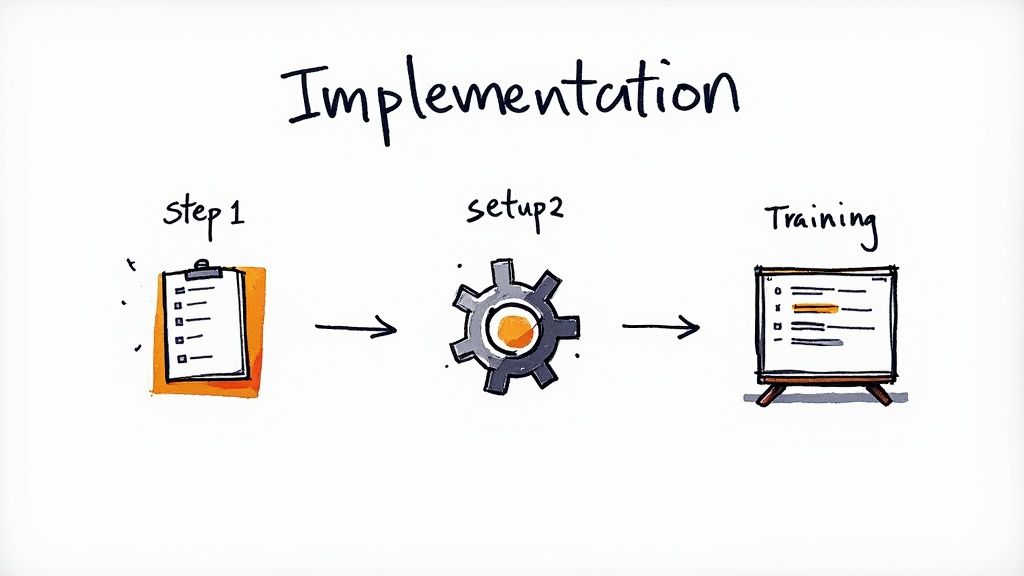
Before booking a single demo, take time to map out your current workflows. Where are the bottlenecks? What’s the usual cause of budget blowouts? Pinpointing these pain points gives you a checklist of non-negotiable features your new software must have.
Evaluating Core Functionality and Usability
With a clear picture of your needs, you can start weighing options. The technical specs matter, but so does how your team will actually use the platform daily.
A user-friendly interface is non-negotiable. If the software is a headache to navigate, your team won't use it, and your investment is wasted. The design must be intuitive, making it easy for everyone from project managers to site supervisors to get on board. This is especially true for mobile.
Your crew on-site is your first line of defence in cost control. The software must have a solid, easy-to-use mobile app that lets them track expenses, approve invoices, and log labour hours right from the job site. Without that, you create a data lag that defeats the purpose of real-time visibility.
Scalability and Future-Proofing Your Investment
Your business isn't standing still, so your software shouldn't either. Scalability is critical. The platform you choose today must be ready to handle your firm's growth tomorrow.
Ask yourself these questions:
- Can the software handle more projects and users as your company expands?
- Does it offer different tiers or add-ons, allowing you to add more advanced features later?
- Is the provider investing in their own product with regular updates and innovation?
The industry is also changing. For instance, the growing focus on sustainability means that integrating carbon accounting into construction cost management is becoming a must-have for firms looking to meet new regulations. A forward-thinking platform ensures your investment stays relevant.
The Critical Role of Salesforce Integration
For any construction business serious about growth, this is the key question: how well does the software integrate with your CRM? A native, rock-solid connection to Salesforce elevates a tool from being merely useful to being an indispensable business asset. This integration is the key to creating that single source of truth.
When evaluating an integration, here’s our best practice checklist:
- Native Connectors: A pre-built, native integration is far superior to a custom-coded solution. It’s more reliable, easier to maintain, and ensures data flows seamlessly.
- Bi-Directional Sync: Data must travel both ways. Project financials from your cost tool should update client records in Salesforce, and new project details from Salesforce should automatically create jobs in your construction software.
- Customisable Data Mapping: Your business is unique. You need the ability to decide exactly which data fields sync between systems to match your operational workflows.
Ultimately, choosing the right construction cost management software is about finding a partner for your long-term success. By focusing on usability, scalability, and a deep integration with Salesforce, you can land a platform that truly empowers your team, protects your margins, and lays the groundwork for sustainable growth.
A Roadmap for Successful Implementation with a Salesforce Partner
Even the most powerful construction cost management software will fail if the rollout is disorganised. The best technology is only as good as its implementation, which is why a clear, strategic roadmap is non-negotiable. This isn't just installing software; it's a business transformation that demands careful planning, expert guidance, and a focus on getting your team on board.
Bringing a Salesforce partner into the project early is your first step towards a smooth transition. An experienced partner provides a proven methodology, helping you navigate common pitfalls and configure the system to support your specific workflows—not the other way around. This ensures your investment is geared to deliver measurable results from the start.
Adopt a Phased Approach
A "big bang" implementation is a recipe for chaos. A far smarter strategy is a phased rollout, starting with a pilot project. This allows a smaller, dedicated team to test the new software in a real-world but controlled environment.
One of our clients, a mid-sized commercial builder, started with just two project managers and their teams. They used the new system on a single project, allowing us to iron out process kinks, fine-tune workflows, and build a core group of internal champions. Their success story became our most powerful tool for driving wider adoption during the full rollout.
Prioritise Clean Data Migration
The accuracy of your new system hinges on the quality of the data you feed it. Simply dumping years of messy project data into a pristine new platform is a critical error. You’ll contaminate your single source of truth before you even begin.
Our best practice is to commit to a thorough data cleansing process before migration. This involves:
- Archiving old, irrelevant project files to reduce clutter and migration time.
- Standardising data formats for consistency across cost codes, client names, and supplier details.
- Validating historical data for accuracy, correcting errors to ensure your opening reports are reliable.
Taking the time to clean your data ensures your team is working with financial information they can trust. It’s a foundational step for accurate forecasting and reporting in the new software and your integrated Salesforce environment.
Deliver Role-Specific Training
Generic, one-size-fits-all training sessions are a waste of time. To ensure your team embraces the new platform, training must be tailored to their specific roles. It has to show each person exactly how the software makes their job easier.
For instance, a project manager’s training should focus on real-time budget tracking and managing change orders. A site supervisor needs to become an expert with the mobile app for on-the-go expense approvals. By customising the training, you directly answer the "What's in it for me?" question for every team member, which is key to overcoming resistance. For a more detailed breakdown of these critical steps, check out our complete Salesforce implementation guide for Australian businesses.
The goal of implementation isn't just to go live; it's to empower your team. When people see how the technology directly helps them solve their daily challenges, user adoption follows naturally.
This focus on digital tools reflects a major industry trend. In Australia, the construction management software market is booming, valued at approximately USD 1483.87 million in 2024. This rapid growth signals a clear shift towards using technology for tighter financial control. You can explore detailed market growth projections on Mordor Intelligence. By following a structured implementation plan with an experienced Salesforce partner, your firm can successfully make this transition and secure a strong competitive edge.
Answering Your Salesforce and Construction Software Questions
Adopting new construction technology, especially with a Salesforce integration, always brings up practical questions. Here, we answer the most common queries from construction firms to provide clear insights into the value of a connected, data-driven operation.
How does construction cost software differ from our accounting software?
It’s a great question. While your accounting software, like Xero or MYOB, provides a high-level view of your company’s financial health, it wasn’t built for the granular detail of project-level control. Construction cost management software is purpose-built for the day-to-day finances of individual jobs.
Think of it this way: your accounting software is the satellite image of your business landscape. Cost management software is the surveyor on the ground, mapping every detail of a specific project.
It’s designed for:
- Detailed Job Costing: Assigning every dollar of labour, materials, and subcontractor costs to specific cost codes.
- Real-Time Budget Tracking: Seeing where your budget stands today, not weeks from now.
- Project-Specific Workflows: Handling unique construction processes like progress claims and change orders.
When you integrate them, the detailed project data from your construction software flows into your accounting system, giving you the best of both worlds: tight project control and an accurate, high-level financial picture.
What is the main benefit of integrating construction software with Salesforce?
The primary benefit is creating a single source of truth that connects your project delivery teams with your sales and client relationship teams. Without this integration, they operate in silos with conflicting information.
An integrated system is a game-changer. It feeds live project financial data directly into your client records within Salesforce. Suddenly, your sales team can see a client’s complete project history and profitability before preparing a new quote. Your project managers gain a richer understanding of the client relationship, looking beyond the current job.
This 360-degree view helps you draft smarter bids, offer better client service, and strategically focus on your most valuable customers—all from within your CRM. This is the core of a successful digital transformation.
Is this type of software affordable for a small firm?
Absolutely. The idea that this technology is only for large enterprises is outdated. Cloud-based Software as a Service (SaaS) has made powerful construction cost management tools accessible for firms of all sizes.
Most providers offer flexible, tiered pricing. A smaller firm can start with core features like job costing and expense tracking, then add advanced modules as the business grows. You select a plan that fits your budget and needs, knowing the platform can scale with you.
The return on investment often appears quickly. Preventing just one major budget overrun or avoiding one unprofitable project type can easily cover the software subscription for a year. It’s a smart financial move for any contractor serious about protecting their margins.
How long does a typical implementation take with a Salesforce partner?
The timeline depends on your firm's size, the number of users, and the complexity of your existing data. That said, a typical implementation and Salesforce integration for a small to mid-sized construction business usually takes between 4 to 12 weeks.
From our project experience, the process breaks down into four key stages:
- Discovery and Planning: We map out your current workflows and establish clear goals for the new system.
- System Configuration and Integration: We set up the software and build the seamless data connection to Salesforce.
- Data Migration: We carefully clean and import your existing project and client information into the new platform.
- User Training and Go-Live: We train your team so they can hit the ground running from day one.
Engaging an experienced Salesforce partner keeps the process smooth and on schedule. As a partner, we help you avoid common pitfalls, ensure the final setup is a perfect fit for your business, and get you seeing value from your cloud solution much faster. For a deeper dive, you can find answers to other common questions in our comprehensive FAQ section.
Ready to gain complete control over your project financials and connect your operations with your sales strategy in Salesforce? At Adaptal, we are the Salesforce partner that specialises in implementing and integrating powerful cloud solutions to drive profitability and growth for construction businesses.