
In property development, you're not just managing a build – you're the conductor of a complex orchestra. From the first handshake on a land deal to the final sale, effective property development project management is about strategically coordinating every specialist, supplier, and dollar to deliver a project on time, on budget, and to the highest standard. This guide shares our experience as a Salesforce partner in helping developers solve these challenges.
The Challenge: Disconnected Data and Spiralling Costs
In Australia's fiercely competitive property market, developers juggle council approvals, fluctuating material costs, and an army of contractors. To succeed, you need absolute control over countless moving parts. The business challenge we see most often is reliance on disconnected spreadsheets, chaotic email threads, and siloed information—an approach that leads to missed deadlines and budget blowouts.
This is where a modern, centralised platform like Salesforce becomes a non-negotiable solution. It creates a single source of truth, connecting architects, town planners, investors, and sales agents on one unified CRM system. Instead of fighting fires, developers can use real-time data and intelligent automation to make proactive, informed decisions that drive digital transformation.
The Salesforce Solution: A Centralised Command Centre
Imagine having a complete, real-time overview of your entire project portfolio. A well-configured Salesforce CRM becomes the central nervous system for your operation, turning data into your most valuable strategic asset.
This unified view delivers significant benefits:
- Complete Project Visibility: Real-time dashboards track milestones, budgets, and communications, eliminating nasty surprises.
- Improved Stakeholder Collaboration: Secure portals via Salesforce Experience Cloud give investors and contractors the project information they need, building trust through transparency.
- Streamlined Processes with Automation: Automate repetitive tasks like follow-ups and report generation, freeing your team to focus on high-value work.
- Enhanced Risk Management: Spot potential bottlenecks and budget blowouts early, tackling risks before they become crises.
By connecting every touchpoint in the development lifecycle on a cloud solution like Salesforce, you unlock the insights needed to boost performance, control costs, and drive more profit from every project.
We've seen it time and time again: firms that implement Salesforce gain a massive competitive advantage. You can explore our Salesforce case studies to see how developers have solved these exact challenges. As an expert Salesforce partner, we specialise in tuning the platform to become your conductor's baton, turning operational chaos into predictable, profitable outcomes.
Using Salesforce to Manage the Five Stages of Development
Every property development follows five distinct stages, each with unique challenges. Getting one stage wrong creates ripple effects that jeopardise the entire venture. This is why having a central CRM to manage every moving part is essential. A well-configured Salesforce platform acts as the project's command centre, providing the clarity and control needed to guide an idea from a sketch to a profitable reality.
This visual breaks down the flow, from scouting a site to handing over the keys, illustrating the critical path every developer must navigate.
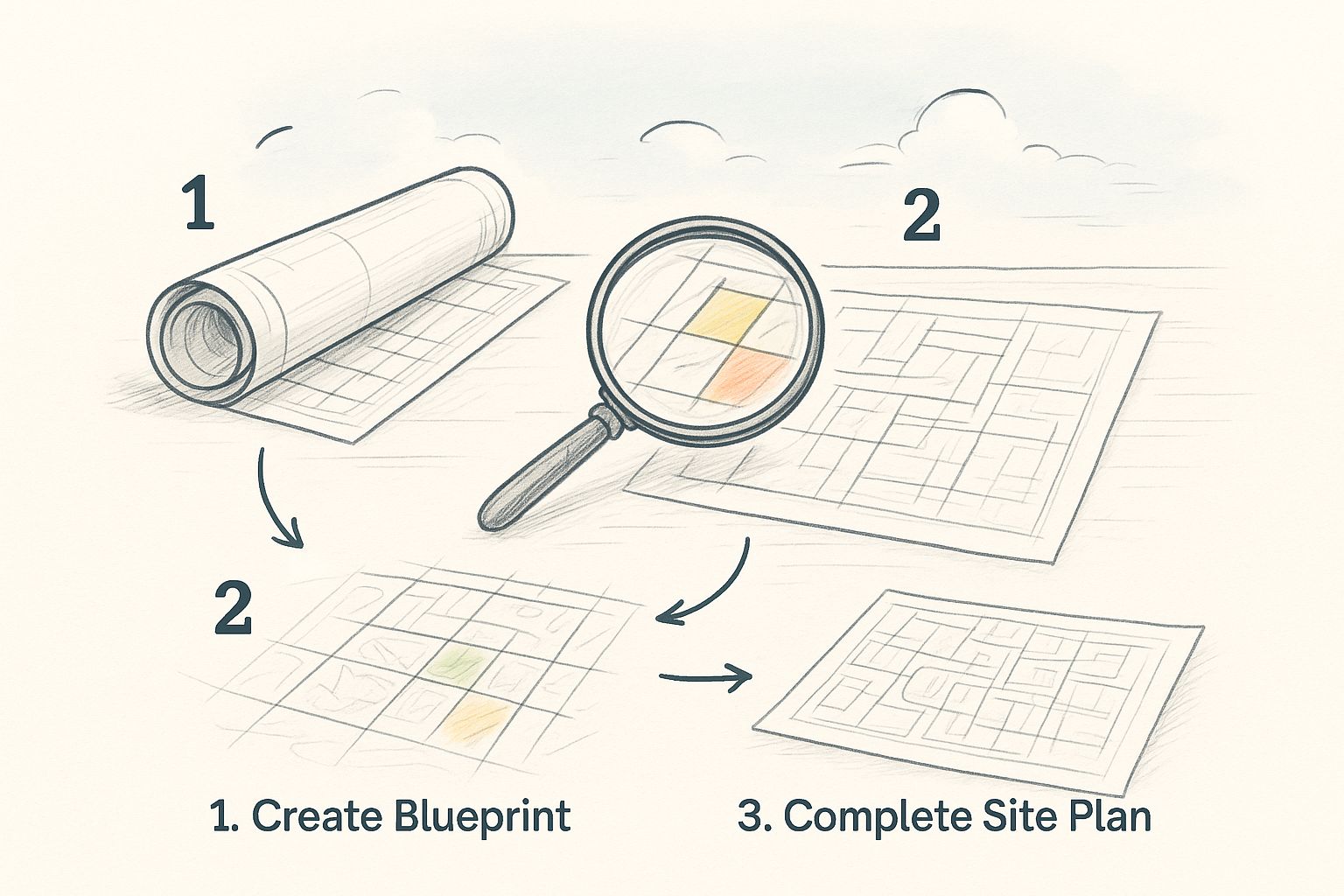
As you can see, decisions made in acquisition and design have massive consequences during construction and sales. Let's explore the key challenges in each stage and how a tailored Salesforce solution delivers results.
| Development Stage | Business Challenge | How a Salesforce Solution Helps |
|---|---|---|
| Stage 1: Acquisition & Feasibility | Managing vast data for multiple sites, leading to missed opportunities or flawed due diligence. | Create a centralised database in Salesforce to track sites, financial models, and communications for swift, informed decision-making. |
| Stage 2: Design & Approvals | Juggling countless documents, consultant feedback, and complex government approval workflows, causing costly delays. | Map and automate approval workflows in Salesforce, creating a single source of truth for all project documents and stakeholder communications. |
| Stage 3: Financing & Pre-Construction | Manually compiling progress reports for investors is time-consuming and prone to errors. | Automate reporting with real-time Salesforce dashboards, providing stakeholders with secure access to project progress and budget data. |
| Stage 4: Construction | Lack of real-time visibility into budget overruns, timeline delays, and on-site quality control issues. | Use Salesforce to track budgets against actual spend, manage variation requests, and log site inspections to proactively address issues. |
| Stage 5: Marketing & Sales | Disconnected marketing efforts (e.g., in Pardot/Account Engagement) and sales outcomes, making it hard to track ROI. | Manage the entire lead-to-contract process in Sales Cloud to gain clear insights into the sales pipeline and optimise marketing spend. |
This table provides a high-level snapshot, but diving into each stage reveals just how critical a unified platform can be for navigating the complexities of modern property development.
Stage 1: Acquisition And Feasibility
This is where it all begins: finding and vetting potential development sites. Success hinges on sharp due diligence and accurate financial modelling. The business challenge is managing an ocean of data across multiple sites in spreadsheets, which quickly become a tangled mess.
Our Lesson: With Salesforce, you can build a central database of every potential site. Each record can track due diligence status, key contacts, financial models, and all communications, ensuring your team is always working with the right info.
Stage 2: Design And Approvals
Once a site is secured, the vision becomes tangible. This phase is about collaborating with architects, engineers, and planners to create designs and navigate the tricky council approval maze. The challenge here is that projects get bogged down in delays from managing documents and chasing application statuses. A custom Salesforce solution helps you map out and automate these complex approval workflows, giving everyone a single source of truth.
Stage 3: Financing And Pre-Construction
With approvals in hand, the focus shifts to locking down funding and preparing to break ground. Transparency is king. Investors and lenders need detailed, up-to-the-minute reports. The problem is that pulling this data together manually is slow and a recipe for mistakes. Salesforce can automate this reporting, giving stakeholders secure, real-time dashboards that build confidence and maintain trust.
Stage 4: Construction
This is the most capital-intensive and high-risk part of the project, where the project manager juggles schedules, costs, and quality control. Common headaches include:
- Budget Overruns: Unexpected site issues or material costs can blow the budget.
- Timeline Delays: Bad weather or supply chain hiccups can push back completion.
- Quality Control: Ensuring the build meets design specs is a full-time job.
A solid property development project management platform like Salesforce provides a real-time window into construction. It can track budgets against actual spend, manage variation requests, and log site inspections, empowering your team to solve problems before they snowball. We’ve seen this firsthand in our Country Club Living case study, where streamlined operations were a game-changer.
Stage 5: Marketing And Sales
Finally, the project is ready for the market. This stage involves launching marketing campaigns, managing buyer enquiries, and processing contracts. The challenge is connecting marketing spend to sales results. By managing the entire journey from lead to contract in Salesforce Sales Cloud, you get crystal-clear insights into your sales pipeline, can track agent performance, and forecast revenue with greater accuracy. This data-driven approach ensures you maximise ROI and hit sales targets.
Uniting Key Players on Salesforce for Project Success
Successful property development is an orchestra, not a solo act. You need specialists working in harmony. When everyone is on the same page, the project flows. When they operate in separate worlds, the venture is at risk.

The primary business challenge that derails timelines and blows budgets is almost always miscommunication and data gaps. An architect working from an outdated blueprint or a project manager unaware of a material delay—these are the fractures that lead to costly rework. The old way of juggling email chains and disconnected spreadsheets can’t keep pace.
Defining Roles and Responsibilities
To understand why a connected CRM is so powerful, you have to appreciate the distinct roles each key player holds:
- The Developer: The visionary and investor who carries the financial risk and makes final calls on scope and budget.
- The Project Manager: The conductor who handles day-to-day coordination of schedules, budgets, contractors, and communications.
- The Architect: The designer who translates the vision into compliant and functional blueprints.
- The Builder/General Contractor: The hands-on leader responsible for physical construction and quality.
Demand for skilled project managers is skyrocketing. Australia is expected to need around 2.3 million new project management professionals annually until 2030, a surge driven by project complexity. This talent shortage makes efficient collaboration tools even more critical. You can dive deeper into project management trends on KBS.edu.au.
Salesforce as The Collaborative Hub
This is where a central platform like Salesforce becomes indispensable. It’s not just software; it's the digital backbone for the entire team, breaking down communication barriers and creating a ‘single source of truth’ that aligns everyone around real-time information.
By creating a connected ecosystem, Salesforce ensures every stakeholder—from the developer in the boardroom to the builder on-site—is working from the same, up-to-the-minute blueprint. This eliminates guesswork and fosters transparency.
An expert Salesforce partner can set up the platform to serve as a collaborative command centre. All stakeholders can access relevant project data, track conversations, and manage documents in one secure, central location.
A Case Study in Collaboration: Preventing Rework
Let’s make this real. Imagine an architect uploads revised plans directly into Salesforce. The system automatically notifies the project manager and builder, who can pull up the new version instantly on-site. Just like that, you’ve prevented the expensive mistake of building from outdated drawings. Or a builder logs a budget variation request on their phone via Salesforce Field Service. The project manager gets an alert, reviews its impact on the budget in a real-time dashboard, and forwards it for approval—all within minutes. This is how an expert Salesforce partner builds a truly collaborative digital environment for successful property development project management.
How Salesforce Turns Project Risks into Opportunities
In property development, risk is a certainty. The challenge isn't avoiding risk—it's anticipating and managing it. For too long, the industry has relied on a patchwork of disconnected spreadsheets, a dangerously reactive approach that hides problems until they’re too big and expensive to fix.
From Reactive to Proactive Risk Management with Salesforce
Modern projects demand a strategic shift from putting out fires to preventing them. The solution is visibility. A centralised platform like Salesforce becomes a developer's most powerful ally in safeguarding their investment. Instead of digging through old emails, teams can glance at real-time dashboards that give them a single, trustworthy view of project health, empowering them to tackle bottlenecks before they cause a domino effect of delays.
Confronting Common Australian Development Risks with CRM
In Australia, certain risks consistently test developers. Projects spanning 12 to 36 months are often stretched by council approval delays, while rising material costs complicate budgets. A properly configured Salesforce solution helps you tackle these threats head-on:
- Planning & Approval Delays: Map the approval process in Salesforce, set automated reminders for deadlines, and track all communications with councils to keep applications moving.
- Budget & Cost Overruns: Integrate financial data to track actual spending against the budget in real-time. Custom alerts can flag when a cost centre is nearing its limit, allowing project managers to act before the budget is breached.
- Market & Sales Volatility: Your CRM data becomes an early warning system. Monitor lead velocity and conversion rates in Sales Cloud to get an early read on buyer sentiment and adjust marketing strategies proactively.
A well-configured Salesforce platform transforms risk management from a guessing game into a data-driven discipline, providing the foresight needed to protect your bottom line and maintain project momentum.
A Case Study in Proactive Control: The Live Portfolio Dashboard
A developer we worked with was juggling three mid-rise residential projects using weekly reports compiled from multiple spreadsheets. By the time they spotted a cost overrun, the money was gone. After implementing a Salesforce solution, they gained a live portfolio dashboard. One morning, the dashboard flagged that subcontractor costs on one project were trending 15% higher than forecasted. The developer immediately drilled down into the data, pinpointed the trade responsible, and resolved the issue that day. This is the power of proactive control. You can learn more with a practical guide to contract risk management. As a dedicated Salesforce partner, we specialise in building these systems that turn data into decisive action.
Adopting Salesforce Best Practices for Modern Developers
Staying competitive demands a commitment to modern best practices that drive efficiency and boost profitability. The most successful projects are built on digital tools, data-driven decisions, and transparent communication.
For the modern developer, this means ditching fragmented systems and embracing a single, powerful platform. This is the heart of effective property development project management—creating a central nervous system for your entire operation.
Embrace Full Digital Transformation with a Salesforce Partner
The first step is a full commitment to digital transformation. This isn’t just buying software; it's a fundamental shift in how your team works. It means centralising every piece of project information into one accessible platform, breaking down data silos. A custom-configured Salesforce solution is the perfect CRM for this, acting as the single source of truth.
Our Lesson: When your entire team works from the same real-time data in Salesforce, you slash errors, make faster decisions, and build a culture of accountability. This is the backbone of a modern real estate tech stack.
By connecting every process, you gain an unparalleled view of your portfolio. Explore our guide on why Salesforce is the backbone of modern agencies.
Foster Transparent Stakeholder Communication with Experience Cloud
With investors and contractors, trust is your most valuable currency. A best practice is to foster transparency through clear, data-backed communication. This is where Salesforce Experience Cloud changes the game. You can create secure, branded portals where stakeholders can log in anytime to see real-time project updates, financial dashboards, and key documents. This proactive approach builds trust and frees up your team's time.
Capitalise on Emerging Market Trends Using CRM Data
The Australian property market never stands still. Programs like the $10 billion Housing Australia Future Fund (HAFF) and the rise of the build-to-rent (BTR) model are creating huge opportunities. A flexible CRM system like Salesforce is your secret weapon for agility. It allows you to pivot quickly, track compliance for government-funded projects, manage unique BTR leasing workflows, and analyse market data to spot promising opportunities before the competition.
Choosing the Right Salesforce Partner for Your Projects
As we've seen, modern property development project management thrives on a powerful, central platform. Moving to an integrated CRM like Salesforce is a necessity. But the most critical step is choosing the right implementation partner.
Success isn’t just about the technology; it’s about the expertise behind it. A generic, off-the-shelf CRM setup won't understand the nuances of site acquisition, council approvals, or construction milestones. You need a Salesforce partner who lives and breathes your industry.
Why Industry Expertise is a Non-Negotiable
Choosing a Salesforce partner with proven experience in property development is everything. They aren't just configuring software; they're building a solution that speaks your language and solves your real-world challenges. A true expert partner translates your operational needs into a perfectly tuned digital environment.
Our Lesson Learned: The right partner helps you transition from a reactive methodology to an integrated, efficient, and more profitable way of working, building a foundation for scalable success.
Your Next Step to a Smarter Workflow
Making the jump to a unified platform can seem daunting, but with the right guidance, it’s a smooth and rewarding process. The goal is simple: create a single source of truth that gives you complete control over every project in your portfolio.
At Adaptal, we are a Salesforce partner that builds solutions delivering measurable results. Our team combines deep Salesforce knowledge with hands-on experience in the Australian property sector. We're ready to map out your ideal workflow and build a system that meets your unique needs.
Ready to build a better blueprint for your business? Explore our Salesforce consulting services to learn how we help developers like you. Let's schedule a chat and see how a properly configured Salesforce solution can drive your future projects forward.
Frequently Asked Questions About Salesforce for Property Development
Here are some answers to common Salesforce questions we hear from professionals in property development project management.
Why are spreadsheets inefficient for property development projects?
Spreadsheets are a liability for complex development projects because they're static and siloed. The business challenge is that decisions are often made on outdated information. Key risks include:
- No Single Source of Truth: Multiple versions of a budget file create chaos and lead to expensive rework.
- Manual Entry Errors: One typo can throw off an entire project budget with no real audit trail.
- Lack of Collaboration: They weren't built for teams, creating a disconnect between the office and the construction site.
- Poor Security: Sensitive project and financial data is completely unsecured.
Spreadsheets create dangerous blind spots, forcing a reactive approach instead of proactive property development project management.
How does Salesforce improve communication with investors?
Salesforce builds investor confidence through transparency. Instead of spending days compiling reports, you can provide stakeholders with secure, real-time access to the information they care about using Salesforce Experience Cloud. This solution lets you build a branded, secure online portal where investors can:
- View live project dashboards tracking key milestones and budget performance.
- Access a central library of important documents like plans and approvals.
- Get automatic notifications when a major milestone is hit.
This proactive communication shows a level of professionalism that strengthens relationships and builds trust for future projects.
What is the first step to implementing Salesforce for my development business?
The most important first step is finding a Salesforce partner who genuinely understands both the platform and the property development industry. A generic setup won’t address the specific workflows and challenges unique to your business. A specialised partner will always start with a deep-dive discovery process to map out your current processes, pinpoint pain points, and define what success looks like for your team. This initial groundwork is the foundation for a successful implementation that delivers a real return on your investment.
Ready to move beyond spreadsheets and gain true control over your development projects? As a Salesforce partner, Adaptal brings together deep platform expertise with hands-on property industry experience to build solutions that drive efficiency and boost profitability.
Schedule a free consultation today to see how we can configure a Salesforce platform that truly works for your business.