
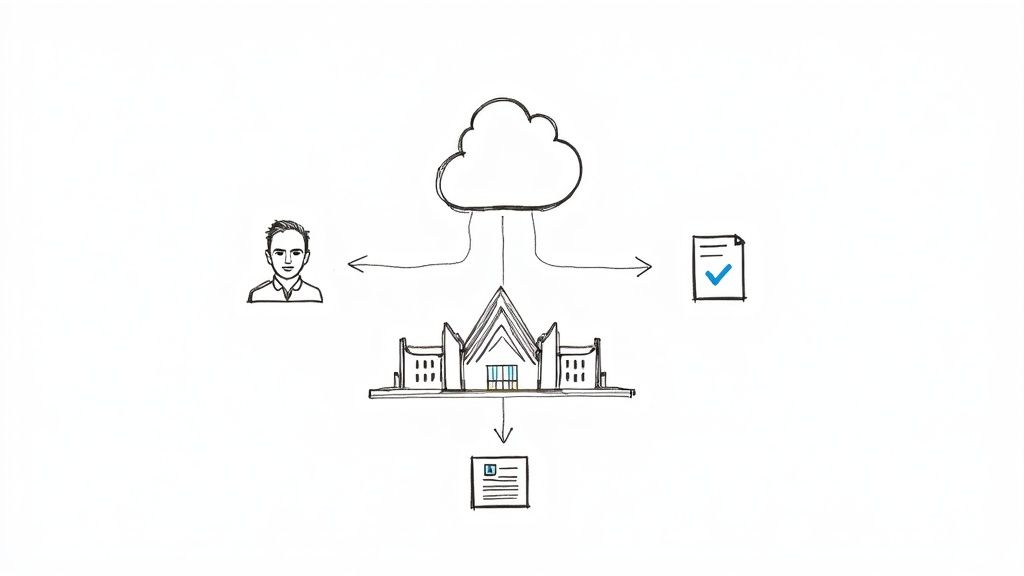
Salesforce's Public Sector Solutions offer a specialised CRM platform designed to help government agencies modernise outdated, inefficient systems. The core objective is to create a unified digital environment that enhances service delivery, streamlines operations, and builds stronger connections with citizens. It’s about shifting from process-centric operations to a citizen-first model of governance.
The Challenge: Why Government Services Need a Digital Overhaul
For decades, Australian government agencies have contended with a patchwork of disconnected legacy systems. This siloed approach creates significant challenges. Citizens often have to repeat information across different departments and navigate cumbersome, paper-based processes. Internally, public servants spend valuable time searching for data across multiple databases instead of focusing on service delivery. This inefficiency leads to slower response times, increased operational costs, and a growing gap between public expectation and government capability.
This is precisely the problem Salesforce Public Sector Solutions was engineered to solve. It's more than just digitising forms or launching another online portal; it’s about fundamentally rethinking how government agencies operate. By providing a single, comprehensive CRM platform, Salesforce empowers agencies to break down internal barriers and build a connected digital foundation. This shift is enabling innovative approaches to public service, similar to the advancements being explored in the PBIF's AI challenge for government services, which highlight the future of citizen-centric technology.
The Move to a Unified Digital CRM Platform
Since 2018, the adoption of Salesforce by Australian government bodies has accelerated, driven by a clear need for improved community engagement and more efficient operations. A cloud-based CRM allows agencies to consolidate fragmented constituent data into one central location, simplifying processes like grant applications, permit approvals, and case management. As a Salesforce partner, we've seen agencies achieve significant results. For example, some Australian states have reported up to a 30% reduction in service processing times after implementing Salesforce, driven by intelligent automation and a single view of citizen data. This digital transformation aligns perfectly with Australia’s broader goals for a modernised public sector. To learn more, you can explore more insights on Salesforce for government here.
This digital shift delivers tangible benefits for all stakeholders:
- For Citizens: A consistent, seamless experience across all government touchpoints, with self-service options and faster resolutions.
- For Public Servants: A complete history of a citizen's interactions, enabling more personalised and effective support.
- For Agency Leaders: Real-time data and analytics to monitor performance, identify bottlenecks, and inform evidence-based policy decisions.
At its core, this digital transformation is about building trust. When government services are responsive, transparent, and easy to navigate, it strengthens the relationship between the public sector and the communities it serves. A powerful CRM is the engine that drives this change.
Understanding Salesforce Public Sector Solutions' Core Capabilities
To truly grasp the value of Salesforce Public Sector Solutions, it's essential to look beyond technical specifications and focus on the outcomes it enables for government agencies. This isn't just a list of features; it's a purpose-built toolkit for solving the daily challenges of public service, from managing complex citizen cases to administering grant programs with transparency.
The platform's central capability is creating a 360-degree citizen view. Imagine a single, trusted record for every resident, accessible across relevant departments. This simple concept eliminates the frustration of citizens having to repeat their story multiple times. It ensures every public servant has the complete context, allowing them to provide support that is not just efficient but also empathetic.
Unpacking the Core CRM Functions
Several key functions form the bedrock of the platform. Each is designed to replace a manual, often paper-intensive process with a streamlined, transparent digital workflow.
This visual illustrates how core functions like case management, workflow automation, and data analytics interconnect within a public sector cloud environment.
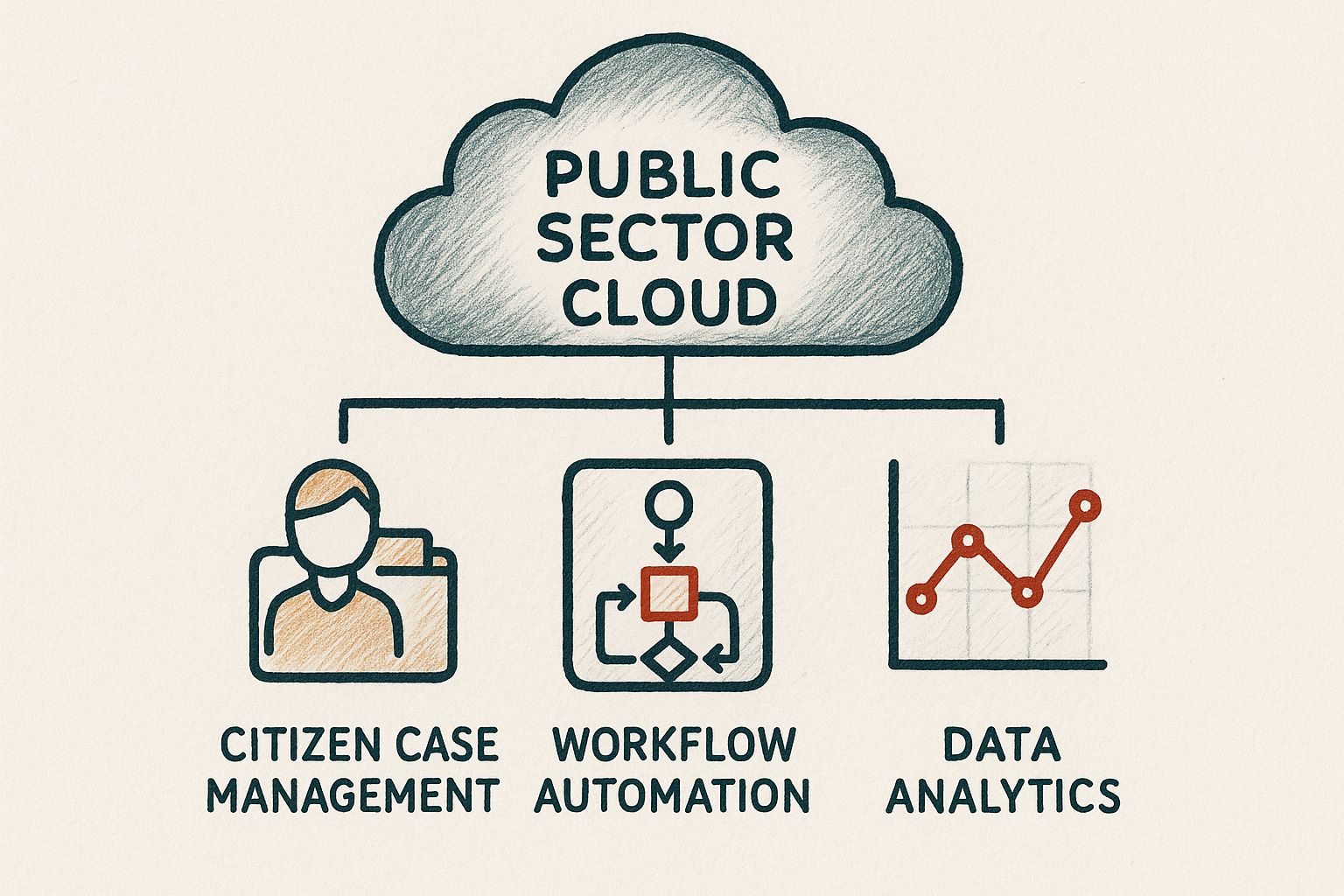
As you can see, connecting disparate data and automating workflows are the keys to unlocking superior case management and service delivery. These functions are not standalone tools; they are interconnected components of a single hub for government operations.
Here are the key components you’ll find:
- Case Management: The command centre for every citizen interaction. Whether it's a social services application, an incident report, or a request for information, all details are tracked in one place. This ensures accountability and prevents cases from falling through the cracks.
- Grants Management: The platform transforms the often-complex grants lifecycle into a clear, guided journey. Agencies can manage everything—from application and review to fund disbursement and reporting—all within one system.
- Licence and Permit Management: Say goodbye to endless paperwork. Salesforce digitises the entire application and approval process for licences and permits, providing citizens with a self-service portal to track progress and staff with automated workflows to accelerate approvals.
To illustrate how these capabilities map directly to government functions, we've created a simple breakdown.
Mapping Salesforce Features to Government Functions
| Salesforce Capability | Primary Government Function | Real-World Agency Example |
|---|---|---|
| Case Management & Workflows | Social Services & Citizen Support | A state welfare agency uses Salesforce to manage a family's journey from aid application to receiving benefits and ongoing support. |
| Grants Management | Funding & Program Administration | A federal department administers research grant applications, reviews, and disbursements for universities and non-profits on the platform. |
| Licence & Permit Management | Regulatory & Compliance Oversight | A local council automates the building permit process, from online submission by a resident to final inspection approval by a field officer. |
| Experience Cloud Portals | Public Engagement & Self-Service | A city government provides a portal where residents can report issues like potholes or broken streetlights and track their resolution status. |
| Analytics (Tableau) | Strategic Planning & Reporting | A public health authority analyses vaccination data in real-time to identify underserved communities and deploy targeted outreach campaigns. |
This table shows that for nearly every core government responsibility, there is a Salesforce capability ready to enhance efficiency and transparency.
From Data Silos to a Single Source of Truth
The traditional government operating model often involves data locked in separate systems that cannot communicate. One department manages business licensing, another handles public health, and a third oversees infrastructure, with no easy way to connect the information.
This creates massive inefficiencies and a fragmented citizen experience. Salesforce is designed to dismantle these data silos.
By integrating information across departments, the platform establishes a 'single source of truth'. This means a council worker reviewing a permit application can instantly see if the same business has outstanding compliance issues, enabling more informed and responsible decision-making.
This unified approach not only smooths out daily operations but also provides agency leaders with the clean, reliable data needed for strategic planning. With a complete picture of community needs and service demands, resources can be allocated more effectively and program impact can be accurately measured. An experienced Salesforce partner can help map these capabilities to your agency's specific mission—a key part of our Salesforce consulting services.
By breaking down these core capabilities, it becomes clear how Salesforce Public Sector Solutions directly addresses the operational challenges that hinder government efficiency, providing the framework for more responsive, transparent, and citizen-focused services.
Case Studies: Salesforce for Government Agencies in Action
It's one thing to discuss a platform's features, but it's another to see them delivering real-world impact. The true value of Salesforce Public Sector Solutions comes to life when we move from abstract capabilities to specific government applications. The platform is not a rigid, off-the-shelf product but a flexible foundation that can be configured to meet the diverse needs of public service.
This adaptability is crucial. It allows agencies to solve nuanced challenges with precision. As a Salesforce partner, we've seen firsthand how a well-configured platform delivers tangible results for both public servants and the citizens they serve.

The Challenge: A State Health Department Managing Public Health Initiatives
A state health department was responsible for a massive seasonal vaccination program. Before Salesforce, their process was a chaotic mix of spreadsheets, siloed patient databases, and manual phone calls. The results were predictable: confusion, missed appointments, and an inability to accurately track the program's progress.
The Salesforce Solution: A Unified Vaccination Management System
With Salesforce, the entire tangled process was unified into one cohesive system, leveraging multiple Salesforce clouds.
- Targeted Outreach (Marketing Cloud): The department used its data to identify and segment vulnerable populations, then launched personalised communication campaigns via SMS and email to encourage vaccination.
- Seamless Scheduling (Experience Cloud): A public-facing portal was created, allowing citizens to easily find nearby clinics, book appointments, and receive automated reminders, dramatically reducing no-show rates.
- Real-Time Analytics (Tableau): Agency leaders gained a live view of vaccination rates through interactive dashboards, enabling them to monitor progress by region, demographic, and clinic, and reallocate resources where needed most.
The Results: Improved Health Outcomes and Operational Efficiency
This wasn't just about better organisation; it was about delivering better health outcomes. The platform provided the tools to manage a complex, large-scale program with data-driven precision, transforming a logistical challenge into a streamlined operation that directly improved community wellbeing.
The Challenge: A Local Council Struggling with Community Service Requests
A local council was managing day-to-day services like road maintenance, park repairs, and waste management. In their old system, a resident's report of a pothole might get lost in an email inbox, leaving them with no visibility into whether their request was being addressed.
The Salesforce Solution: A Transparent Service Delivery Model
Salesforce was implemented to turn this reactive process into a proactive and transparent service delivery model.
When a resident submits a request through a public portal or mobile app, a case is automatically created in Service Cloud. That case is then intelligently routed to the correct department—Public Works for the pothole, Parks and Recreation for a broken swing set.
From Report to Resolution: The New Workflow
The entire journey of the service request is now visible to everyone involved.
- Automated Logging: The report is logged with a unique case number, and the resident receives an instant confirmation.
- Intelligent Routing: Based on the issue type and location, the case is automatically assigned to the correct field team.
- Mobile Workforce Empowerment (Field Service): Field technicians receive the work order on their mobile devices, complete with all details and a GPS map to the location.
- Real-Time Updates: Once the repair is complete, the technician updates the case status, automatically triggering a notification to the resident confirming the issue is resolved.
The Results: Enhanced Public Trust and Accountability
This closed-loop system builds incredible public trust. It demonstrates that the council is responsive, organised, and accountable, turning a potential point of frustration into a positive citizen experience.
These stories show how Salesforce can be configured to solve very different public sector challenges. Our experience with diverse government projects, which you can explore in our Salesforce case studies, has taught us that the key is to first understand the unique mission of each agency. Only then can the technology be shaped to deliver meaningful and lasting results for the community.
Your Roadmap for a Successful Salesforce Implementation
A platform as powerful as Salesforce Public Sector Solutions is only as good as its implementation. Initiating this kind of digital transformation in a government agency is not just a technical project; it's a fundamental shift in organisational culture and operations. Success hinges on a clear, strategic roadmap that anticipates challenges and maintains a sharp focus on delivering long-term public value.
Drawing from our experience delivering real-world government projects, we’ve learned that a successful journey starts long before the technical work begins. It starts with building a shared vision and a solid foundation for change.
Step 1: Secure Stakeholder Buy-In From Day One
The single most critical success factor is achieving genuine buy-in from all levels of the organisation. This goes beyond a simple sign-off from leadership; it means involving frontline staff, department heads, and IT teams in the conversation from the very beginning.
When stakeholders feel their input is valued and they understand the "why" behind the change—such as reducing manual data entry or providing citizens with faster answers—they transition from passive observers to active project champions.
Step 2: Define What Success Looks Like with Measurable KPIs
Before implementation begins, you must clearly define what a successful outcome looks like for your agency. Vague goals like "improving efficiency" are insufficient. Instead, establish specific, measurable metrics that align directly with your public service mission.
- Citizen-Facing Goals: Will success mean reducing the average permit approval time by 25%? Or increasing citizen satisfaction scores by 15 points within the first year?
- Internal Goals: Is the objective to reduce employee time spent on administrative tasks by 10 hours per week? Or to eliminate 80% of paper-based forms?
Defining these key performance indicators (KPIs) upfront provides the project with a clear north star. It creates a benchmark to measure progress against and ensures every decision during implementation is focused on achieving tangible results.
Step 3: Proactively Address Common Implementation Hurdles
Public sector projects present unique challenges, particularly when migrating from legacy systems that have been in place for decades. Planning for these hurdles is essential to keeping your project on track and on budget.
One of the biggest obstacles is often data migration. Moving years of information from old, siloed systems requires meticulous planning, cleansing, and validation to ensure data integrity in the new Salesforce environment.
Another common challenge is managing scope creep. It is easy for a project to expand as new possibilities are uncovered. A phased implementation approach, breaking the project into manageable stages with distinct deliverables, helps maintain focus and deliver value incrementally. For a successful implementation of a platform like Salesforce, it's crucial to consider the expertise of professionals such as CRM implementation consultants who can help navigate these complexities.
Finally, driving user adoption is paramount. A brilliant new system is useless if it isn't used correctly. A robust change management strategy—including comprehensive training, clear communication, and ongoing support—is non-negotiable. It ensures your team feels empowered by the new tools, not overwhelmed by them.
Navigating these steps requires a blend of technical expertise and a deep understanding of the public sector. A well-structured plan, guided by an experienced Salesforce partner, is the surest path to ensuring your investment delivers lasting value for your agency and the community you serve. For more detailed guidance, explore our complete Salesforce implementation guide for Australia.
Building a Connected Government Tech Ecosystem with Salesforce Integration
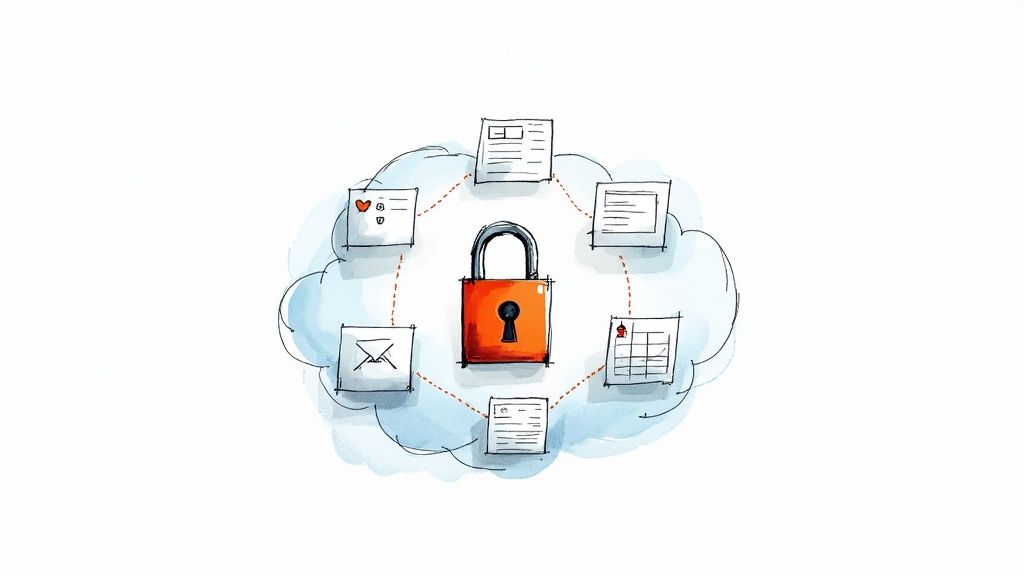
A world-class CRM platform delivers its greatest value when it functions as the central hub of an organisation’s technology, not as a digital island. For government agencies, this is a critical requirement. The complex landscape of existing IT systems—from decades-old financial mainframes to modern document management platforms—means that Salesforce Public Sector Solutions must be a master of integration.
The goal is to finally dismantle the data silos that have long hindered government operations. When information is trapped in separate systems, public servants are forced to switch between multiple screens to get a complete view, slowing down service delivery and creating a disjointed experience for citizens.
A strategic approach to integration is therefore essential. By connecting Salesforce to the wider government technology ecosystem, agencies can create a true ‘single source of truth’ that empowers employees and transforms the citizen experience.
Weaving a Web of Connected Systems Through Integration
True digital transformation in government is about enabling systems to communicate seamlessly. Salesforce is designed to be the central orchestrator, using powerful tools to pull data from and push data to other essential platforms. This creates a unified operational view where information flows freely and securely.
Here’s how this connectivity works in practice:
- Finance Systems: In a grant disbursement process, once a grant is approved in Salesforce, the payment instruction can be sent directly to the agency’s finance system. This automation eliminates manual data entry and reduces the risk of errors.
- Document Management: When a citizen uploads documents for a permit application via an Experience Cloud portal, those files can be instantly and securely routed to the official record-keeping platform, ensuring compliance and a complete audit trail.
- Existing Citizen Portals: Many agencies have pre-existing citizen portals. Rather than replacing them, Salesforce can integrate with these portals, ensuring any data submitted by a resident is captured in the CRM for a complete 360-degree view.
The core principle is simple but powerful: make data available where it’s needed, when it’s needed. This integration strategy turns Salesforce into the central nervous system for modern government, coordinating actions and information across every department.
The Role of APIs in Breaking Down Data Silos
The technical key to this connectivity is the Application Programming Interface (API). An API acts as a secure messenger that allows different software applications to communicate and share data according to predefined rules. Salesforce’s robust API capabilities are the foundation for building this connected ecosystem.
Integration platforms like MuleSoft (a Salesforce company) take this a step further. They serve as a universal translator, simplifying the process of connecting systems that were not originally designed to work together. This accelerates the breakdown of data silos and the creation of a unified technology environment.
The benefits of an integrated approach are immense. For government agencies aiming to build a connected technology ecosystem, exploring a Salesforce Zendesk integration can provide valuable insights into how different platforms can work together to improve service delivery.
Ultimately, a well-integrated system delivers a consistent, frictionless experience for citizens. Whether they are paying a council rate, applying for a benefit, or reporting an issue, the underlying technology works in concert to provide a single, unified government experience. This not only improves public perception but also drives significant internal efficiencies, freeing up public servants to focus on high-value, mission-critical work.
FAQ: Answering Your Salesforce for Government Questions
Adopting a major digital platform like Salesforce Public Sector Solutions is a significant undertaking. Government leaders need complete clarity and confidence before moving away from legacy systems that have been in place for years.
Here, we address the most common questions we hear from Australian public sector organisations. Our goal is to provide direct, practical answers to help you make an informed decision, covering everything from data security and compliance to customisation and return on investment.
How does Salesforce ensure data security for Australian agencies?
Data security is the top priority for any public sector technology project. Salesforce has built its platform on a multi-layered security architecture designed to protect sensitive citizen information and comply with stringent government standards.
The platform includes powerful tools like Salesforce Shield, which provides enhanced encryption, event monitoring, and detailed audit trails. This gives your agency granular control and complete visibility over who is accessing what data, and when.
For Australian agencies, Salesforce can be configured to meet specific local requirements, including:
- Data Residency: Ensuring your data is stored within Australia to comply with data sovereignty regulations.
- Compliance Frameworks: Aligning with critical standards such as the Protective Security Policy Framework (PSPF).
An experienced Salesforce partner is crucial here. As a trusted partner, we ensure your implementation not only leverages the platform's native security features but is also meticulously aligned with Australian privacy principles and government regulations from day one.
What is the real ROI of implementing Salesforce in the public sector?
The return on investment (ROI) from a Salesforce implementation in government is measured in two critical ways: direct financial gains and enhanced public value.
From a financial perspective, agencies achieve savings by automating manual, time-consuming tasks. This frees up public servants to focus on high-value, mission-critical work. Significant cost reductions also come from decommissioning expensive legacy systems that are difficult and costly to maintain.
However, the public value ROI often delivers the most significant impact:
- Improved Citizen Satisfaction: Faster, more transparent services naturally lead to increased public trust and satisfaction.
- Increased Employee Productivity: Modern, intuitive tools reduce administrative burden, boost morale, and make teams more effective.
- Better Policy Decisions: With accurate, consolidated data available in real-time dashboards, leaders can make evidence-based decisions that deliver better outcomes for the community.
A thorough business case analysis is key to a successful project. It helps your agency forecast and measure these benefits, providing a clear picture of the expected returns. For more general queries about the platform, you can find further information in our comprehensive Salesforce FAQ section.
Can Salesforce be customised to our agency's unique processes?
Absolutely. One of the platform's greatest strengths is its adaptability. While Salesforce Public Sector Solutions provide a robust, pre-built foundation for government, it is not a rigid, one-size-fits-all product.
The platform is highly configurable and can be tailored to fit your agency's specific processes, terminology, and regulatory requirements, often without writing a single line of code.
Using declarative "clicks-not-code" tools like Flow Builder, your teams can design and automate complex workflows that precisely mirror how your agency operates. This also empowers your staff to make future adjustments as policies evolve, reducing reliance on developers.
An experienced Salesforce partner guides this process strategically. Our approach is to leverage powerful out-of-the-box features first and recommend custom code only when genuinely necessary. This ensures your solution is not only a perfect fit but is also sustainable and easy to manage for years to come.
Ready to transform your agency's service delivery with a trusted Salesforce partner? Our team has extensive experience helping Australian organisations unlock the full potential of Salesforce. Contact us today for a consultation to discuss how we can build a solution that meets your unique public sector mission.