

In the high-stakes world of construction and real estate, efficiency isn't just a goal; it's a survival strategy. While dedicated construction project management software is great for centralising tasks, budgets, and schedules, its real power is unleashed when it's plugged into your client data in Salesforce CRM. This connection bridges the gap between the job site and the front office, creating a single source of truth that gives you complete operational control.
The Business Challenge: Disconnected Construction and Client Data
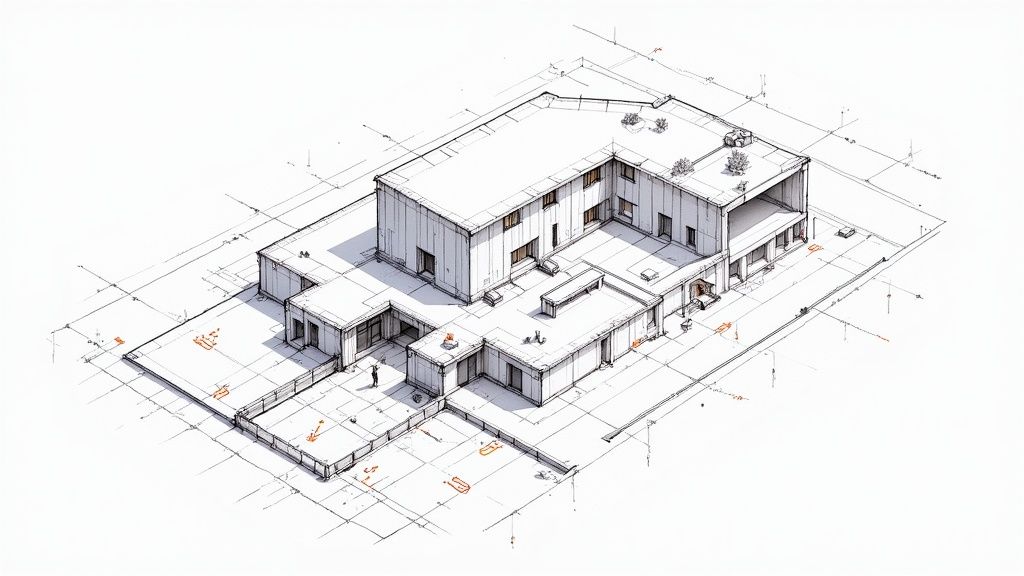
Many construction and real estate firms operate with a fundamental disconnect. Critical client information, tender details, and financial agreements live in one system—like Salesforce Sales Cloud. Meanwhile, the actual project execution details are scattered across emails, standalone project apps, and site binders. This fragmentation is a breeding ground for costly information silos.
This disconnect isn't just an inconvenience; it actively eats into your profits. When the promises your sales team makes in the CRM aren't seamlessly handed over to your project managers, the risks start to stack up.
The real cost of disconnected data is the cumulative impact of small inefficiencies: a missed change order, an outdated blueprint, or a delayed client approval. These issues compound, leading to budget overruns and damaged client trust—challenges we frequently solve for our clients.
The Consequences of Data Silos
Without a single source of truth connecting your CRM to your operations, businesses face significant friction. As Salesforce partners, we see the consequences show up in predictable, yet damaging, ways:
- Bidding Errors: Estimates are based on patchy historical data, leading to underpriced jobs that kill your margins from day one.
- Delayed Schedules: Project managers waste precious time hunting for client-approved specs that should be at their fingertips in the project file, causing timelines to slip.
- Poor Client Communication: When the site team has no visibility of client conversations logged in Salesforce Service Cloud, inconsistent messaging can quickly undermine relationships.
- Manual Data Entry: Staff spend hours re-keying contract details and client information from Salesforce into the project management system, opening the door to human error.
This growing need for operational cohesion is driving a clear trend. The Australian construction management software market was valued at approximately USD 98.07 million in 2024 and is projected to hit USD 165.45 million by 2032, showing a strong push towards smarter, integrated digital solutions.
Just as outdated construction methods can lead to inefficiency, it's worth noting the hidden costs of traditional drone operations as another parallel where integrated platforms deliver huge savings. The solution lies in connecting dedicated construction project management software with a powerful CRM like Salesforce. This creates a seamless flow of information from the first client call right through to the final project handover.
Key Features of Construction Software That Integrates with Salesforce
When you're choosing construction project management software, it's easy to get lost in a long list of features. The real goal, though, is to find a tool that solves the specific, on-the-ground problems your team faces, while connecting seamlessly to your Salesforce CRM.
The best platforms are the ones that turn abstract client data from Salesforce into clear, actionable steps for your project managers and site supervisors. It's about creating a single, connected system where your sales, service, and project operations can finally talk to each other.
For any construction business serious about digital transformation, core features like the ability to track jobs and costs in a snap are non-negotiable. But the true value comes from seeing that cost data alongside the client and sales data in Salesforce.
In Australia alone, the construction and design software market—which includes project management and scheduling—was the largest segment in 2024, pulling in a massive 19.21% revenue share. And with the continuous push towards cloud solutions and CRM integration, that number is only set to grow.
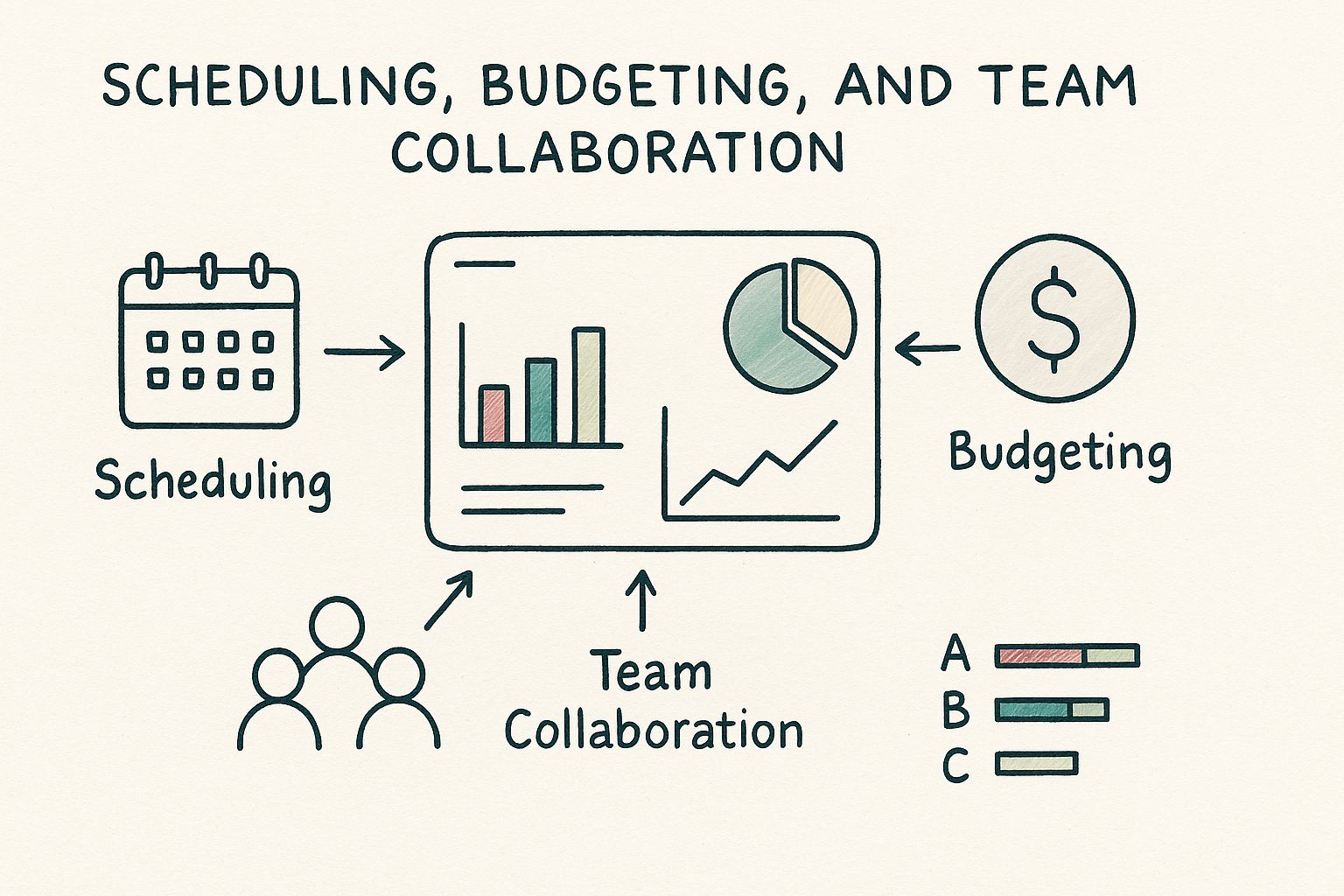
It’s this interconnectedness that separates a modern tool from a clunky spreadsheet. You get one source of truth for the entire project lifecycle, from the first sketch to the final handover.
Core Capabilities for Project Success
To truly leave manual methods behind, your software needs to be robust in a few key areas. Think of these as the pillars holding up your project, giving you complete control over every stage of a build.
- Financial and Budget Management: This is so much more than just logging expenses. It’s about having tools for accurate job costing, smoothly managing change orders, and keeping an eye on your profit margins in real time, with data that can sync back to the original opportunity in Salesforce.
- Resource and Schedule Management: Got the right crew, equipment, and subcontractors? Great. Now you need to allocate them effectively. Advanced scheduling helps you dodge conflicts and keep the project timeline on track, even when the unexpected happens.
- Document Control and Centralisation: A cloud-based home for all project documents—blueprints, permits, contracts, RFIs—is absolutely essential. It guarantees everyone, whether they're in the office or on-site, is working from the latest version. That alone dramatically cuts down on costly rework.
- Client and Subcontractor Communication: Forget messy email chains and missed calls. Integrated communication tools bring all conversations, approvals, and daily logs into one place. This creates a clear, auditable record that boosts transparency and holds everyone accountable, with key interactions logged back to the client's record in Salesforce.
Bringing these capabilities together is a game-changer. But the real magic happens when you connect that operational data to your client relationships in Salesforce. That's a challenge where our Salesforce consulting services offer deep expertise, turning your project management tool into a powerful engine for business growth.
Traditional Methods vs. an Integrated Salesforce Solution
The jump from spreadsheets to a dedicated software solution connected to Salesforce can feel massive, but the efficiency gains are undeniable. It's the difference between juggling disconnected files and having a single, intelligent command centre for your entire business.
Here’s a quick look at how old-school methods stack up against a modern, integrated platform:
| Project Task | Traditional Method (Spreadsheets, Email) | Modern Software Solution with Salesforce |
|---|---|---|
| Budget Tracking | Manual data entry, prone to errors, delayed updates. | Real-time expense tracking, automated job costing, instant profit analysis against Salesforce opportunity. |
| Scheduling | Static Gantt charts, difficult to update, poor collaboration. | Dynamic, cloud-based schedules with resource allocation and conflict warnings. |
| Document Control | Files scattered across emails and local drives, version confusion. | Centralised cloud repository, version control, access from any device. |
| Communication | Disjointed email threads, lost phone calls, lack of audit trail. | Integrated messaging, daily logs, and a single, searchable project record linked to Salesforce. |
| Change Orders | Slow approval process via email, difficult to track financial impact. | Streamlined digital approvals with immediate updates to the project budget in Salesforce. |
Ultimately, making the switch isn't just about getting new software; it's about fundamentally changing how your team works. As Salesforce partners, we help businesses eliminate information silos, automate tedious tasks, and give everyone the data they need to make better decisions, faster.
Why Salesforce is the Game-Changer for Construction and Real Estate Firms

While your dedicated construction project management software is fantastic at handling the 'what' and 'how' of a build, Salesforce is the master of the 'who' and 'why' behind every contract. It’s the #1 CRM platform built to manage the entire client relationship, from the first enquiry all the way through to long-term warranties and repeat business.
This is a critical distinction. Your project software manages tasks, Gantt charts, and on-site resources—the operational core of getting the job done. Salesforce, on the other hand, manages the bigger picture: the relationships, the sales pipeline, and the long-term value of every client. It provides the commercial context that drives your business forward.
From Complex Tenders to Loyal Clients with Salesforce Cloud
Winning a project in construction is a long, complex process. This is precisely the kind of journey Salesforce Sales Cloud was designed for. It takes that tangled web of tenders, bids, and stakeholder conversations and organises it into a clear, predictable sales pipeline. Suddenly, you have a real-time view of your future revenue, empowering you to make strategic decisions with confidence.
But the relationship doesn’t stop once the contract is signed. This is where Salesforce Service Cloud steps in. It gives you a professional, organised way to track post-handover warranties, manage maintenance requests, and handle defect liability periods without breaking a sweat.
By centralising all your post-handover support in Service Cloud, you turn what could be a point of friction into an opportunity to prove your reliability and build client loyalty. This organised approach is the bedrock of repeat business and powerful word-of-mouth referrals.
The Salesforce Solution: A Case Study in Client-Centric Growth
We once worked with a property development firm that was great at delivering projects but struggled with fragmented client data. Repeat business was hit-or-miss, and they had no clear picture of where their best leads were coming from. Their challenge was a classic case of disconnected systems.
The solution was to implement Salesforce as their central CRM, integrating it with their existing operational software. This gave them a 360-degree view of every client. They could see every interaction, from an initial query about a land package in Sales Cloud right through to the final sign-off and subsequent maintenance calls managed in Service Cloud.
The results delivered tangible business benefits:
- Improved Bid Accuracy: By analysing past project data linked to specific client profiles in Salesforce, their sales team started putting together more competitive and profitable tenders.
- Increased Repeat Business: Armed with a full history of client preferences and past conversations, they could proactively reach out with new opportunities, leading to a 25% increase in repeat contracts within just two years.
- Stronger Referral Network: Service Cloud enabled them to deliver exceptional post-sale support, turning happy clients into vocal advocates who consistently sent high-quality referrals their way.
This experience highlights how a powerful CRM acts as the central nervous system for a modern construction business. For a deeper dive, check out our insights on why Salesforce is the backbone of modern real estate agencies. As an experienced Salesforce partner, we specialise in tailoring the platform to meet the unique demands of the property and construction sectors.
Integrating Construction Software with Salesforce CRM
This is where your technology investment really pays off. Integration acts as the digital bridge connecting the dust and action of your job site to the strategic conversations happening in your front office. By linking your construction project management software with a CRM like Salesforce, you tear down the walls between your departments and create a powerful, end-to-end business ecosystem.
This crucial link gets rid of the soul-crushing grind of entering the same data twice, drastically cuts down on human error, and gives leadership a unified, real-time picture of the entire business. Everyone is finally working from the same playbook.
From a Won Deal in Sales Cloud to Breaking Ground
So, what does this look like in the real world? It all starts when your sales team marks a deal as 'Closed-Won' in Salesforce Sales Cloud. Instead of a clunky manual handover, this single action automatically kicks off a new project in your construction software via an integration.
This new project arrives pre-filled with all the critical client details, contract values, key contacts, and agreed-upon specs, pulled directly from Salesforce. Your project team can hit the ground running.
This automation isn’t just about saving a few minutes; it’s about preserving the integrity of the project from day one. The data from that very first client conversation in Salesforce is carried all the way through to the final punch list, ensuring promises made by sales are perfectly understood and executed by the project team.
The benefits ripple outwards, creating a virtuous cycle of efficiency:
- Your sales team can see project progress against the original scope within Salesforce, helping them spot upsell opportunities or proactively manage client expectations.
- The finance department gets a clearer view of project profitability as real-time costs from the job site sync back against the initial budget logged in Salesforce.
- The foreman on-site has instant access to all client contact information and project specs on their mobile device, pulled directly from the CRM.
A Unified View for Smarter Decisions
This level of connected thinking is driving huge investment in the Australian market. In fact, builders, contractors, and construction managers are the biggest adopters of this technology, contributing a combined USD 1.3 billion to the market in 2023. This isn't just a trend; it's a widespread recognition that specialised, connected software is essential for productivity. You can discover more insights about construction software statistics to see the full picture.
Ultimately, integrating your construction and CRM platforms shifts your business from a reactive to a proactive model. As your Salesforce partner, we can help you stop putting out fires caused by miscommunication and start making strategic decisions based on a complete view of your entire operation.
Choosing Your Software and Salesforce Implementation Partner
Picking the right technology is a massive step, but it’s only half the battle. The success of your entire digital transformation comes down to choosing both the right construction project management software and the right Salesforce partner to bring it all to life.
Think of it this way: the right platform is the new engine for your business. But the right partner? They’re the expert mechanic who doesn’t just install it, but tunes it perfectly to work with your Salesforce setup and unique business processes.
Evaluating the Software
Before you think about implementation, the software itself has to meet the demands of a modern construction company. It needs to be a dynamic tool that empowers your teams, both in the office and on site.
When you’re looking at options, focus your evaluation on these non-negotiables:
- Robust Salesforce Integration: This is critical. The software must be built to connect seamlessly with Salesforce. This is the only way you’ll get that single source of truth, tracking everything from the first client call to the final project handover.
- Mobile-First Design: Your crews in the field are the lifeblood of your operation. The software’s mobile app can’t be an afterthought—it needs to be intuitive, fast, and fully functional offline for easy daily logs, photo uploads, and real-time updates from any job site.
- Scalability for Growth: The solution you choose today must be ready for your business tomorrow. It should handle everything from a small residential reno to multiple, large-scale commercial projects without slowing down.
Choosing software is like hiring a key employee who will touch every part of your business. You need a candidate that’s reliable, communicates well with other systems (integrates), and is ready to handle more responsibility as you expand.
Selecting the Right Salesforce Partner
Once you’ve shortlisted software, the focus shifts to finding an implementation partner. An experienced partner doesn’t just install a program; they get in the trenches with you to align the technology with your unique business processes. Their goal is to ensure your team actually uses it and that you see a clear return on your investment.
When interviewing potential partners, you need to go deeper than their sales pitch. For more on this, our comprehensive Salesforce implementation guide for Australia offers a detailed framework to help you make an informed choice.
Make sure you ask any potential partner these questions:
- Do you have direct experience in the construction and real estate industry? They must understand the specific language and flow of project-based work, from tender management in Sales Cloud through to defect liability periods in Service Cloud.
- What is your methodology for complex integrations and data migrations? Getting historical data out of old systems is fraught with risk. They need a proven process to avoid costly errors and downtime.
- What does your user training and long-term support plan look like? A successful implementation is defined by user adoption. Ensure they have a clear plan to empower your team from day one and provide ongoing support.
FAQs: Salesforce for Construction Project Management
Moving to a fully connected software setup always brings up questions. Here are the most common questions we hear from construction firms considering a more unified approach with Salesforce.
Can construction project management software really integrate with Salesforce?
Yes, absolutely. Most leading construction project management software solutions have open APIs designed to connect smoothly with CRMs like Salesforce. The key to success, however, is working with a Salesforce partner who understands the construction industry’s unique data flows. When done right, critical info—client details from a won tender, project financials, key milestones—syncs automatically, eliminating double-handling of data. For more on how different systems talk to each other, you can look into understanding software integrations.
What is the biggest benefit of using Salesforce for a construction business?
The single biggest benefit is achieving a complete, 360-degree view of your clients and their projects. Your construction software masters the day-to-day build, but Salesforce manages the entire client relationship. It starts with tracking leads and bids in Sales Cloud and extends to handling post-construction service calls in Service Cloud. This unified view helps you spot opportunities for repeat business, forecast your pipeline with greater accuracy, and deliver a superior client experience. You can see how this works in the real world by checking out our various Salesforce project case studies.
Our field teams are not very tech-savvy. Is this software difficult to use?
This is a common and valid concern. Modern construction software is built with the field team in mind, designed for easy use on a mobile or tablet. The best platforms have clean, intuitive interfaces for daily logs, photo uploads, and task management. The goal of integrating with Salesforce is to make workflows simpler, not more complicated. A good implementation partner will also focus heavily on training and adoption support to ensure your site crews feel the new tools are helping them, not holding them back.
How long does a Salesforce integration project like this typically take?
The timeline depends on the complexity of your business processes and chosen software. A typical project might range from a few months for a straightforward setup to longer for a large company with complex data needs. We often recommend a phased approach. Phase one might focus on connecting your core CRM data with project creation to deliver immediate value. Later, you could add advanced features like syncing financial data or building client portals with Salesforce Experience Cloud. A skilled Salesforce partner will work with you to map out a realistic timeline that avoids major disruptions.
Ready to connect your job site to your sales team with a unified Salesforce solution? The team at Adaptal specialises in tailoring Salesforce and integrated platforms for the unique demands of the Australian construction and real estate sectors. Contact us today to discuss how we can help build a more efficient, profitable future for your business at https://adaptal.com.au.
Article created using Outrank