
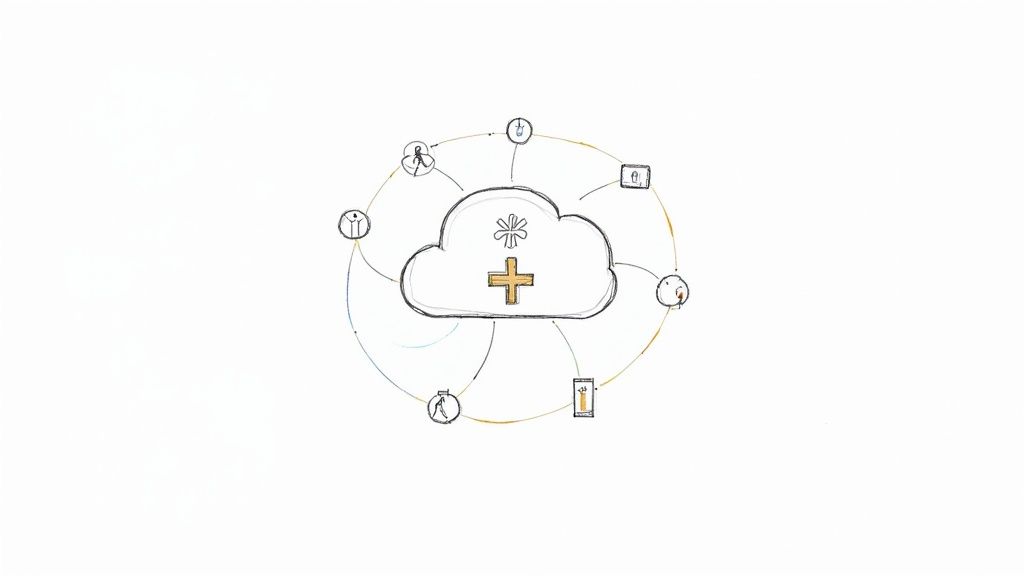
Salesforce Health Cloud is a specialised CRM platform built to pull together every piece of a patient's story into one unified view. From a business perspective, it connects data from disparate sources to help healthcare providers coordinate care, build stronger patient relationships, and shift from a reactive to a more collaborative, proactive model of care delivery.
What Exactly Is Salesforce Health Cloud?
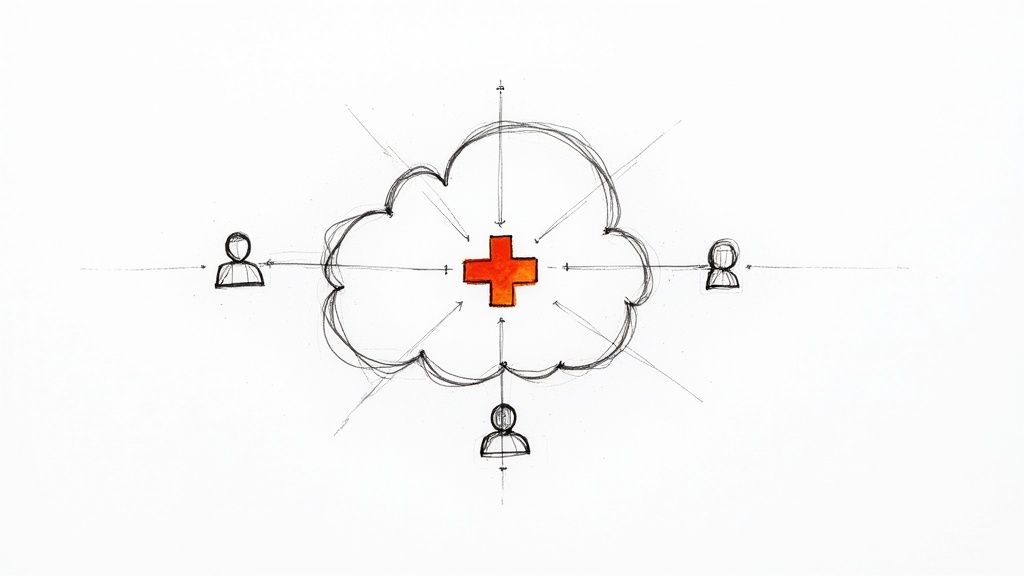
When organisations first explore Salesforce Health Cloud, there's a common misunderstanding. Many decision-makers assume it's designed to replace their existing Electronic Health Record (EHR) system. In our experience, clarifying this is the first step: that is not its purpose.
It's more accurate to view Health Cloud as a powerful patient relationship and engagement layer that sits on top of your clinical systems.
Your EHR is the system of record for clinical data—it’s the vault for diagnoses, lab results, and treatment histories. Health Cloud, on the other hand, is the system of engagement. It integrates with your EHR and other sources, weaving all the data together to create a complete, 360-degree view of each person. This provides a far richer picture than clinical data alone ever could, driving smarter business decisions and better patient outcomes.
The Operating System for Patient Engagement
A great way to think about Salesforce Health Cloud is as the central operating system for patient care management. Just like an OS on a computer manages different apps and hardware to create a seamless user experience, Health Cloud orchestrates information and communication across a patient's entire healthcare journey.
It breaks down the data silos that hinder efficiency, creating a single source of truth that everyone involved in a patient's care can access. This unified view doesn't just include clinical data; it also brings in all the non-clinical details that are critical for modern healthcare.
- Communication Logs: Every single interaction, from phone calls to secure messages, is tracked in the CRM.
- Patient Preferences: Details like their preferred contact method or the best times for appointments are captured.
- Social Determinants: It can capture non-clinical factors like a patient's living situation or access to transport.
- Care Plans: Dynamic, collaborative plans are visible to the whole care team, not just one person.
This allows providers to see the entire patient story and act on it. For example, a care coordinator might see a patient has missed several appointments. The challenge for the business is patient non-adherence. By looking at their Health Cloud profile, the coordinator could see a note about limited transport access. The Salesforce solution is to use this insight to trigger a proactive workflow, like arranging a community transport service—a connection that would be impossible to make from a purely clinical record. The business benefit is reduced non-attendance and improved patient outcomes.
By connecting these disparate data points, Salesforce Health Cloud enables a fundamental shift in how healthcare is delivered. It moves organisations from a model of reactive treatment to one of proactive wellness, where they can anticipate needs and prevent issues before they escalate.
From Disconnected Data to Connected Experiences
Ultimately, the goal is to create a more connected and collaborative healthcare experience for everyone. For patients, this means feeling seen and understood as an individual, not just a set of medical records. They get personalised communication that makes managing their own health less overwhelming.
For providers and administrative staff, it means having the right information at their fingertips, exactly when they need it. The platform smashes communication barriers between departments and even separate facilities. A specialist, a GP, and a community nurse can all look at the same patient record, ensuring every decision is informed and consistent.
As a trusted Salesforce partner, we've seen firsthand how this level of digital transformation directly leads to better patient outcomes and significant gains in operational efficiency. It truly sets the foundation for a modern healthcare system built around the patient.
Core Features That Transform Patient Care
To understand what makes Salesforce Health Cloud a strategic business asset, you need to look past the buzzwords and dive into the actual tools care teams use daily. These features are the engine driving the platform, turning fragmented data into coordinated, patient-first action. They're designed to give providers a crystal-clear, actionable view of every person they look after.
Consider the business challenge: a care coordinator needs to call a recently discharged patient. Without a unified system, they would waste time digging through paper files or jumping between different software. The Salesforce solution: Health Cloud presents everything on one screen. The result is instant context and insight, right when it's needed most, improving staff efficiency and the quality of patient interaction.
This image shows just how Health Cloud gives providers a complete patient picture on the go, directly improving the care experience.
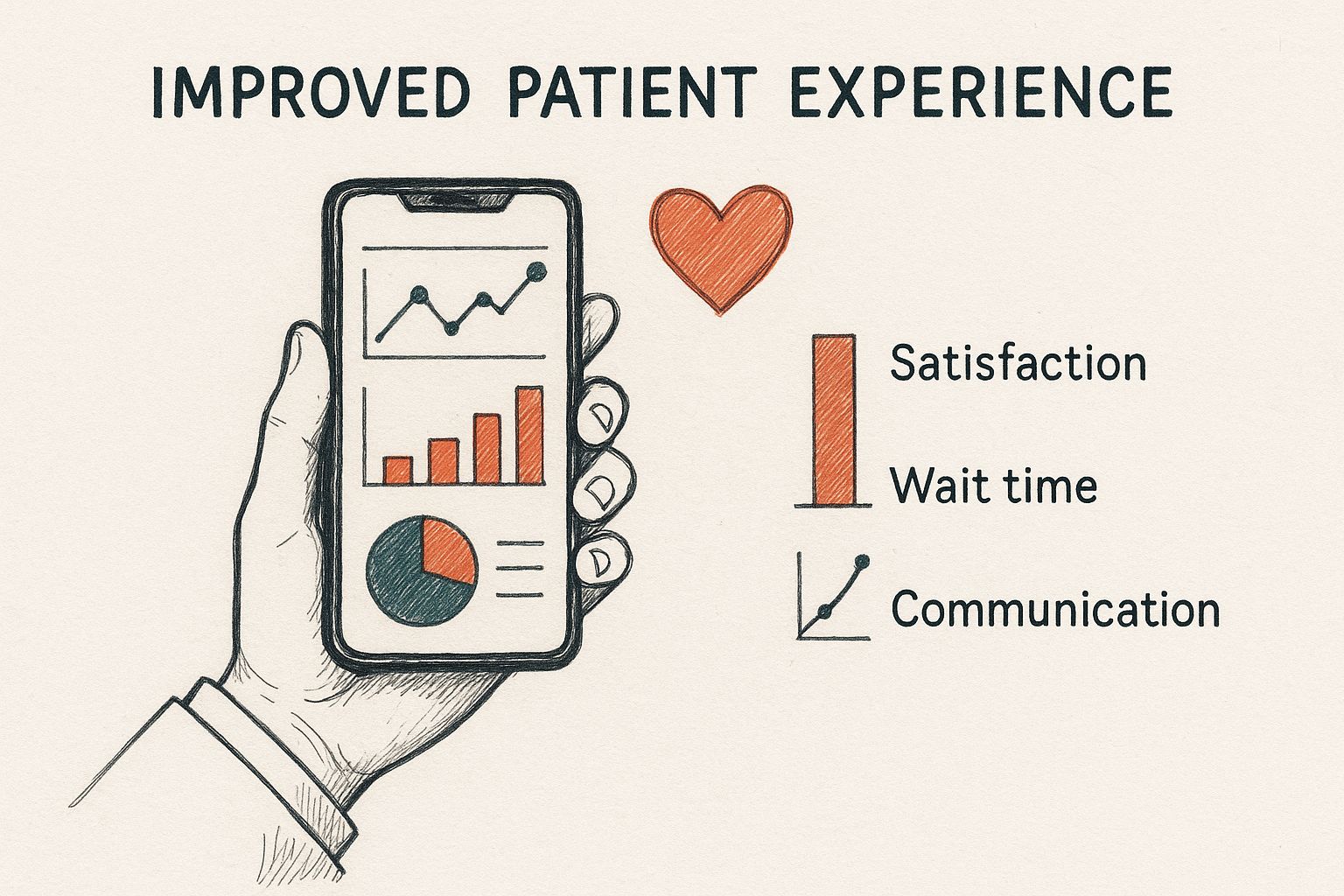
It’s a perfect example of how accessible, organised information empowers providers to deliver faster, more responsive care.
The Complete Patient 360 View
At the very heart of Health Cloud is the Patient 360 view. This isn’t just a digital filing cabinet; it’s a living, dynamic profile that pulls together every piece of a patient's story from across your business systems. It merges clinical data from Electronic Health Records (EHRs) with a host of non-clinical information.
This unified view brings together:
- Demographic and Contact Information: The basics, plus how the patient prefers to be contacted.
- Clinical Data Summary: Need-to-know details like conditions, allergies, and current medications pulled from the EHR.
- Interaction History: A full CRM log of every appointment, call, and message.
- Care Team Network: A visual map showing every provider and specialist involved in the patient's journey.
Having this complete picture means a provider can make smarter decisions in a fraction of the time. They can instantly see who else is on the care team, review past conversations, and grasp the patient's unique situation before making a call.
Intelligent Care Coordination and Planning
Health Cloud turns static care plans into dynamic, collaborative roadmaps. Right inside the platform, care teams can build and manage personalised plans, set goals, and assign tasks to different team members—including the patients themselves.
What’s really powerful here is the automation. The system can be configured to automatically trigger patient communications like appointment reminders, medication alerts, or helpful articles through their preferred channel, whether that’s an SMS from Sales Cloud or a secure message via Experience Cloud.
This frees up staff from tedious admin work and encourages patients to take a more hands-on role in their own health. For Australian providers, it’s a direct path to better operational efficiency and stronger adherence to care plans.
To help you see the connection between features and real-world results, this table breaks down the core components and their primary benefits.
Key Health Cloud Features and Their Impact
| Feature | Description | Primary Benefit |
|---|---|---|
| Patient 360 View | A single, unified profile combining clinical, demographic, and communication data from multiple systems. | Enables more informed, personalised decision-making with complete patient context at a glance. |
| Care Coordination | Tools for creating, managing, and automating personalised care plans with assigned tasks and goals. | Improves team collaboration and patient adherence while reducing administrative overhead. |
| Risk Stratification | Data-driven analytics to identify patients at high risk of adverse health events. | Allows for proactive intervention, helping to prevent hospital readmissions and improve outcomes. |
| Omnichannel Engagement | Integrates all communication channels (portal, SMS, telehealth) into one consolidated view. | Creates a seamless, consistent patient experience and ensures no communication gets lost. |
Each of these features plays a critical role in building a more connected and proactive healthcare system.
Proactive Risk Stratification
One of Health Cloud's most powerful capabilities is identifying at-risk patients before a negative event occurs. Using data-driven rules and analytics, the platform can flag individuals who may require additional support.
For example, the system can analyse data to find patients with chronic conditions who have repeatedly missed appointments or failed to refill prescriptions. This business challenge can be solved with a Salesforce workflow that prompts care coordinators to reach out, identify barriers, and offer help. This shift from reactive to proactive care is a game-changer for managing population health and reducing preventable hospital visits.
Omnichannel Patient Engagement
Modern patients expect to connect with their healthcare providers as easily as they do with any other service. Health Cloud makes this possible with true omnichannel engagement tools, often leveraging other parts of the Salesforce ecosystem.
This means every communication channel is wired into a single platform:
- Secure messaging via a patient portal (powered by Experience Cloud)
- SMS and email reminders (powered by Sales Cloud or Marketing Cloud)
- Integrated telehealth video calls
- Logging of traditional phone calls
No matter how a patient gets in touch, the interaction is captured in their Patient 360 view. This guarantees continuity, so patients never have to repeat their story. For any organisation focused on building strong, lasting patient relationships, this kind of seamless communication is non-negotiable.
The platform's impact is growing fast. Globally, Salesforce Health Cloud now holds a market share of around 2.17%, serving over 630 customers. Adoption has jumped by 35% since 2018, and users are reporting a 29% decrease in operational costs thanks to these powerful tools.
Of course, tailoring these features to your specific needs takes expertise. Our Salesforce consulting services help Australian healthcare organisations configure Health Cloud to maximise their return on investment. The technology also continues to evolve, with advancements like AI voice recognition in healthcare opening up new ways to capture patient data and make clinical work even more efficient.
How Health Cloud Maps a Better Patient Journey
Features and dashboards are one thing, but the real magic of Salesforce Health Cloud comes alive when you trace a patient's journey. Let’s walk through the experience of ‘Sophie’, who has just been diagnosed with a chronic condition. We’ll see how the platform transforms her healthcare journey from a fragmented, stressful process into a connected, supportive experience.
The Business Challenge: Before a platform like Health Cloud, Sophie’s world would have been a maze. She'd be bouncing between her GP, a specialist, and a pharmacist, retelling her story at every stop. Each held a different piece of her puzzle, but no one was putting them together. This fragmented approach places a massive burden on the patient to act as their own care coordinator. It’s inefficient for the business and exhausting for the patient.
The Salesforce Solution: Genuinely Collaborative Care
With Health Cloud implemented, Sophie's experience is completely different. The moment she’s diagnosed, her entire care team starts working together inside the platform to build a single, dynamic care plan. This isn't a static document; it's a living roadmap that everyone—including Sophie, via an Experience Cloud portal—can see and contribute to.
Her GP logs her medications. Her specialist maps out treatment goals. A community nurse schedules follow-up calls. Suddenly, everyone is on the same page, working from the same information.
This is the fundamental change: moving from a series of disconnected appointments to a continuous, connected care model. It puts the patient at the centre, giving them the tools and the team they need to manage their health proactively.
The Result: For Sophie, this is a game-changer. No more repeating her medical history. She has peace of mind, knowing her whole team is working in lockstep. For the healthcare provider, the benefit is streamlined operations, fewer errors, and a stronger, more trusting patient relationship.
Empowering Patients with Proactive, Automated Support
Another significant benefit for Sophie is the proactive support she now receives. Health Cloud uses smart automation to help her stay on top of her new treatment plan without feeling overwhelmed.
- Simple Reminders: She gets timely SMS messages from Sales Cloud reminding her to take her medication.
- Helpful Information: The system sends her links to articles and videos about her condition, accessible through her secure patient portal.
- Seamless Coordination: Automated alerts go out to her and her care team for check-ups, ensuring appointments aren't missed.
This automated, yet personal, communication makes Sophie feel supported. More importantly, it empowers her to become an active participant in her own care. She can log into her portal to ask a non-urgent question or track her progress. This level of engagement is what truly drives better long-term health outcomes.
The platform's power to unify data and simplify care coordination is why it's been so successful. This is especially true in markets like Australia, where Salesforce already has a strong foothold. Salesforce holds a massive 20.7% of the global CRM market share in 2024, and Health Cloud is a key part of that ecosystem. You can dig deeper into the platform's market presence over at Enlyft.
At the end of the day, Health Cloud breaks down the walls that have traditionally isolated different parts of the healthcare system. For patients like Sophie, it means they’re no longer navigating a complex system alone. They become true partners in their own care, backed by a connected, informed team. That’s where the real business value lies.
Proven Use Cases in Australian Healthcare
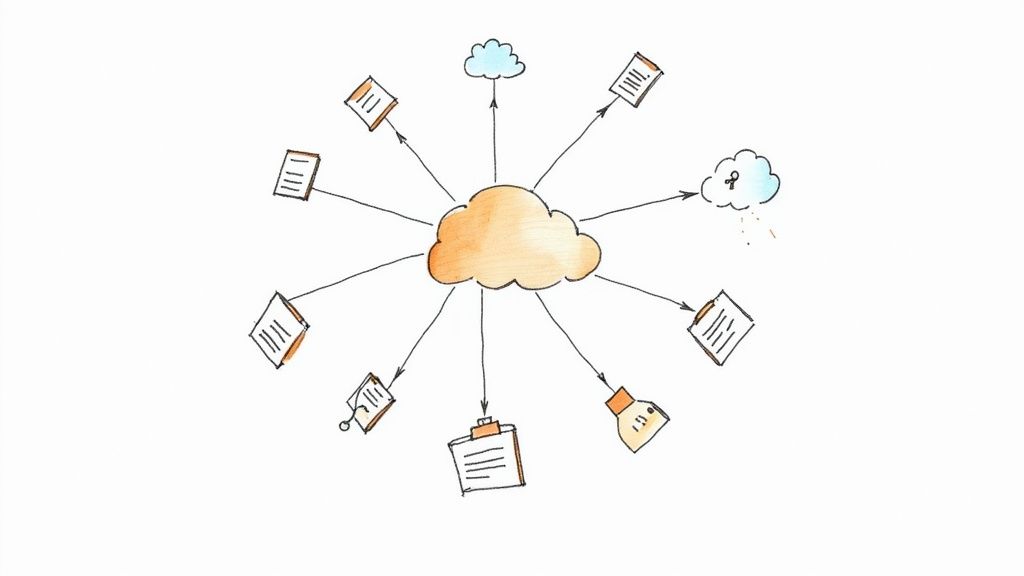
The real power of Salesforce Health Cloud isn't just in its core features, but in its incredible adaptability. It's not a rigid solution just for large hospitals. Its true strength lies in its ability to solve specific challenges across the entire Australian health and life sciences landscape.
From our project experience, here are some real-world applications that prove how the platform can be moulded to fit unique business needs, making it a critical asset for any organisation looking to improve outcomes through better relationship management.
Aged Care Coordination and Family Engagement
The Business Challenge: In the Australian aged care sector, clear communication with residents and their families is paramount. The challenge is coordinating complex care needs while keeping families informed and engaged, often with manual, time-consuming processes.
The Salesforce Solution: An aged care provider can use Health Cloud to create a central hub for each resident, tracking everything from medication schedules and dietary needs to social activities. This single source of truth ensures everyone, from nurses to lifestyle coordinators, is on the same page.
For family members, the platform can power a secure online portal (built on Salesforce Experience Cloud). This is where they can log in to see upcoming appointments, read updates from the care team, and message staff directly. It fosters a level of transparency that brings incredible peace of mind.
The Result: This digital transformation doesn't just improve efficiency by automating routine tasks. It turns a complex web of interactions into a streamlined, collaborative process that reduces administrative burden and enhances family trust.
Medical Device Patient Onboarding and Support
The Business Challenge: Medical device companies have a unique relationship with their patients. It involves detailed onboarding, ongoing support, and ensuring adherence to a usage plan for new equipment. Managing this lifecycle at scale is a significant operational challenge.
The Salesforce Solution: Salesforce Health Cloud is perfectly built to manage this entire lifecycle. A company providing at-home monitoring devices can build a structured onboarding journey right inside the platform. This journey could include:
- Automated welcome kits with educational materials sent via email.
- Scheduled follow-up calls automatically assigned to support staff using Sales Cloud task management.
- A patient portal where users can find troubleshooting guides and log support tickets.
The Result: By tracking every interaction, the company uncovers powerful insights into common problems and can address them proactively. This approach creates a much better patient experience and ensures the device is used correctly, which ultimately leads to better health outcomes and demonstrates the product's value. Many of our most successful projects, which you can explore in our Salesforce case studies, have focused on building these exact kinds of highly effective patient support systems.
Pharmaceutical Patient Support Programmes
The Business Challenge: Pharmaceutical companies run support programmes to help people manage complex treatments and improve medication adherence. Managing these initiatives for thousands of patients securely and efficiently is a major logistical hurdle.
The Salesforce Solution: Health Cloud provides the ideal framework to manage these programmes at scale. A pharmaceutical company can build a secure system to enrol patients, monitor their progress, and deliver personalised support. The system could be set up to:
- Manage patient consent and communication preferences in a fully compliant way.
- Send personalised medication reminders via Sales Cloud or Marketing Cloud.
- Provide access to resources and support nurses through a dedicated Experience Cloud portal.
- Gather anonymised data on adherence patterns to continuously improve the programme.
The Result: This structured approach allows companies to give consistent, high-quality support to thousands of patients at once. It turns a massive operational challenge into a powerful tool for improving patient well-being and demonstrating the real-world value of their treatments.
Implementing Health Cloud for Success
Bringing a platform like Salesforce Health Cloud into your organisation isn't just a software installation; it's a strategic business transformation. Based on our direct experience as a Salesforce partner, a successful implementation hinges on a solid plan that considers your goals, people, and technology from day one.
The journey begins with a simple question: what business problem are we trying to solve? A common mistake is getting lost in technical details without a clear "why". Before any configuration begins, you need to define specific, measurable business goals.
Setting a Clear Foundation for Your Salesforce Project
The first phase is all about strategy. Getting buy-in from key stakeholders—from clinical leads to IT and administration—is absolutely essential. Everyone needs to share the same vision and understand their role in bringing it to life.
Here are the key foundational steps we see as non-negotiable:
- Defining Business Objectives: Are you trying to reduce patient readmissions, improve care plan adherence, or streamline chaotic admin workflows? Pinpointing these goals will be your north star for every decision that follows.
- Securing Stakeholder Buy-in: Assemble a cross-functional team with representatives from every department that will use the platform. This ensures the final solution works for the entire organisation, not just one silo.
- Planning a Phased Data Migration: Moving data is complex. We recommend a phased approach, starting with the most critical patient information, to minimise disruption and allow your team to learn and adapt as you go.
Mapping out these elements first builds a solid foundation for the technical work ahead. For a much deeper look into structuring your project, check out our complete Salesforce implementation guide for Australian businesses.
Tackling Technical Integration with Your Existing Systems
If there's one technical aspect to obsess over, it's integration. Health Cloud delivers maximum value when it acts as the central hub, connected to all your other essential systems. This is how you finally achieve that single, reliable source of truth for every patient.
The goal is not to replace your existing systems but to unify them. A well-integrated Health Cloud pulls relevant data from different sources, presenting it in a single, intuitive interface for your care teams.
The most vital integration is with your Electronic Health Record (EHR) system. This connection allows clinical data to flow seamlessly into Health Cloud, enriching the 360-degree patient view with diagnoses, medications, and lab results. Beyond the EHR, other key integrations often include:
- Billing and Practice Management Systems: To link clinical activities directly with financial operations.
- Patient Portals and Apps: To create a consistent and connected patient experience, often powered by Salesforce Experience Cloud.
- Medical Devices and Wearables: To pull real-time health data straight into patient profiles for proactive care.
When handling sensitive patient data, every step must be secure and compliant. Ensuring robust and HIPAA compliant data transfer isn't just a box to tick; it's a fundamental requirement for maintaining privacy and meeting strict regulations.
Navigating Common Salesforce Implementation Challenges
Even the best plans can encounter hurdles. From our project experience, common challenges include managing change within teams, ensuring data quality during migration, and customising the platform without over-engineering it. This is where having an experienced Salesforce partner in your corner provides immense value.
The demand for platforms like this highlights a massive trend in digital transformation. In Australia, the healthcare cloud infrastructure market—where Salesforce Health Cloud is a major player—was worth around USD 1.63 billion in 2022 and is projected to hit USD 5.43 billion by 2030. A smart, strategic implementation ensures you can ride this wave and set your organisation up for long-term success.
Common Questions About Salesforce Health Cloud
As Australian healthcare organisations evaluate Salesforce Health Cloud, a few key questions always come up. Decision-makers and IT teams need to understand how this platform will fit into their existing technology stack and what the tangible business benefits look like.
Here are the questions we hear most often from prospective clients, along with our straightforward answers.
Does Health Cloud Replace Our EHR?
This is the most common question, and the answer is a firm no. Health Cloud is designed to complement your Electronic Health Record (EHR) system, not replace it.
Think of your EHR as the clinical system of record—the secure vault for diagnoses, lab results, and official medical history. Its primary job is to capture critical clinical data.
Salesforce Health Cloud is the system of engagement. It integrates with your EHR, pulling in that vital clinical data and layering it with a wealth of non-clinical information from your CRM, such as communication logs, appointment history, and patient preferences. This creates a complete patient profile that enables proactive care coordination and personalised communication—something an EHR was never designed to do.
How Does Health Cloud Handle Australian Patient Data Privacy?
Trust is the bedrock of any healthcare technology. Salesforce Health Cloud is engineered to help Australian organisations comply with crucial regulations like the Privacy Act 1988 and the My Health Records Act.
The platform includes a powerful suite of security features designed to protect sensitive patient information:
- Data Encryption: Keeps data safe, whether it's stored (at rest) or being sent (in transit).
- Field-Level Security: Restricts who can see specific data fields based on their role and permissions.
- Comprehensive Audit Trails: Tracks who accessed what data and when, providing a full history of user activity for accountability.
A critical part of our implementation process is configuring the platform to meet your specific data governance policies. We ensure your solution aligns with national and local compliance standards from day one, giving you complete confidence in how your data is managed.
What Is the Typical ROI for Health Cloud?
The return on investment with Health Cloud manifests across three key areas: operational efficiency, clinical outcomes, and the overall experience for both patients and staff.
From a business standpoint, the platform delivers value by optimising operations, enhancing clinical effectiveness, and improving the overall human experience of healthcare. This multi-faceted ROI is what makes it such a powerful investment.
Here’s a simple breakdown of the benefits:
- Operational ROI: This is where you'll see the quickest financial gains. Automating routine tasks with Salesforce Flow, creating more efficient workflows, and streamlining administration all lead to significant cost reductions. We’ve seen clients report a decrease in operational costs of up to 29%.
- Clinical ROI: Here, the value is measured in better patient outcomes. By enabling proactive risk management and improving adherence to care plans, Health Cloud can help prevent costly hospital readmissions and support better long-term health.
- Experiential ROI: This focuses on satisfaction and retention. Patients receive more connected, personalised care, which builds loyalty and trust. Simultaneously, staff are equipped with better tools that reduce administrative burnout, leading to higher employee retention and morale.
Can We Customise Health Cloud for Our Unique Services?
Absolutely. Customisation is one of the biggest strengths of the entire Salesforce platform. Health Cloud is not a rigid, one-size-fits-all product; it's a flexible foundation that can be shaped to fit the precise workflows of any healthcare organisation.
Whether you're a large hospital network, a specialised allied health clinic, a telehealth provider, or an aged care facility, the platform can be tailored to your specific needs.
As a Salesforce partner, our role is to configure Health Cloud to reflect your unique approach to care. This could involve:
- Creating custom objects to track data points specific to your services.
- Building automated workflows that mirror your operational model.
- Designing unique care plan templates for your specific patient populations.
This level of customisation ensures the platform doesn’t just support your work—it actively enhances it. For more answers to common questions about the Salesforce platform and its capabilities, you can explore our detailed Salesforce FAQ page.
Article created using Outrank